25 Best Things to do in Greece
Planning a trip to Greece and trying to decide what’s actually worth your time? We get it.
Greece has a way of making you want to do everything, from ancient ruins and cliffside villages to boat days and long lunches that turn into late dinners! The first time we visited, we were a bit overwhelmed by the options and the logistics, especially once the islands got involved. But since then, we’ve traveled around Greece much more, figured out what’s genuinely unforgettable, and learned a few practical tricks along the way.
So now, in this guide, we’re sharing the experiences that capture the best of Greece, plus simple tips to help you do them well. Opa!
Things to do in Greece
1. Eat just like a local
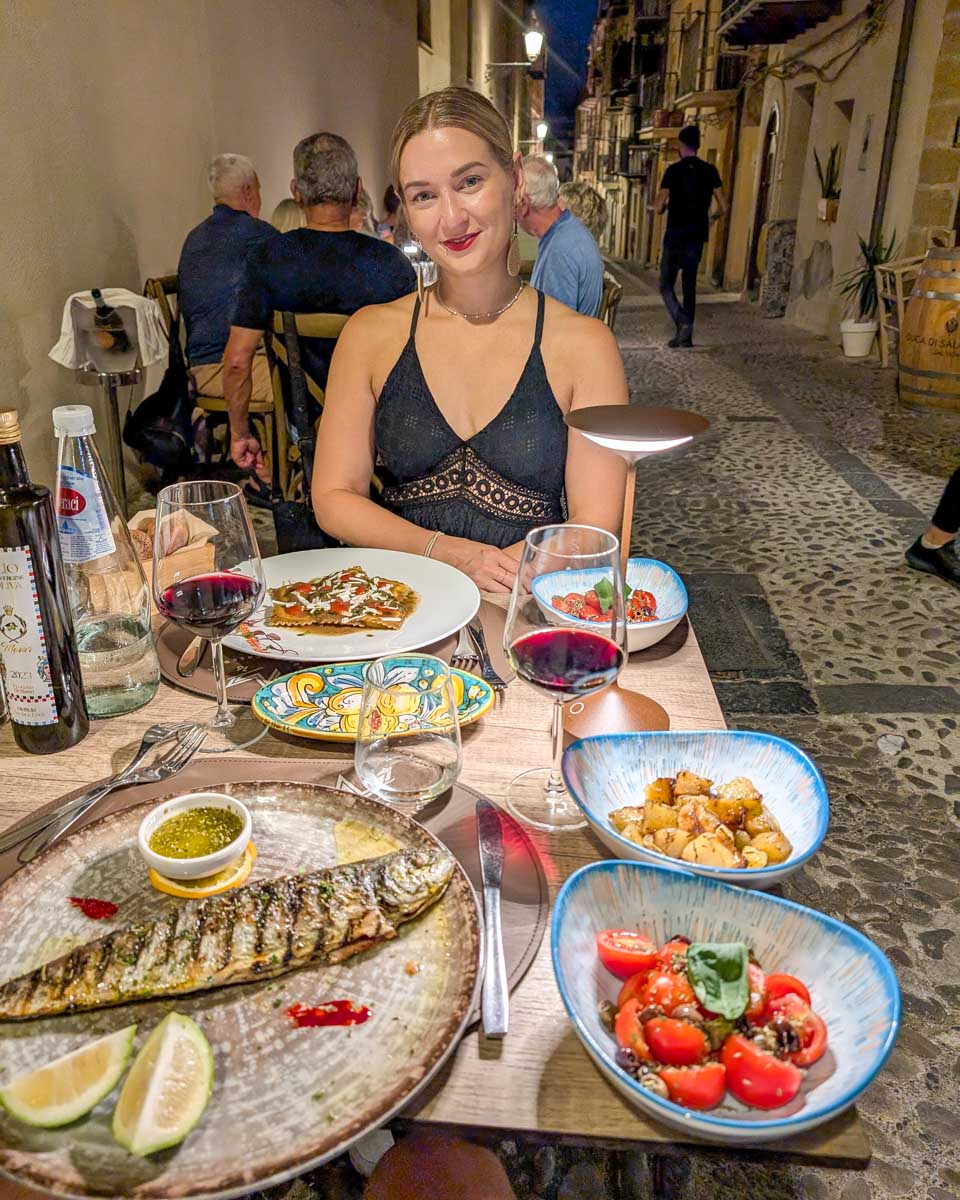
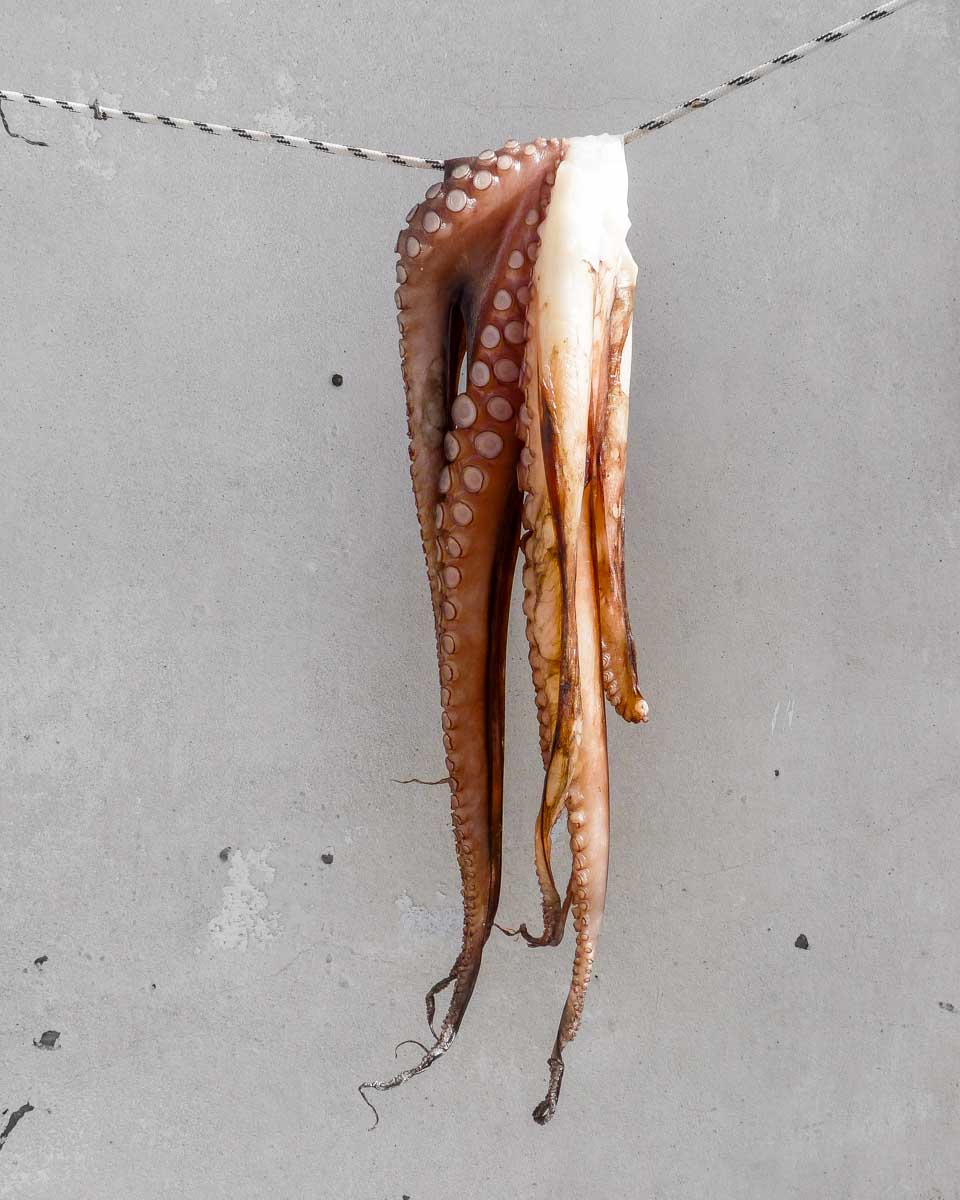
Greek food alone is reason enough to book a trip, and while you’re here, you’ll definitely want to eat like the locals do. We can say from experience that it’s totally worth making the effort to avoid the typical tourist traps and find more authentic spots.
One way to do this is to skip places with big photo boards – this is almost certainly a sign that the menu is aimed at tourists with no real understanding of local food. The same goes for restaurants with hosts who stand outside all night trying to pull people in. The really great places don’t have to do that, because their food speaks for itself!
Instead, we recommend looking for spots with shorter menus, or even just a simple list of daily cooked dishes, known as mageirefta! Seasonal specials are another good sign. These types of restaurants are often family-run, and the food simmers from morning to evening to give it depth and flavor.
Another great way to take the guesswork out of it is to book a food tour! A good food tour goes far beyond gyros and Greek salads, although you’ll still get to try the real deal for both of these iconic dishes. We’ve found it to be an easy way to find the best spots and most delicious dishes early in your trip when you’re still figuring out what to order and where to go. We loved this Athens food tour, and we’re also so glad that we did one in Santorini, too, because it was such a cool way to learn about regional differences in Greek food.
2. Island hop around the Saronic Gulf
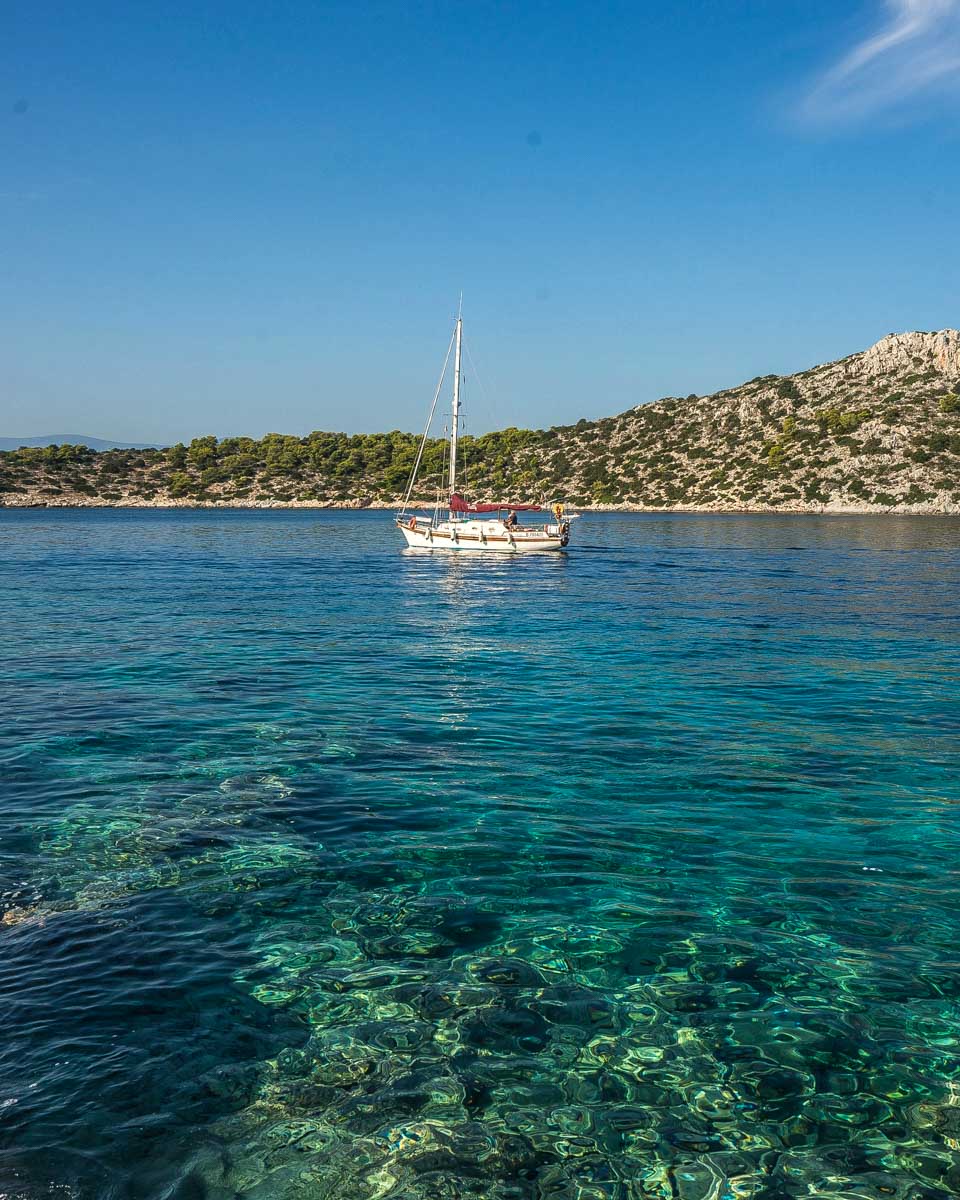
Island hopping around the Saronic Gulf is one of the easiest ways to get a true taste of the Greek islands, especially if you’re based in Athens! Instead of committing to ferries, luggage, and multiple hotel changes, you can experience beautiful islands and super clear seas in a single day. We think it’s one of the most low-effort and high-reward experiences you can have near the capital.
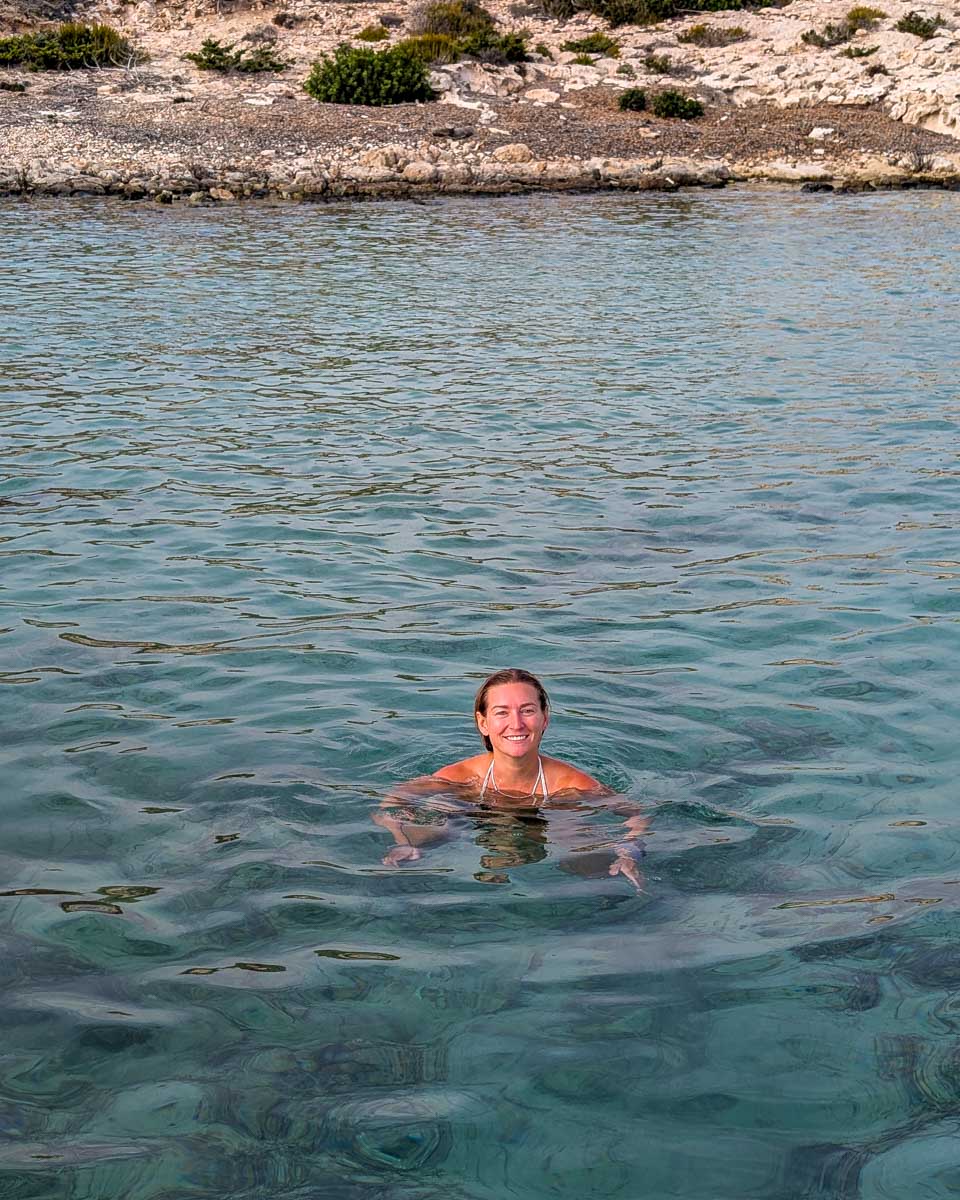
The Saronic Gulf is home to islands like Aegina, Poros, and Agistri, all of which are close enough to Athens to visit in a day without feeling rushed. When we did this, we got to wander harbor towns and swim in turquoise coves, as well as enjoy a delicious seaside lunch! We opted to go with this tour, and we had so much fun thanks to the friendly crew and great music on board.
You can also choose to explore just one island by ferry, which is a good choice if you like to take things slow. But if you’re short on time or want variety, visiting a couple of islands in one go is an excellent way to get a snapshot of island life.
All in all, we think that exploring the Saronic Gulf is a fantastic option for families and older travelers, since you get lots of scenery and experiences without the hassle of constantly packing up and moving. Just be sure to bring reef-safe sunscreen and water shoes, as many beaches here are pebbly or rocky rather than sandy.
3. Wander through Plaka and Anafiotika
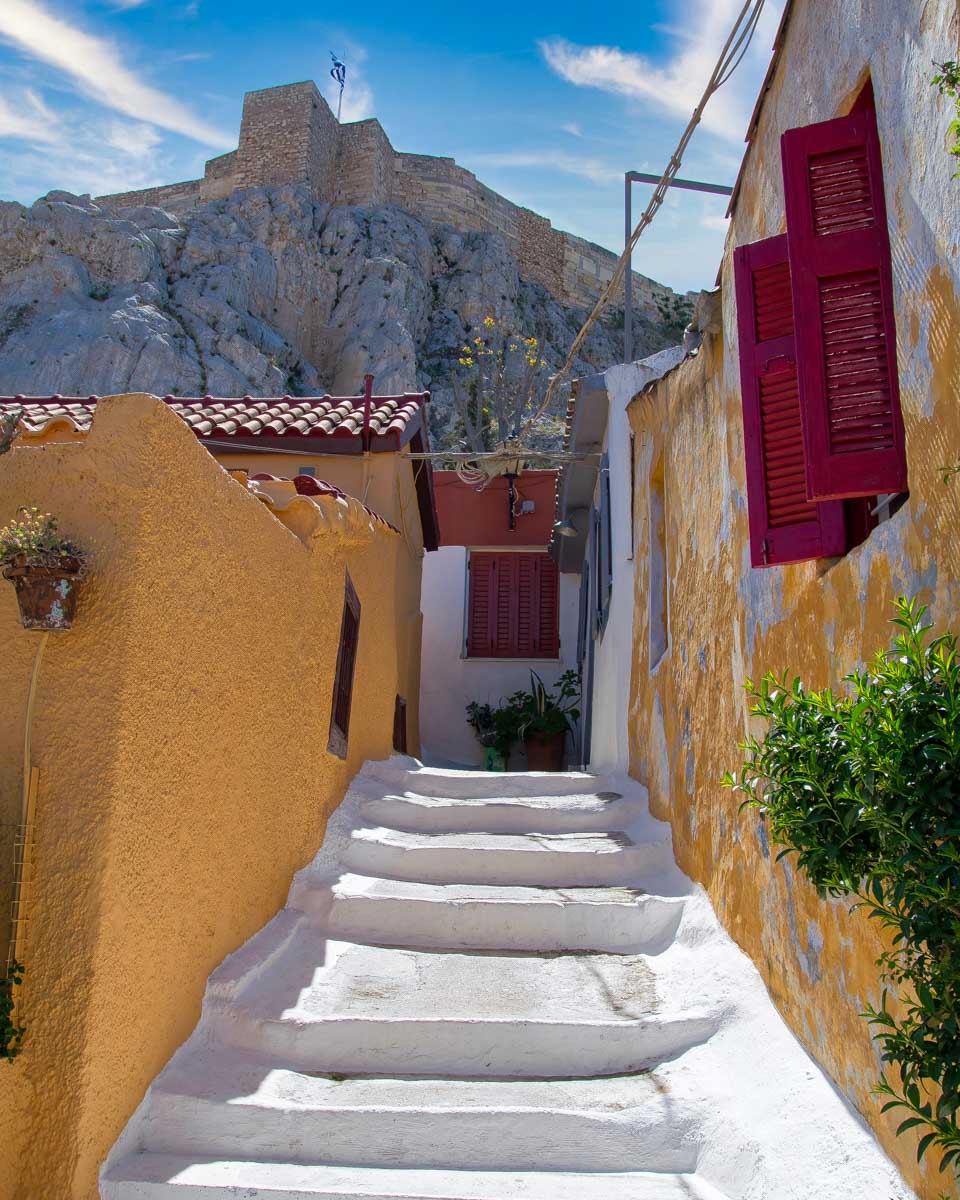
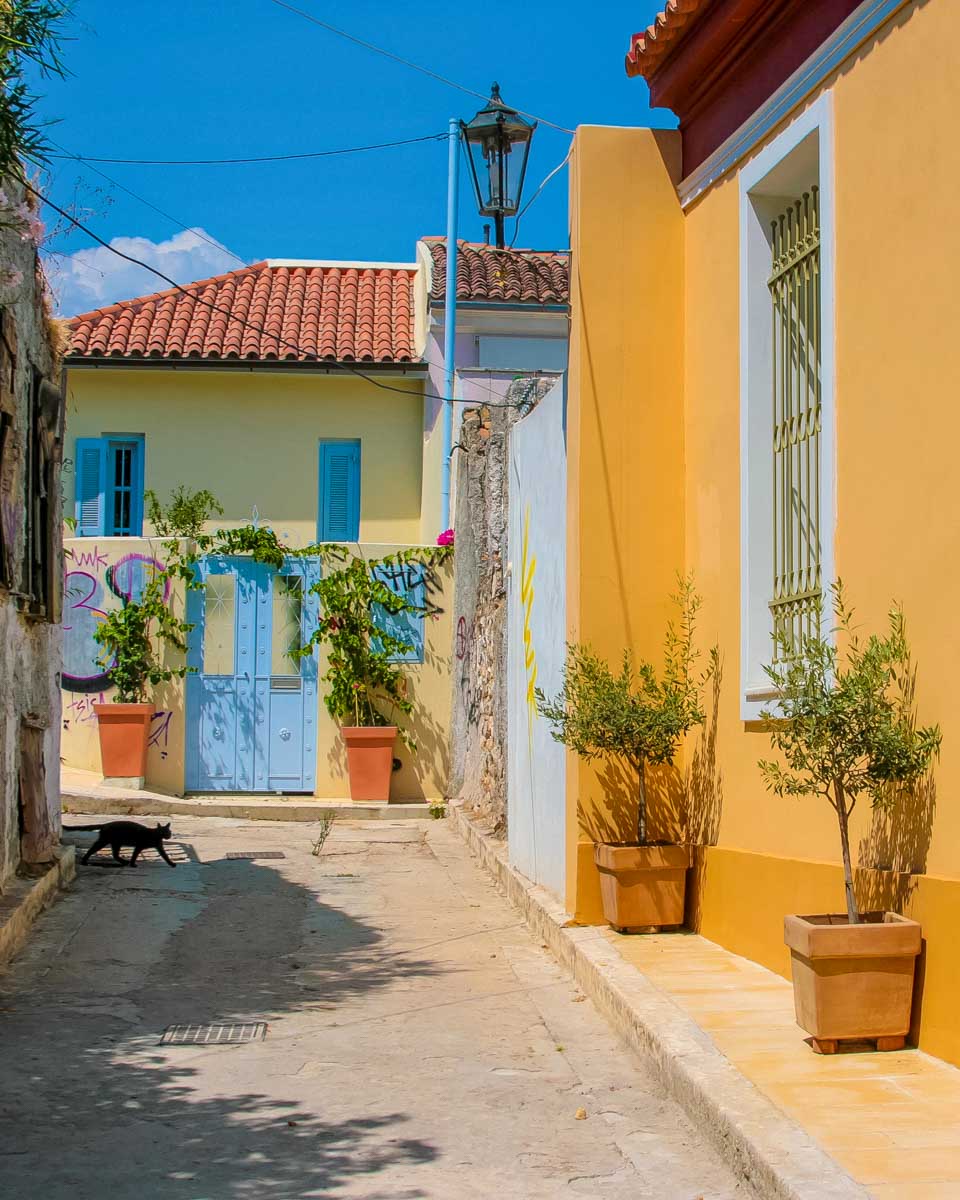
If you like to explore on foot with minimal planning, then wandering through Plaka and Anafiotika is a must when you’re in Athens. It’s actually one of our favorite ways to soak up that classic Athens charm!
This area sits right below the Acropolis, and it feels like a blend of old-city charm and island calm. A simple way to explore is to start in Plaka and follow the narrow lanes, of course, stopping for a coffee or a pastry when something yummy catches your eye!
From there, make your way uphill toward Anafiotika. The moment you hit the stairways, you’ll feel like you’re in Santorini thanks to all of the whitewashed walls and pops of blue.
It’s also important for us to mention that timing makes a BIG difference here. We’ve found that the early morning or early evening is best because the temperatures are cooler and the crowds thin out. Midday can feel hectic and hot, especially in summer, so it’s not as enjoyable.
One important thing to keep in mind is that Anafiotika is a real residential neighborhood. People live here, so it’s important to keep noise down and be respectful when taking photos. Don’t try to peek into people’s homes, either – you’d probably be annoyed if people kept doing that to you!
And one last note – comfortable shoes are a must. The streets are uneven, and the steps can be pretty steep. But overall, this is a low-effort walk that may well become a highlight of your time in Athens, as it did for us.
4. See Santorini from the water
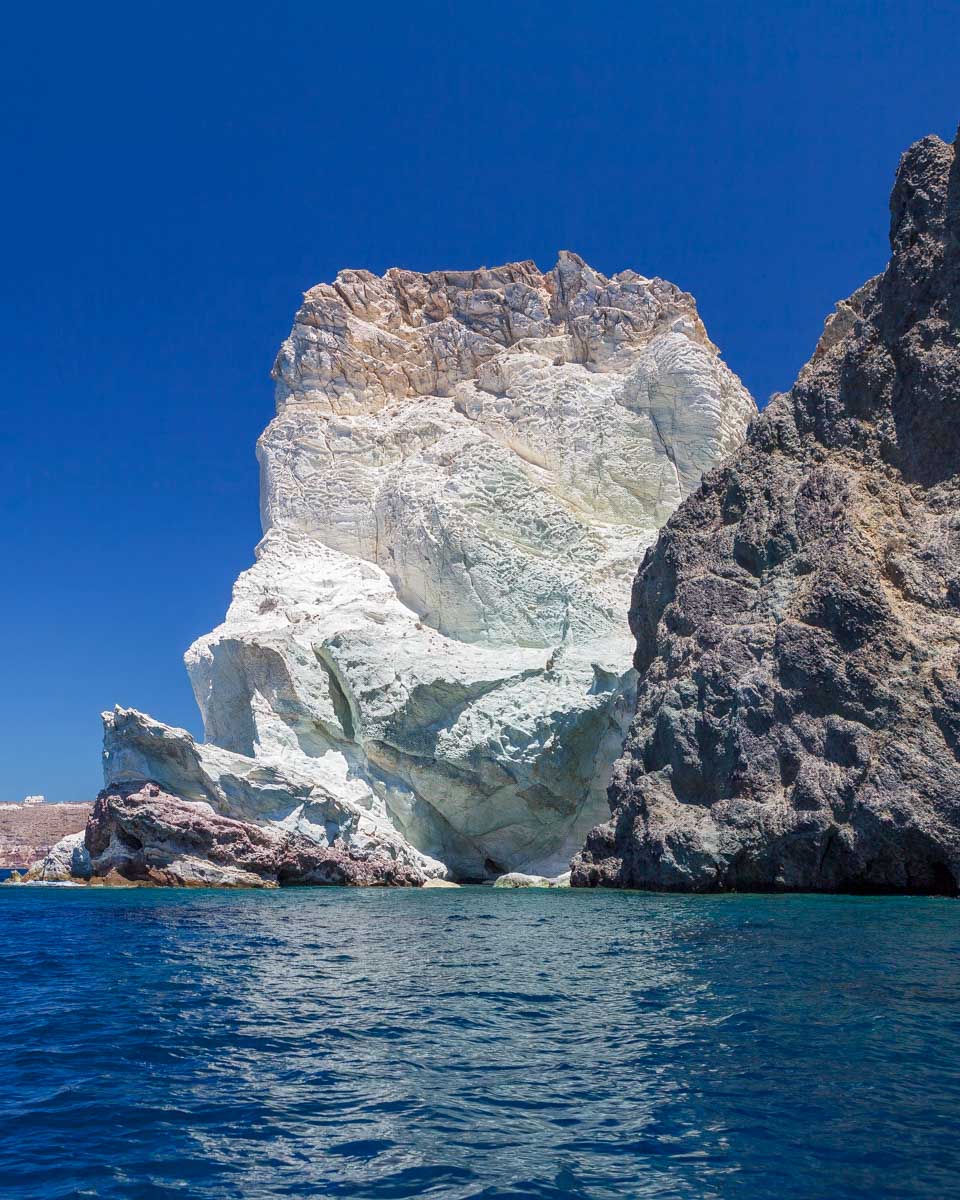
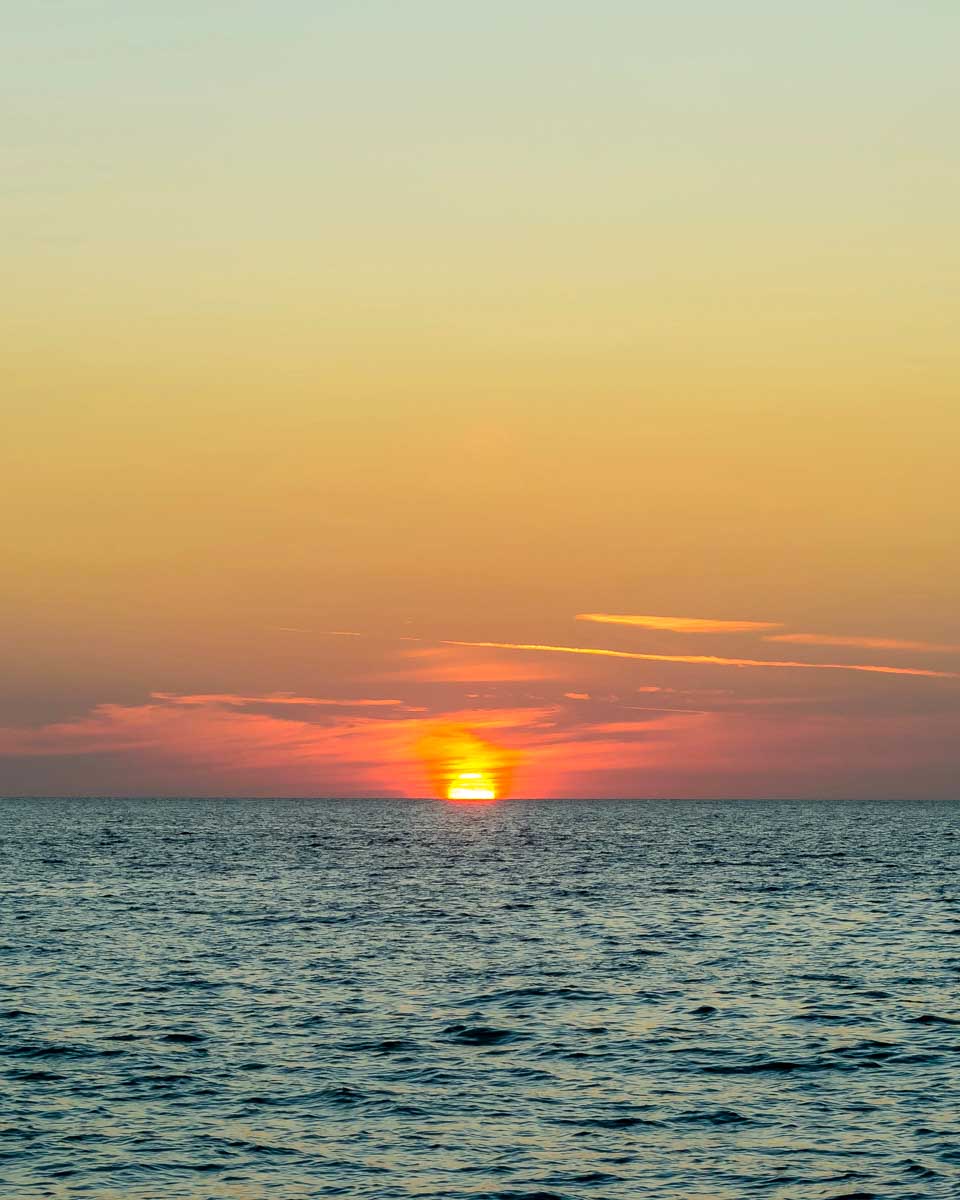
Seeing Santorini from the water lets you experience just how beautiful this island is! From the land, you mostly see the postcard villages perched on top of the cliffs. Those are lovely, of course, but from out on the water, you really understand just how dramatic the caldera is. The sheer volcanic cliffs rise straight out of the sea, and the beaches shift from black to red to white.
There are plenty of boat cruises around Santorini, and they tend to be very relaxed. Typically, they involve several swim stops in clear water, and snorkeling gear is provided on board. You’ll also usually get a stop at the famous hot springs, and often a simple Greek meal on board.
We ended up doing this sunset cruise and loved it! We caught such a beautiful sunset from the boat, and it was definitely one of the highlights of our time on Santorini. However, sunset is a popular time to go, so if you prefer an uncrowded atmosphere, we’d suggest booking a morning tour.
Finally, we just have a couple of practical tips to share. For one, it can get breezy out on the water, so even in summer, we’d suggest bringing a light layer with you. And if your route includes the hot springs, be sure to wear darker swimwear because the mineral-rich water can stain lighter colors. We also found it helpful to bring a towel and dry clothes for the ride back!
5. Watch the sunset at the Temple of Poseidon
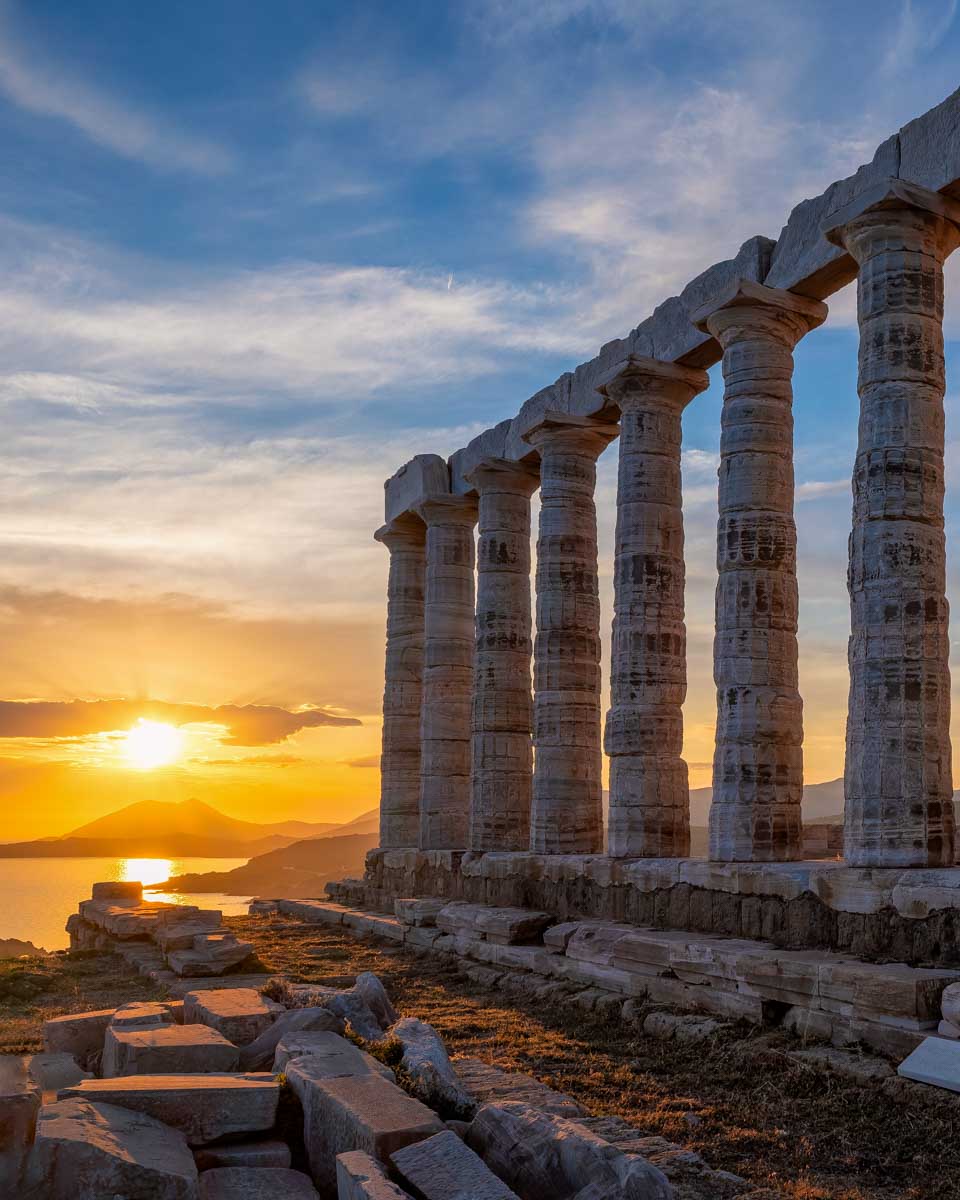
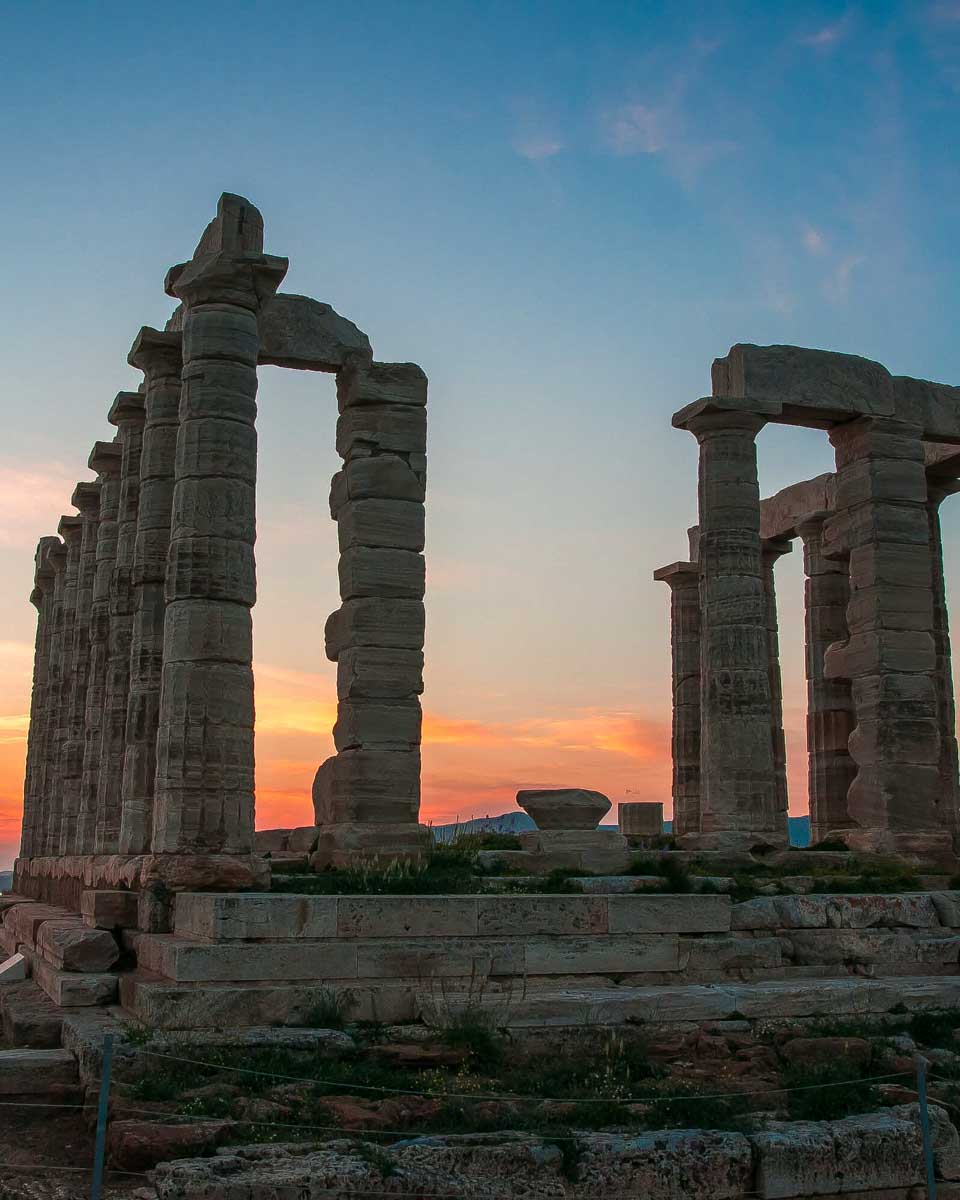
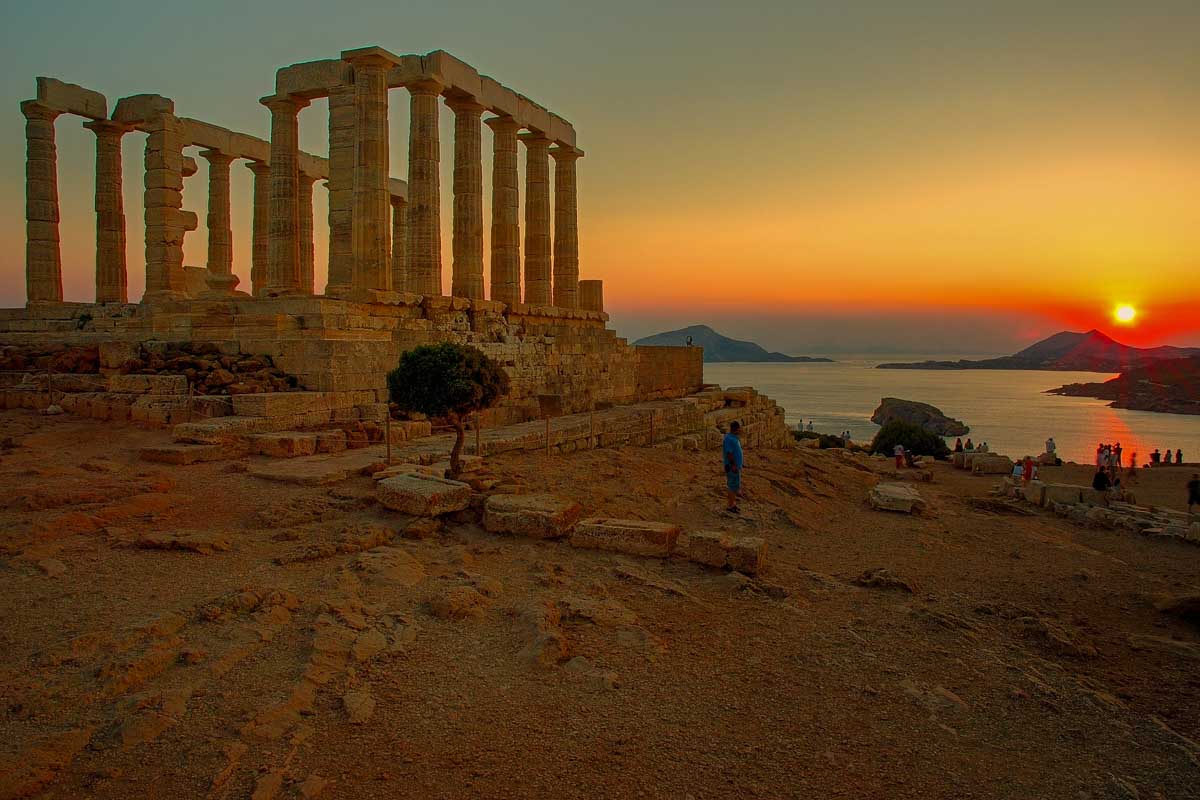
Watching the sunset at the Temple of Poseidon is one of the most memorable experiences you can have near Athens! The temple sits dramatically on the edge of Cape Sounion, high above the Aegean Sea, and it has been watching over the coastline since the 5th century BC. It’s dedicated to Poseidon, the god of the sea, and with views like these, it’s not hard to see why this spot was chosen!
Even if you’ve already visited the Acropolis and other Athens landmarks, Cape Sounion is still absolutely worth it. We loved how the marble columns glowed gold against the sea as the sun sank lower in the sky.
This is also a great option if you don’t want to commit to a full-day trip. The site is about 70 km (43 miles) from Athens, and entry costs around €10 in the high season. You can get there either by bus or rental car, but timing the return after sunset can be a bit of a hassle. We found that joining this sunset tour made the whole experience much easier, because it ensured we got the timing right and didn’t have to navigate unfamiliar public transport in the dark.
Once again, I’d suggest bringing a light layer as it can get windy up on the cliff. Wear sensible shoes, too, as there are a fair few stairs here and the ground across the site can be uneven. Now is not the time for heels or flimsy sandals!
6. Visit the Acropolis and Parthenon
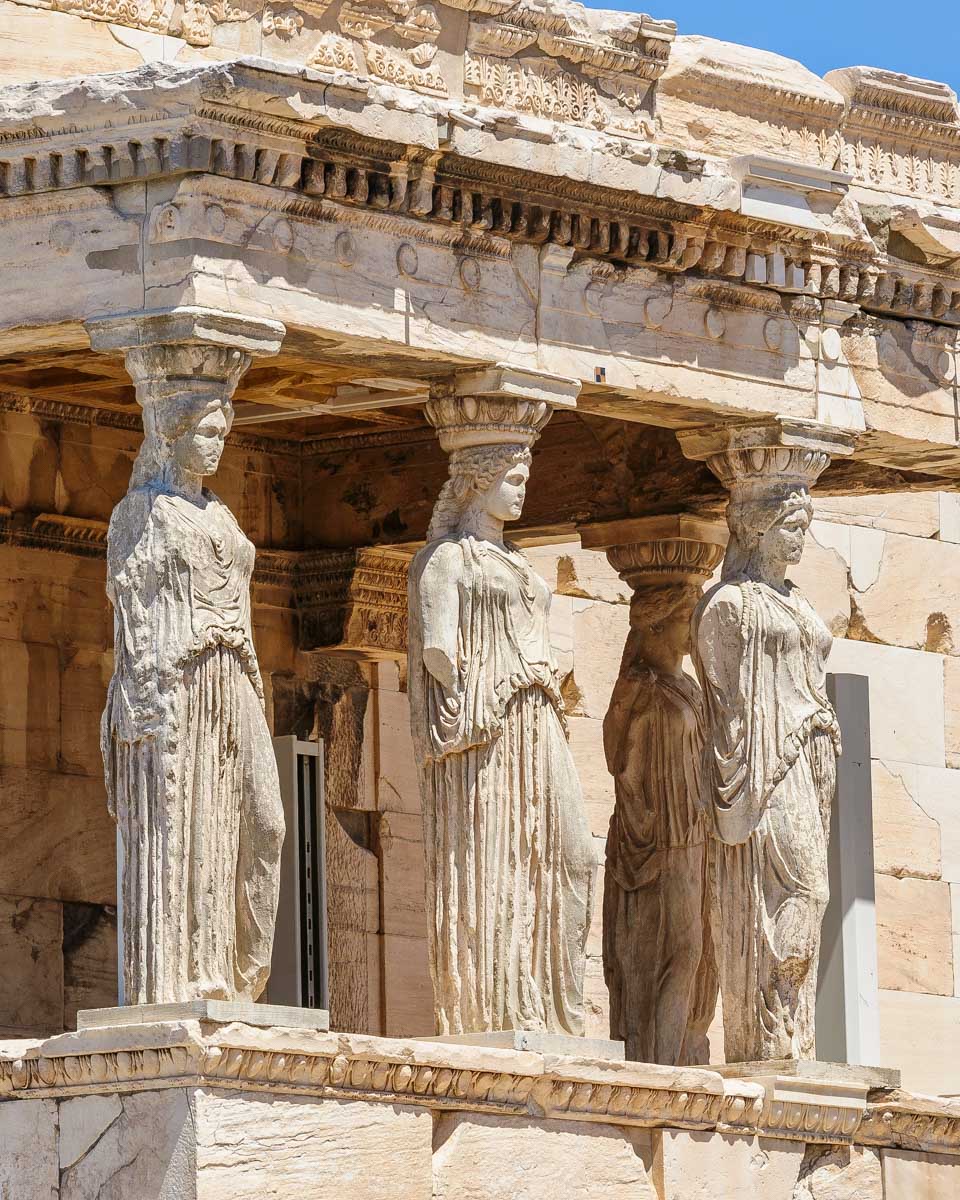
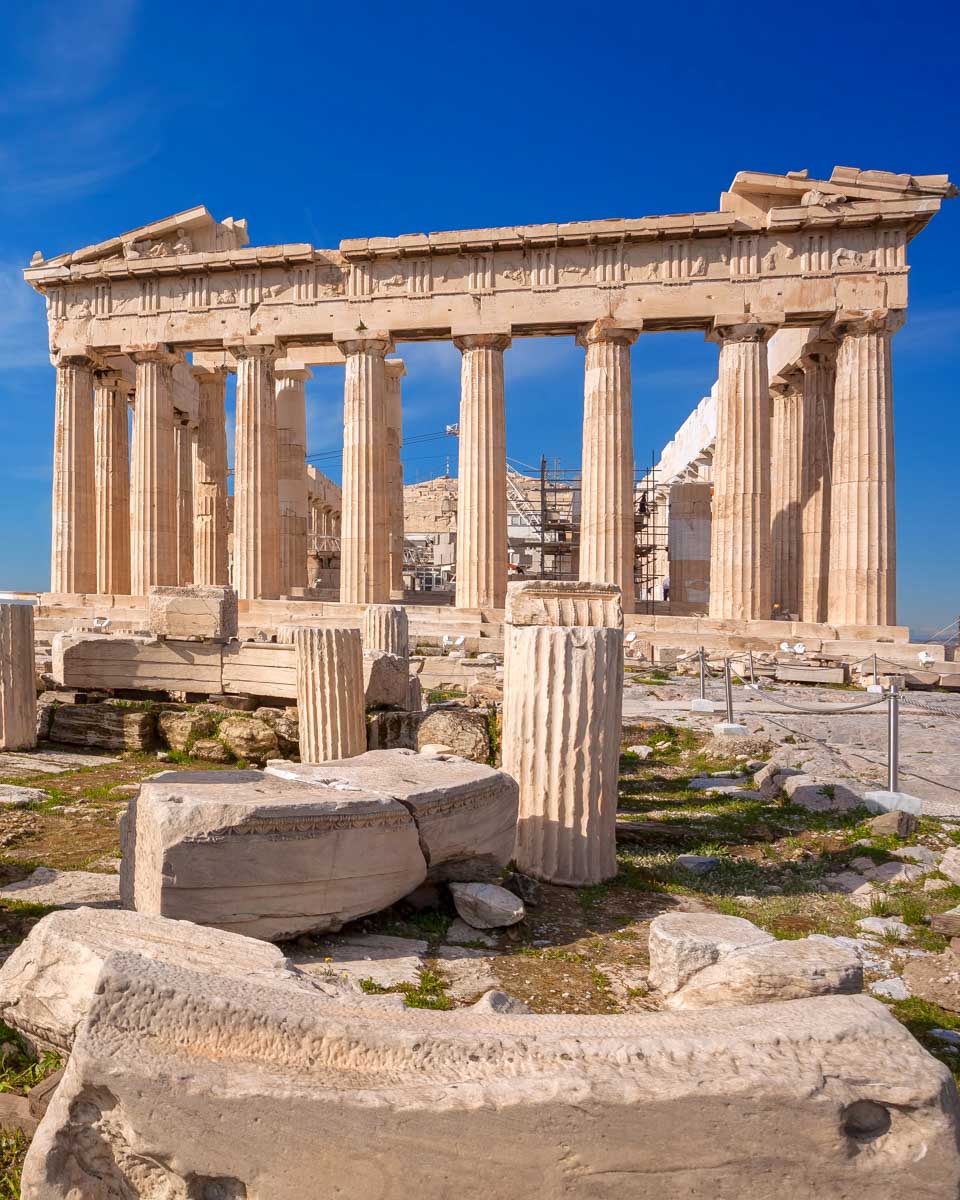
Visiting the Acropolis and the Parthenon is one of those moments that really define a trip to Greece. Sitting high above Athens, the Acropolis is home to some of the most important ancient structures in the world, with the Parthenon as its centerpiece. Seeing it in person puts so much of Greek history into perspective. I found it surprisingly emotional to stand in a place that has symbolized democracy, art, and philosophy for over 2,000 years.
The best way to tackle this visit is to start with the Acropolis itself, then head to the Acropolis Museum straight after. We found that doing it in this order made a big difference, because everything you’ve just seen is still fresh in your mind when you’re looking at the sculptures and artifacts below. You’ll probably want to spend two or three hours here in total if you’re moving at a comfortable pace.
It’s also worth going in with realistic expectations. The Acropolis is very exposed, with little shade, steep steps, and uneven stone paths. In peak season, it can feel extremely hot and crowded, especially late morning through early afternoon. We recommend visiting as early as possible, ideally right when it opens, and bringing plenty of water. If you’re visiting outside of the hottest months, the late afternoon can work well, too.
Because this is one of Greece’s busiest sights, we found that a skip-the-line guided tour was really helpful. It made entry smoother and added so much context, which meant less time reading signs and more time actually enjoying what we were seeing.
7. Learn about Greek Mythology
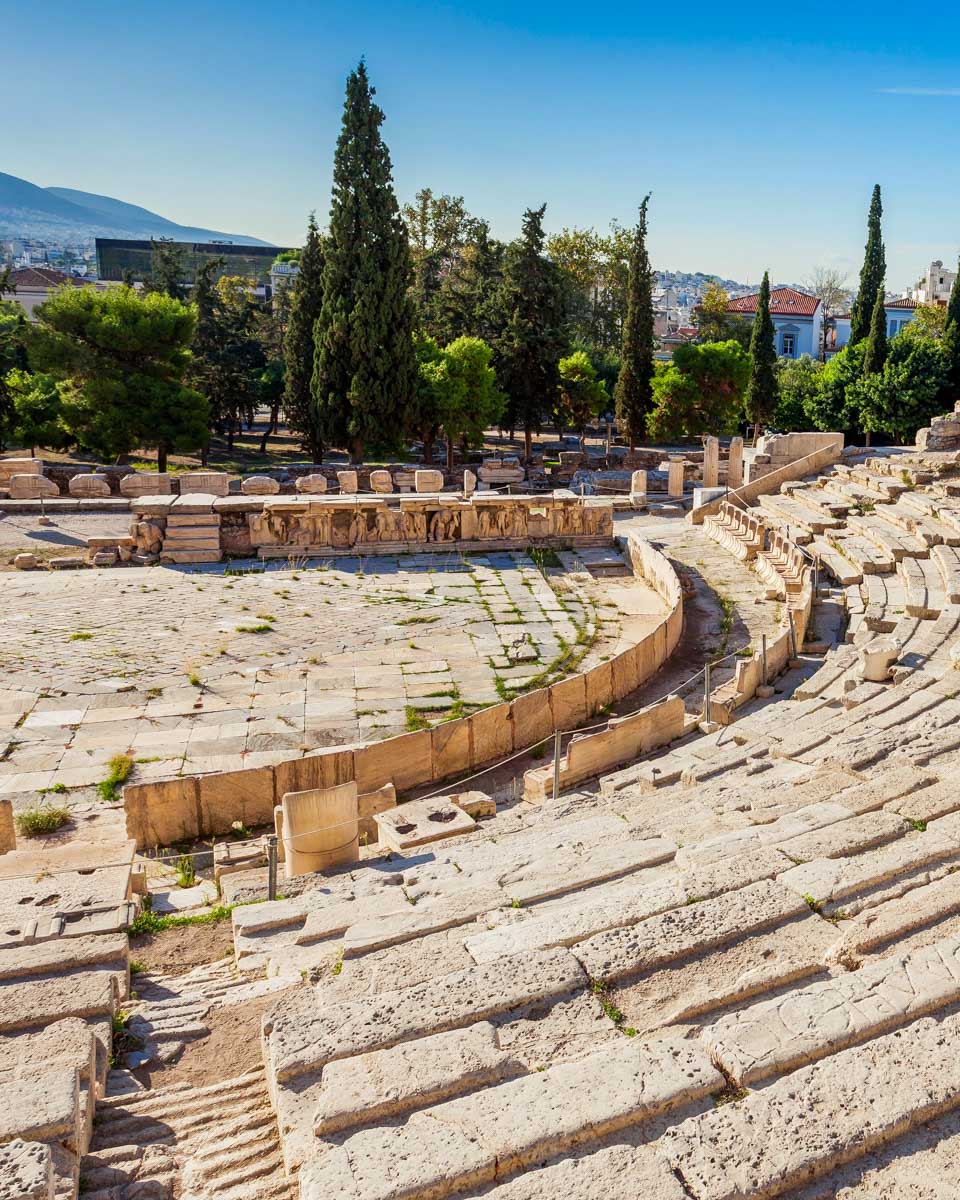
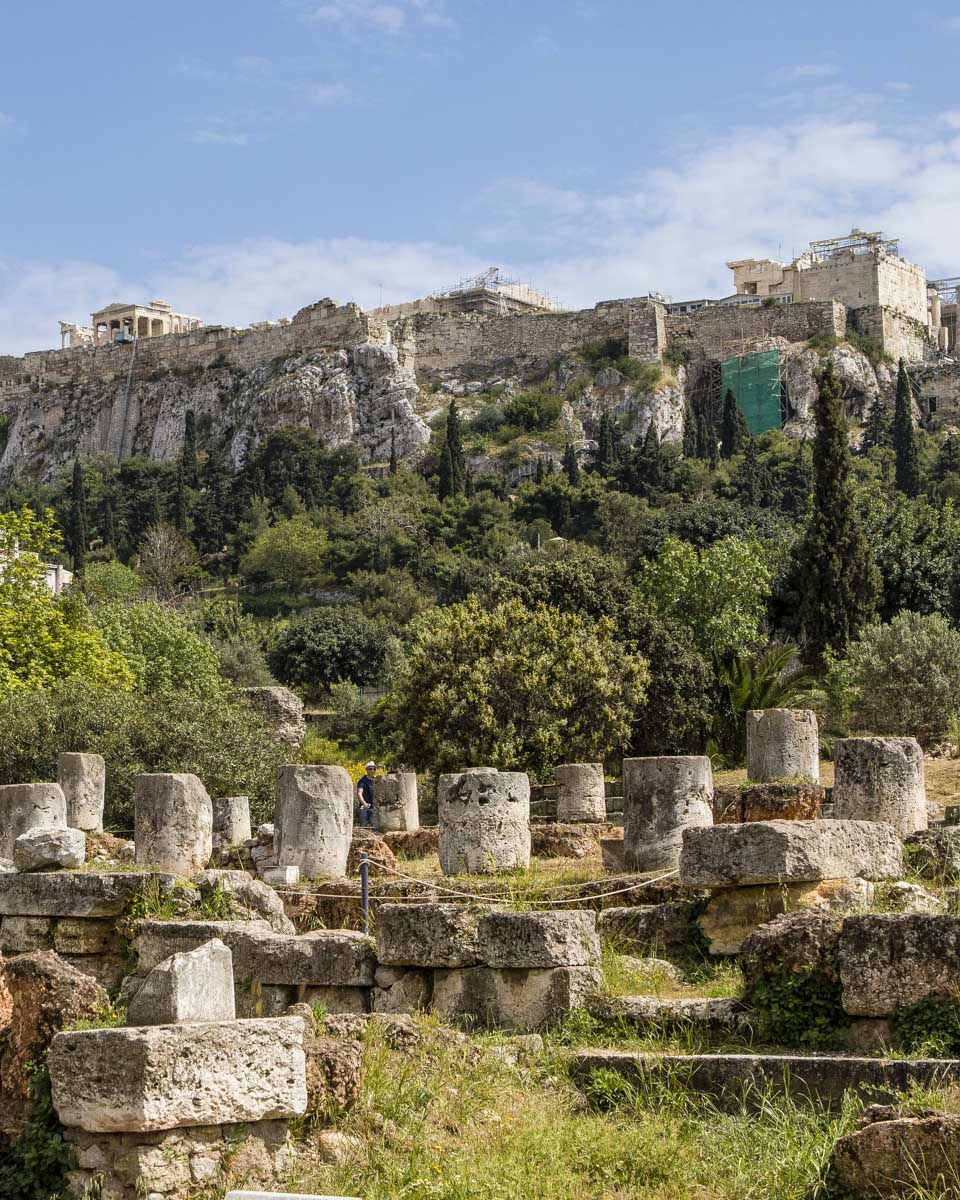
Learning about Greek mythology really does hit differently when you’re in Greece, and especially in Athens! Here, the stories are tied to places you can actually explore for yourself. I mean, it’s one thing to read about gods and heroes in a book, but it’s quite another to stand near the Acropolis and hear how Athena and Poseidon battled for the city!
Athens is one of the best places to dive into mythology because so many key sites are clustered together. Areas around the Acropolis, the Ancient Agora, and nearby temples are packed with stories about gods, goddesses, and legendary figures. We found that once we understood the myths behind these places, everything else we saw across Greece made more sense.
If you can, we really recommend doing a mythology-focused tour early in your trip. It gives you a solid foundation and helps you appreciate what you’re seeing throughout the rest of the country. We loved this tour because our guide was really fun and engaging, so the emphasis was more on storytelling rather than dates and heavy academic detail.
We did this tour during the shoulder seasons, but we still brought plenty of water and sun protection, as shade can be pretty limited in some places. As always, comfy walking shoes make a huge difference, and we always recommend morning tours during the hotter months because the midday heat can be super tiring.
8. Visit Delphi, the old “Center of the World”
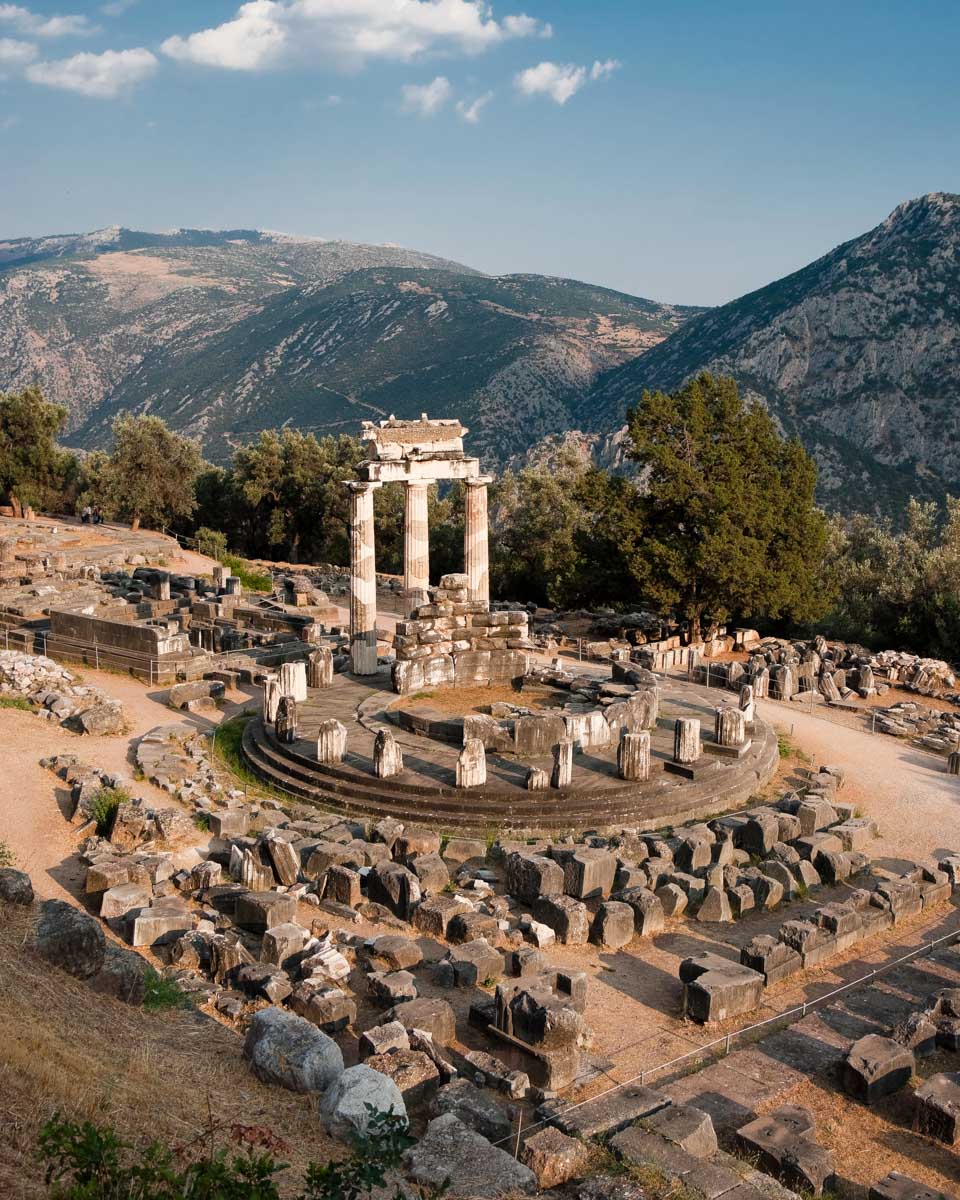
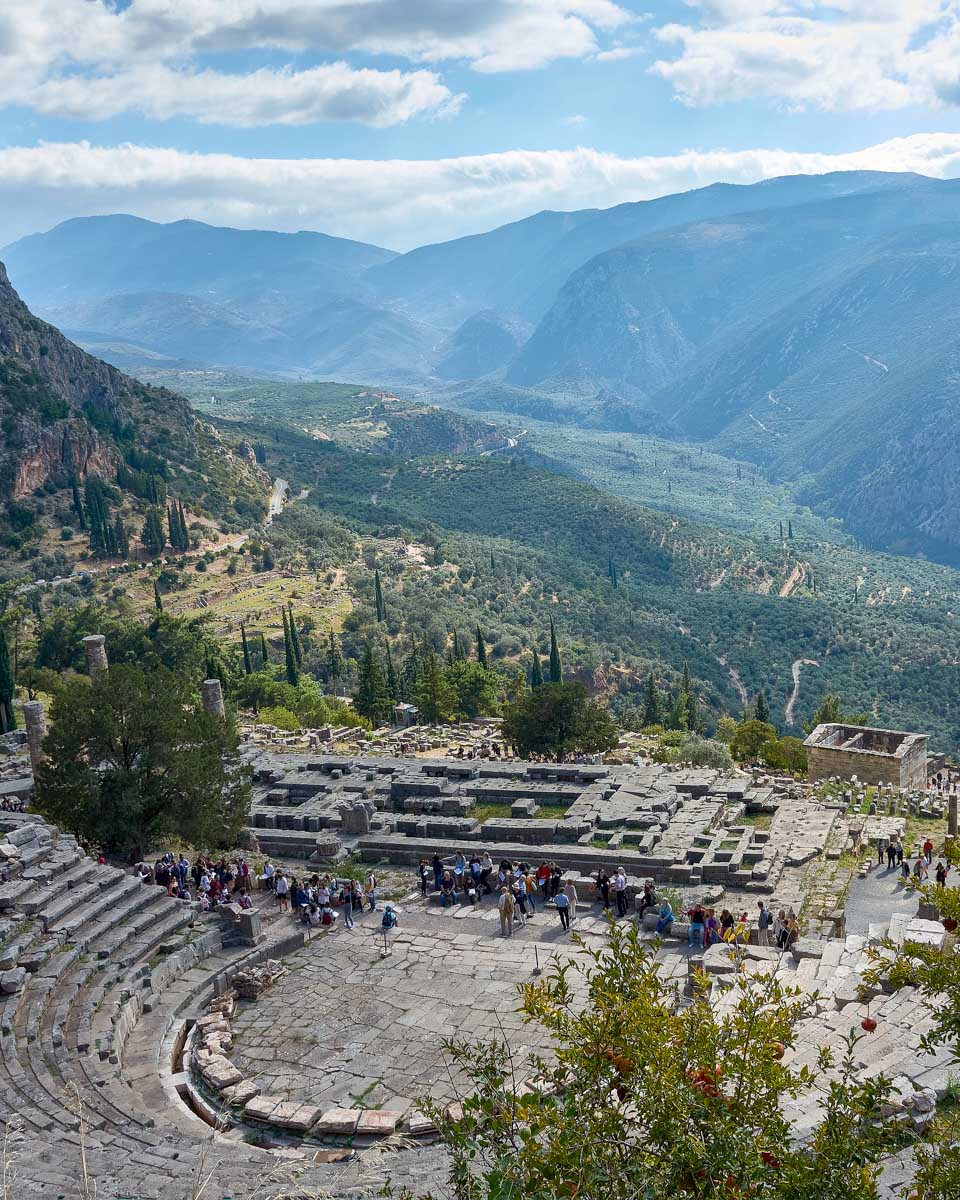
Visiting Delphi is one of those experiences that really stays with you. When we saw it for ourselves, we totally understood why the ancient Greeks believed it was the center of the world.
To give you a little context, Delphi is set high on the slopes of Mount Parnassus, and it was considered the most important sacred site in ancient Greece. People traveled from across the ancient world to consult the Oracle of Delphi, seeking guidance from the gods in this dramatic mountain setting.
And it’s this combination of history and scenery that makes Delphi so special. As you explore the archaeological site, you’ll walk past the Temple of Apollo, the ancient theater, and the stadium, all of which are laid out along a mountain path with sweeping views over the valley below. After visiting the ruins, most routes include time at the Delphi Archaeological Museum, which helps bring everything together with statues, inscriptions, and artifacts found on site.
Delphi is about a two-and-a-half-hour drive from Athens, so most people visit as a day trip. That’s what we did, and we actually booked this tour to make life easier, and it was definitely the right choice!
One thing to keep in mind is that Delphi sits at a higher elevation, so temperatures can feel cooler than in Athens. We recommend packing a light layer, even in warmer months, especially if you’re visiting in the morning or later in the day. But to be honest, the break from the heat can be quite nice!
9. Explore Meteora’s cliff-top monasteries

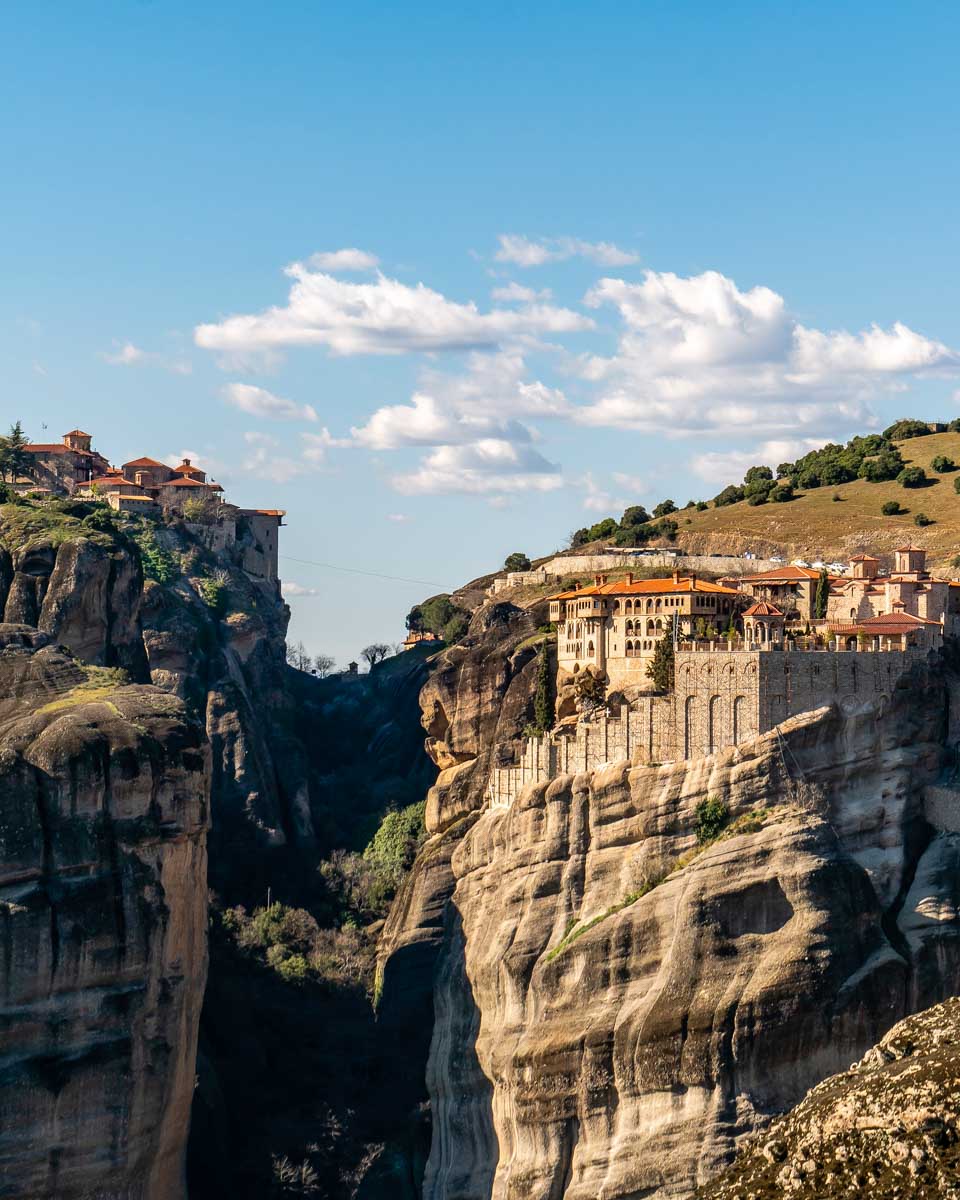
Meteora is one of the most incredible places we’ve ever seen. This is where centuries-old monasteries are perched on top of towering sandstone pillars. It almost doesn’t feel real!
As you can imagine, this place has a deep and fascinating history, but we’ll give you a brief overview now for context’s sake. Meteora became a place of refuge somewhere around the 9th or 10th century, when monks began withdrawing from society to devote themselves to prayer. Then, in the 14th century, its remote location also offered natural protection against attacks by the Ottoman Empire.
You don’t need to be a serious hiker to visit Meteora, but it’s worth knowing that there are quite a few stairs and some walking involved. The views from the top definitely make it worth the effort, though!
You’ll also want to bring modest layers for monastery entry, as these are sacred spaces. Covering your shoulders and knees is typically expected. Comfortable shoes with good grip are also important, because the path and steps here are worn and uneven in places.
A lot of people visit Meteora as a day trip from Athens, but it does make for a very long day. If you have the time, we’d really recommend staying overnight in the nearby towns of Kalambaka or Kastraki, so you don’t have to rush and can enjoy an epic sunrise or sunset from here! We’re so glad that we booked the overnight version of this tour from Athens.
10. Watch the Changing of the Guard at Syntagma Square
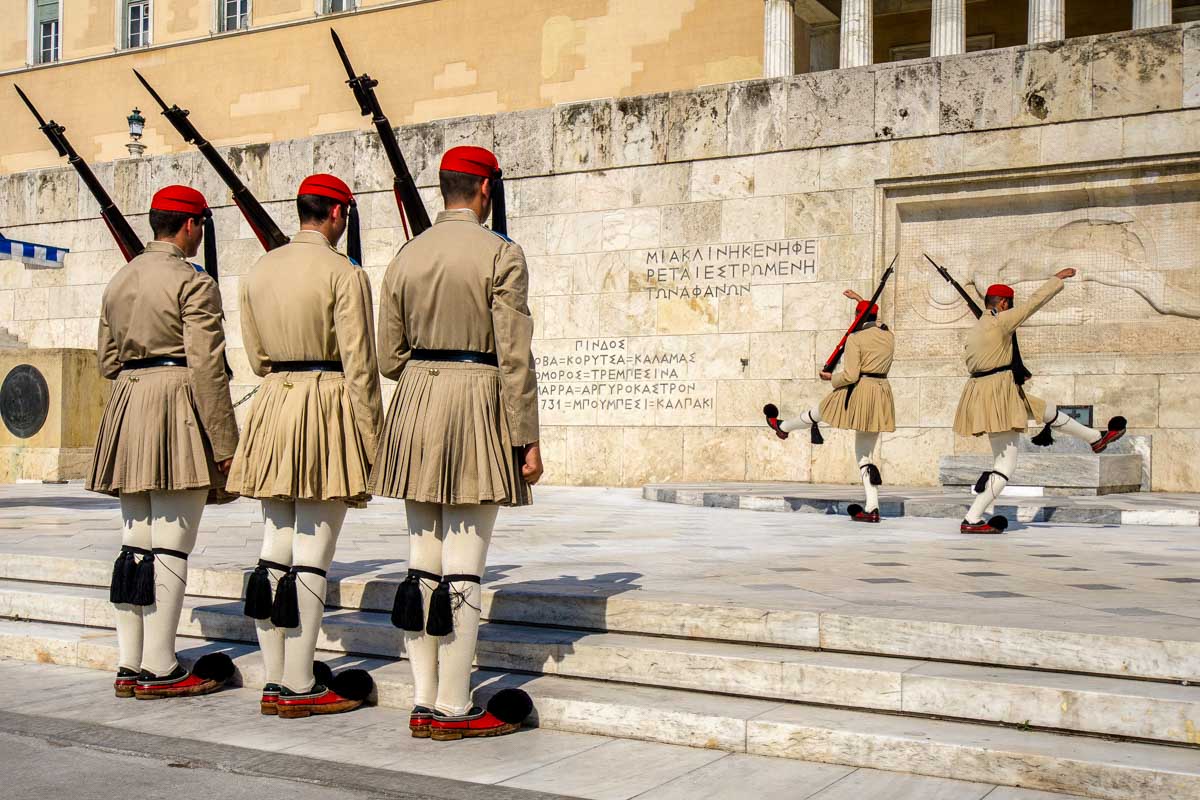
Watching the Changing of the Guard at Syntagma Square is a classic Athens experience that we think everyone should see! The ceremony takes place outside the Hellenic Parliament and features the Evzones, who are elite guards known for their traditional uniforms and slow-motion movements. This theatrical ceremony is totally unique to Greece!
The movements are carefully choreographed, and the uniforms are full of symbolism, so it’s a really interesting cultural moment to absorb. It also doesn’t take very long, so it’s perfect if you’re short on time.
With that said, we recommend arriving a little ahead of time so that you can get a decent viewing spot. Then pair it with a walk through the nearby National Garden afterwards. It’s a lovely way to slow things down, especially if you’ve been sightseeing all morning. And if you’re hoping for photos without a huge crowd, early morning ceremonies tend to be quieter.
Just keep in mind that this is an official ceremonial event. Be respectful and don’t shout or do anything to interrupt the ceremony. Certainly don’t cross barriers for photos!
The nice thing about the Changing of the Guard is that there’s zero booking involved. You can simply show up, watch, and move on. It’s one of the easiest Athens experiences to slot into your day!
11. Learn to cook like a local

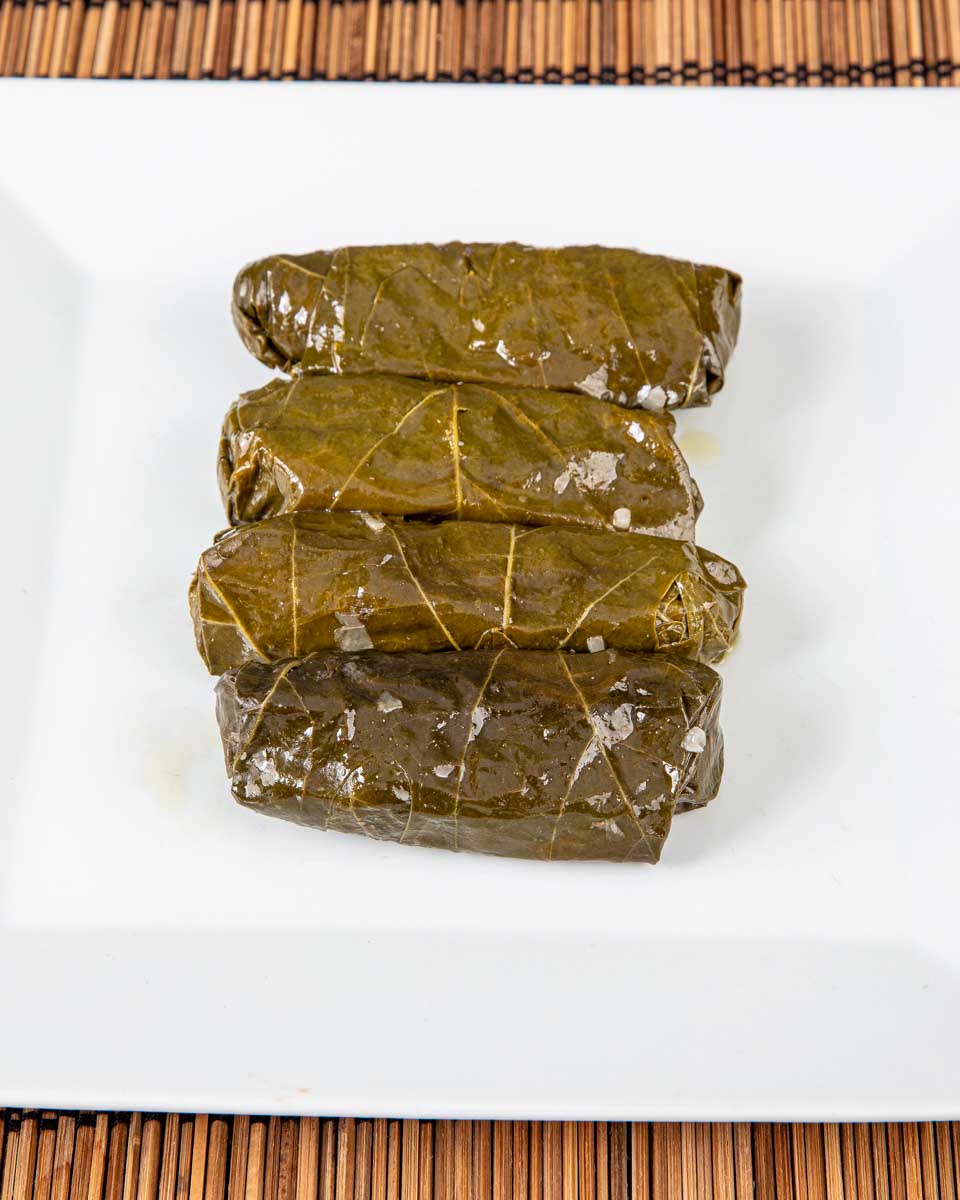
Earlier in this blog, we talked about learning to eat like a local, but if you want to take that even further, then you can also learn to cook like one, too! This is one of our favorite ways to experience Greek culture, because it’s about so much more than just the food. A good cooking class gives you insight into everyday Greek life, family traditions, and regional specialties. We absolutely love learning why dishes are prepared the way they are and how recipes have been passed down over generations.
Most Greek cooking classes focus on classic, comforting dishes you’ll see on menus all over the country. This means things like tzatziki, stuffed gemista, spanakopita, dolmades, fresh salads, and slow-cooked mains, often finished off with something sweet. We’ve found that smaller group classes are especially worthwhile, since they stay hands-on and interactive, and you actually get time to ask questions and be more involved.
If this is something you want to do, we definitely suggest booking ahead. The best instructors and most popular classes tend to fill up quickly, especially in peak season! Personally, we loved this class in Athens because we got to eat our meal on a rooftop with an amazing view of the Acropolis! Meanwhile, this one in Santorini was so much fun, and the wine flowed throughout, and we still make recipes from this Crete cooking class today!
12. Sail the world-famous Kleftiko coast on Milos
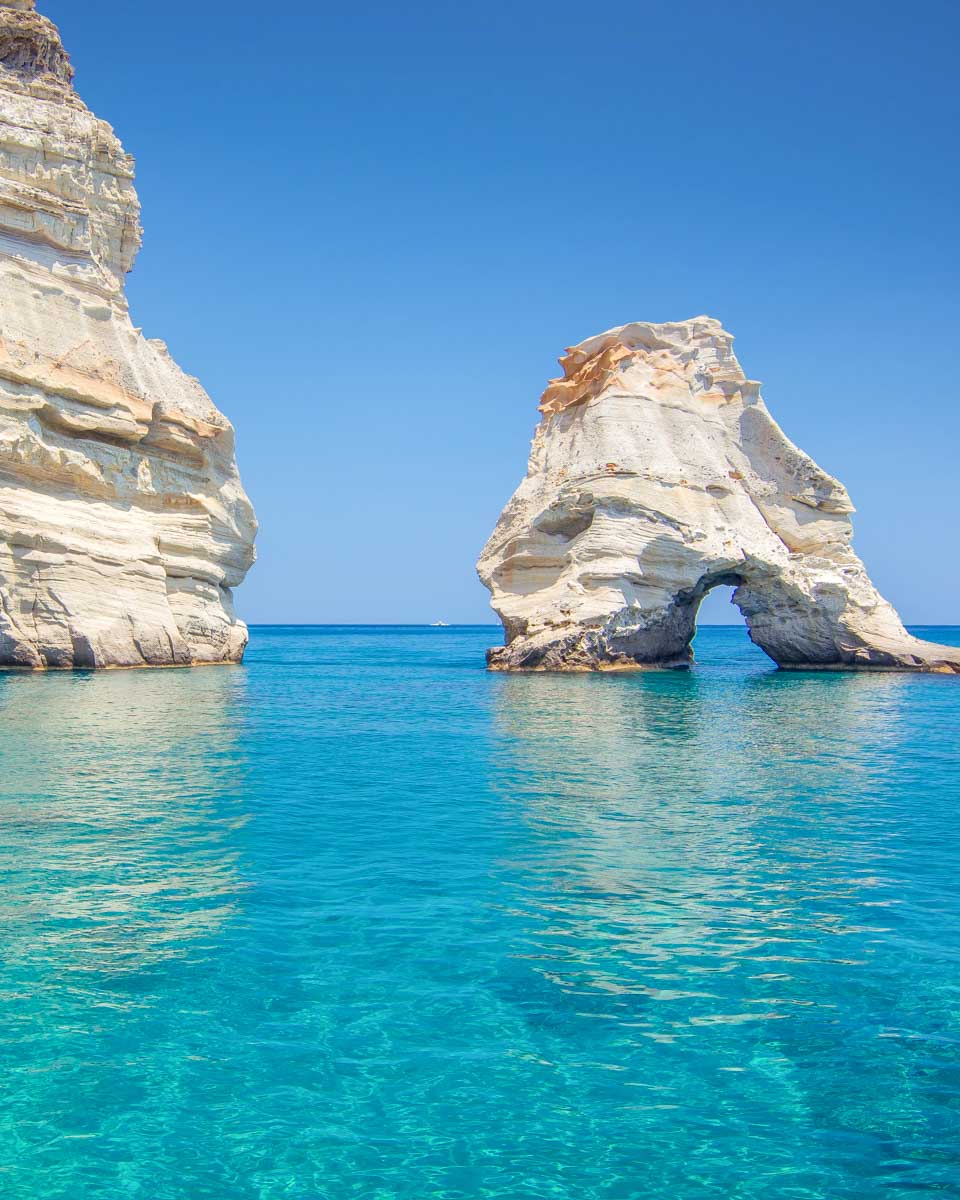
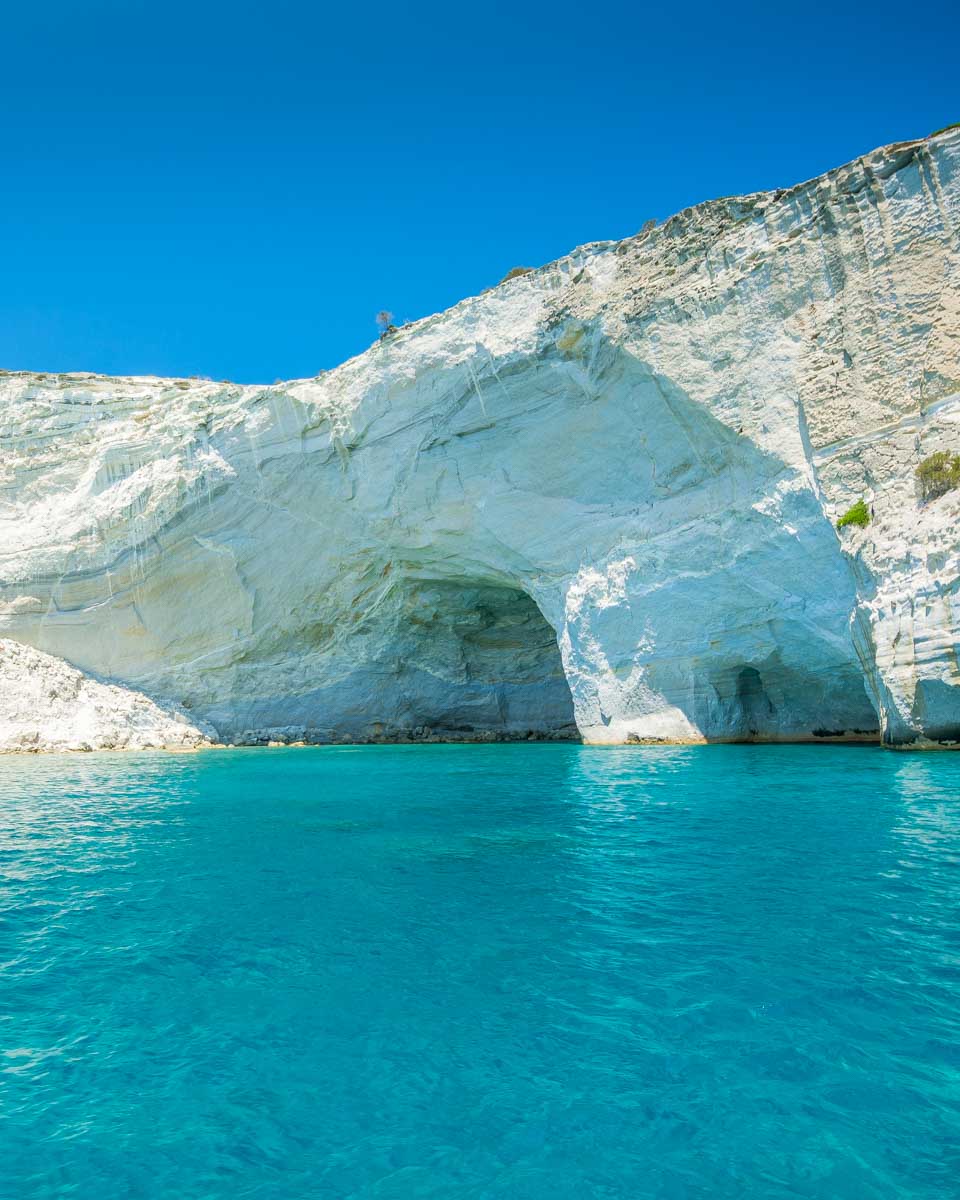
Sailing along the Kleftiko coast is one of the absolute highlights of visiting Milos! It quickly became clear to us why this island is known as a boat island. Many of Milos’s most beautiful spots aren’t accessible by road, and the coastline is packed with sea caves, arches, and bright white rock formations. Kleftiko, in particular, feels wild and untouched in a way that’s hard to find elsewhere in Greece.
What we love about sailing the Kleftiko coast is how relaxing it is! We booked a small group sailing tour and had the best time cruising along the shoreline and stopping to snorkel in impossibly clear water. We also got to see caves that were only reachable by boat, and the day as a whole was just so relaxed.
With that said, quite a few people on our boat fell foul of the sun, so be sure to pack plenty of sunscreen and reapply it every time you get out of the water. A t-shirt or cover-up is a good idea, and a sun hat will help to protect your face! We packed a dry layer for the way back, and we’re glad that we did, because the sea breeze can feel quite cool, especially after you’ve been swimming!
Related Read: Need help planning your island adventure? See our blog on the best Greek Islands to add to your island hopping itinerary for our personal recommendations!
13. Walk through the marble lanes of Pyrgos, Santorini
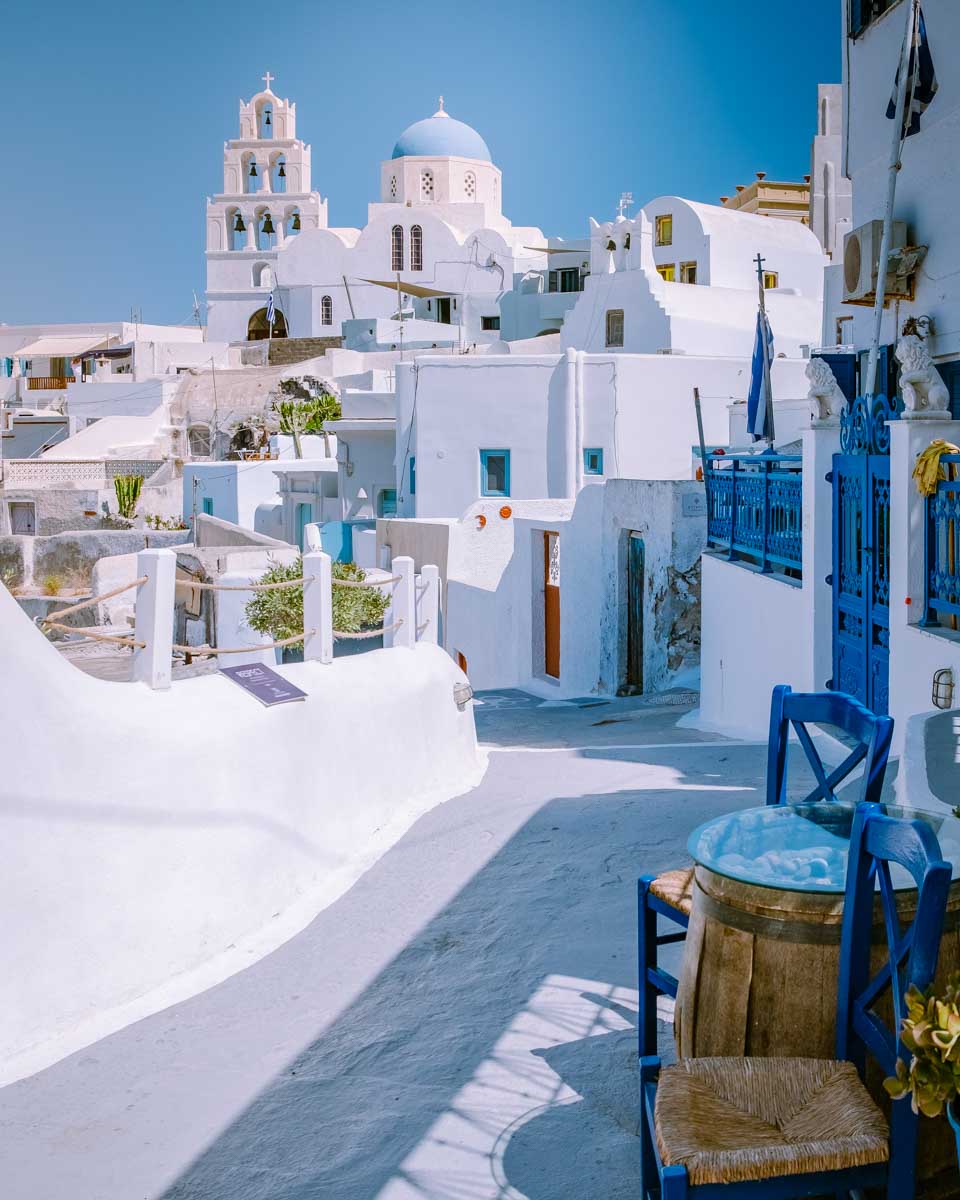
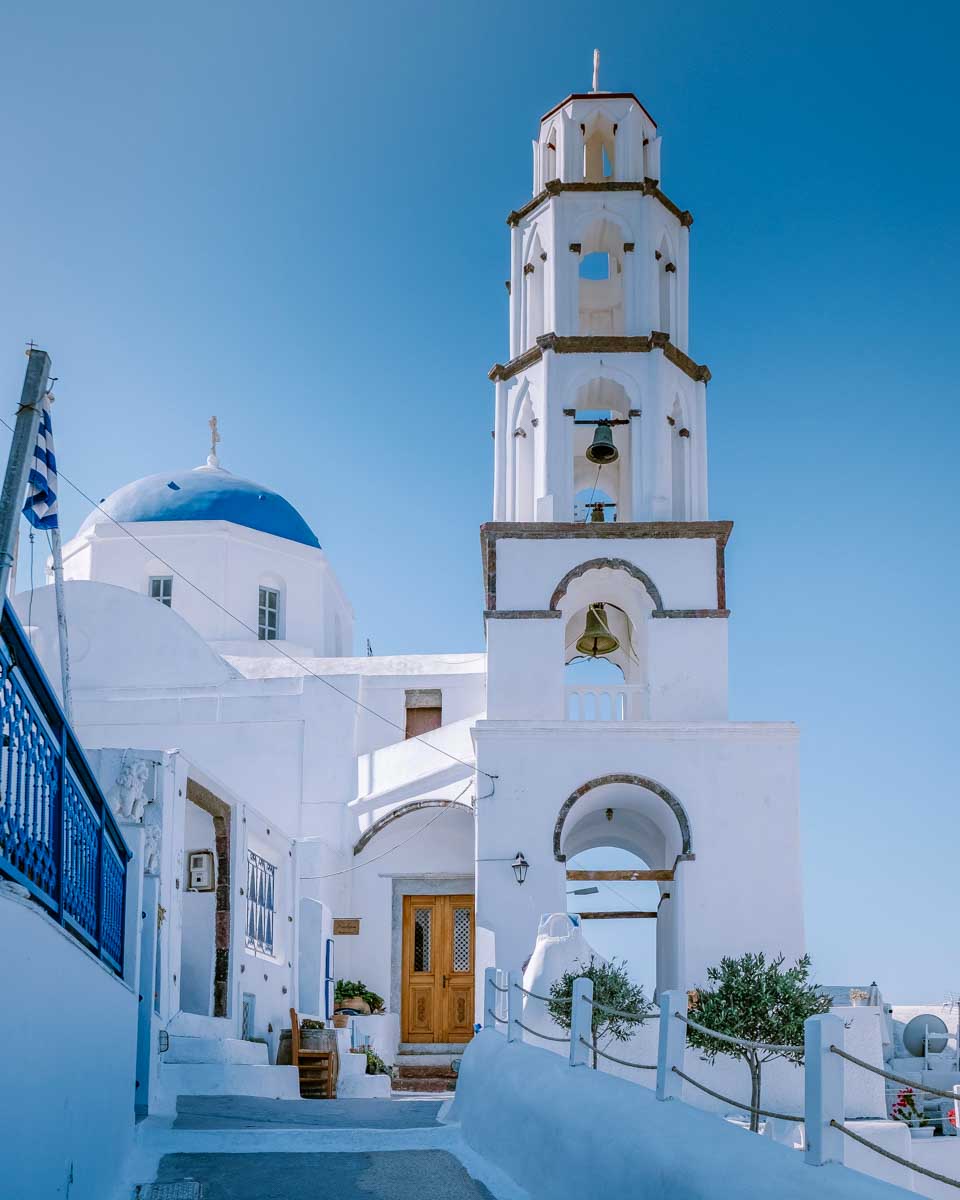
Pyrgos is one of our favorite places in Santorini if you’re looking for something calmer and more local-feeling than Oia. It sits on a hill in the center of the island, offering beautiful views and traditional Cycladic charm without the same crowds or chaos.
Visiting Pyrgos is all about wandering. You’ll stroll through narrow marble lanes and can pop into small shops and quiet churches, as you make your way uphill toward the castle ruins at the top. The higher you go, the better the views get, and the climb never feels rushed. You don’t need a plan to visit Pygros, just 3-4 hours to explore and enjoy the atmosphere.
Speaking of which, timing definitely makes a difference here. Late afternoon to early evening is ideal if you want a relaxed vibe and the chance to snap some epic golden hour photos! The mornings are even quieter, so that’s an ideal time to come if you’re keen to experience Pyrgos at its most peaceful. Either way, it’s a lovely break from the busier parts of the island.
The walk itself is short and easy, but there are uneven steps and some uphill sections, so comfortable shoes do really help. Pyrgos also pairs beautifully with a nearby winery visit or a low-key dinner afterward. And because it’s centrally located, it’s easy to slot into a Santorini day without needing to rearrange your whole itinerary.
14. Cruise to Delos and Rhenia from Mykonos
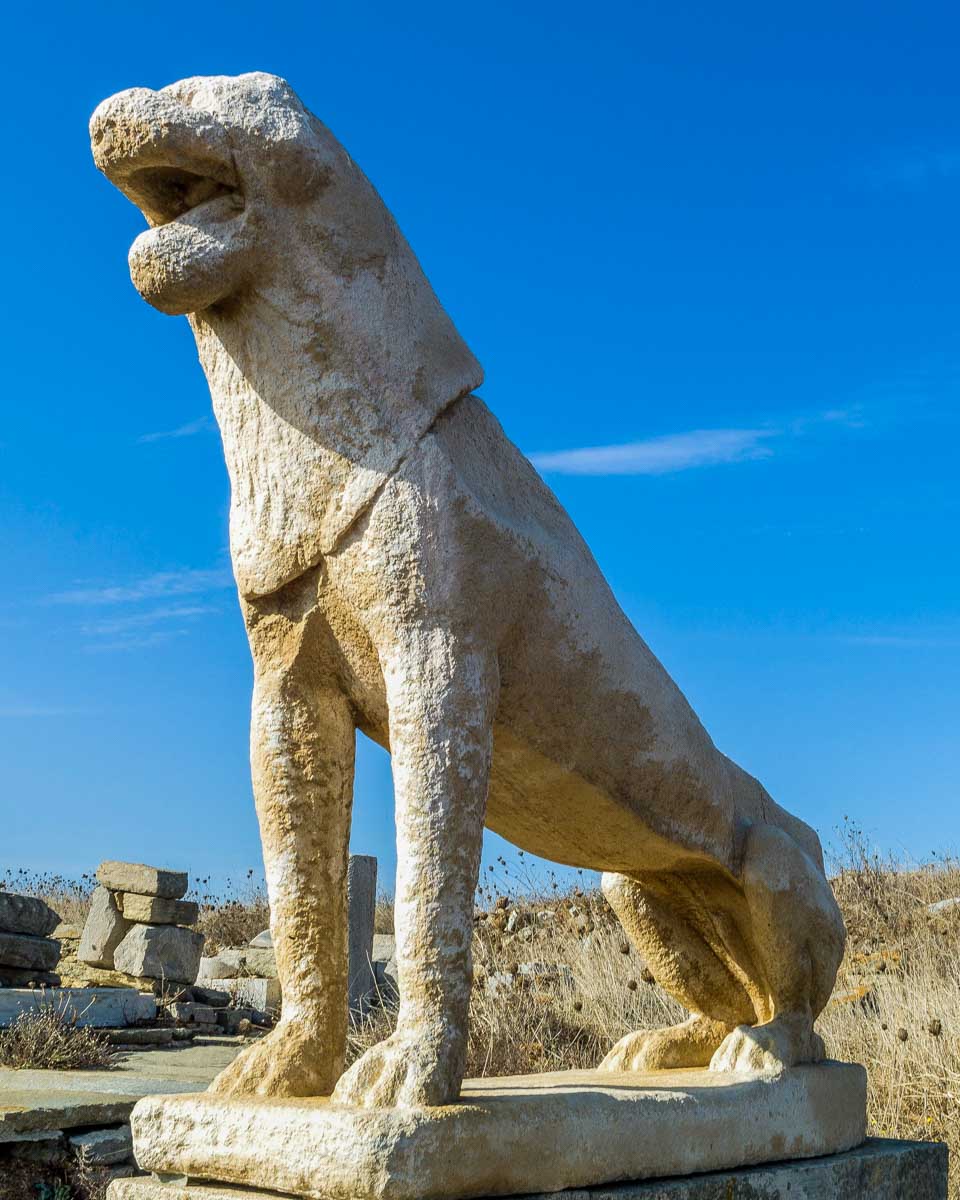
Now, Mykonos can be a pretty high-energy destination, but we think that a cruise to Delos and Rhenia is a great way to balance that out! Delos is one of the most important archaeological sites in Greece, and walking around it feels like stepping straight into the ancient world. According to myth, it’s the birthplace of Apollo and Artemis, and the island is packed with temples, statues, mosaics, and ruins that give you a real sense of how significant it once was.
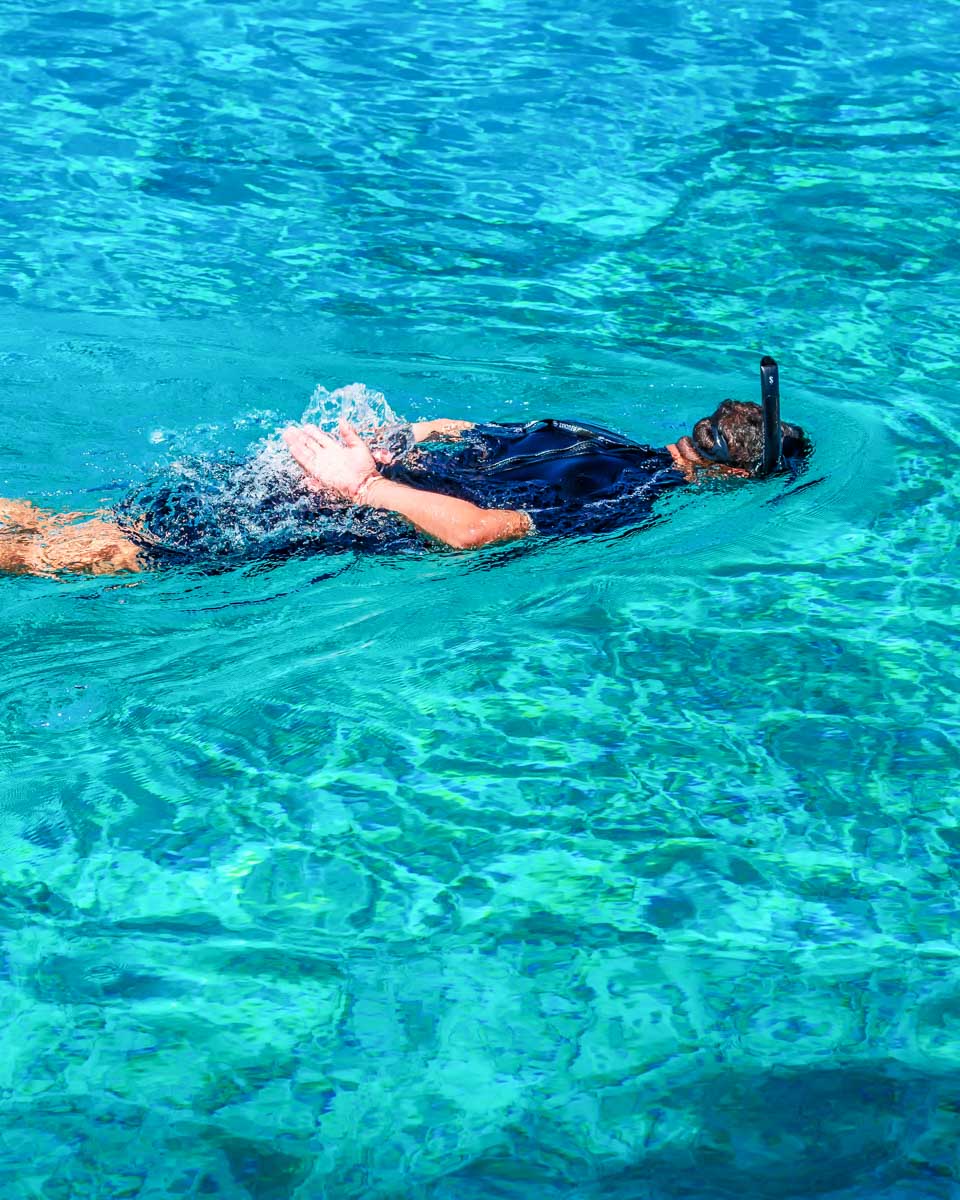
Then, Rhenia is a small, uninhabited island right nearby. It’s pristine, with bright blue water that almost doesn’t feel real! A cruise will typically take you to Rhenia after Delos, so you get a history-heavy morning and then a relaxed, beachy afternoon – perfect!
We chose this Delos and Rhenia cruise because it had such great ratings, and it proved to be a smart decision. We liked exploring Delos with a guide as we learned a lot, and there weren’t many signs on the island, so it was useful to go with someone who knows the area well.
There’s not much shade in Delos, so remember to protect yourself from the sun. The paths are uneven, so sturdy shoes are a must, and don’t forget your bathers so that you can enjoy Rhenia to the fullest! All in all, we think visiting Delos and Rhenia is a fantastic option if you want to intersperse partying in Mykonos with some history and culture.
15. Go wine tasting
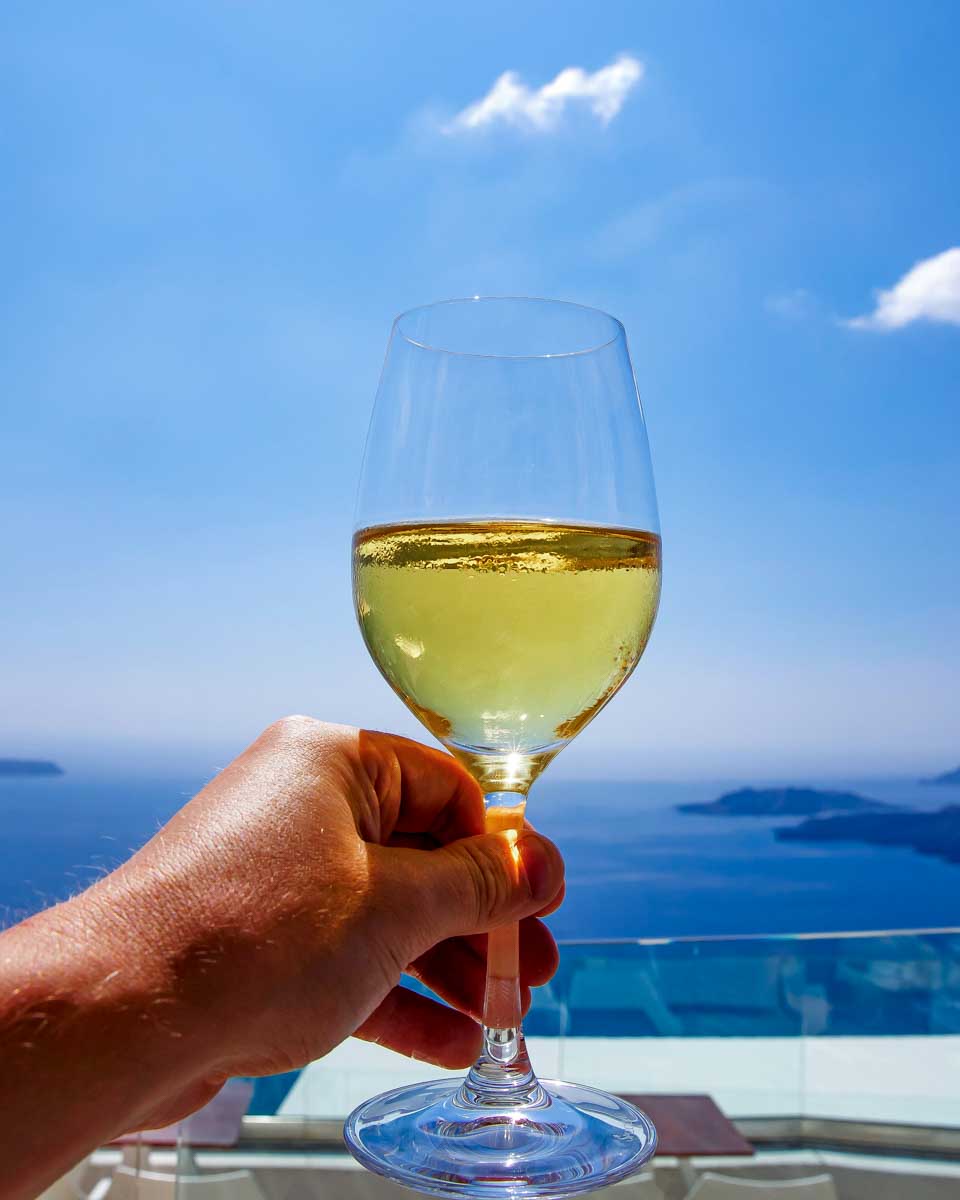

Going wine tasting in Greece is such a fun way to experience the country beyond the usual sightseeing. It’s something we always try to make time for when we visit – it’s a tough job, but somebody has to do it!
Greek wine has a really distinct identity, largely thanks to its indigenous grape varieties and the way each region’s landscape shapes the final flavor. There’s so much variety to discover, from crisp whites grown in volcanic soil to richer reds from inland valleys. I think we find a new favorite wine each time we go tasting!
One of the things that makes Greek wine so interesting is how closely it’s tied to place. When we did a Santorini wine tour, we learned all about its Assyrtiko, which is grown in basket-shaped vines that protect the grapes from wind and sun. We’ve also done wine tours in Crete and Mykonos, and each one offered a slightly different perspective on Greek wine culture.
Most tastings include light snacks, like bread, cheese, or olives, but I would definitely advise you to eat a decent meal beforehand, especially if you’re visiting more than one winery. Otherwise, it will all go straight to your head! It’s also worth bringing a light layer, as some wineries can feel windy or cool in the evenings, since they’re often in higher altitude locations.
16. Explore Naxos beyond the beaches
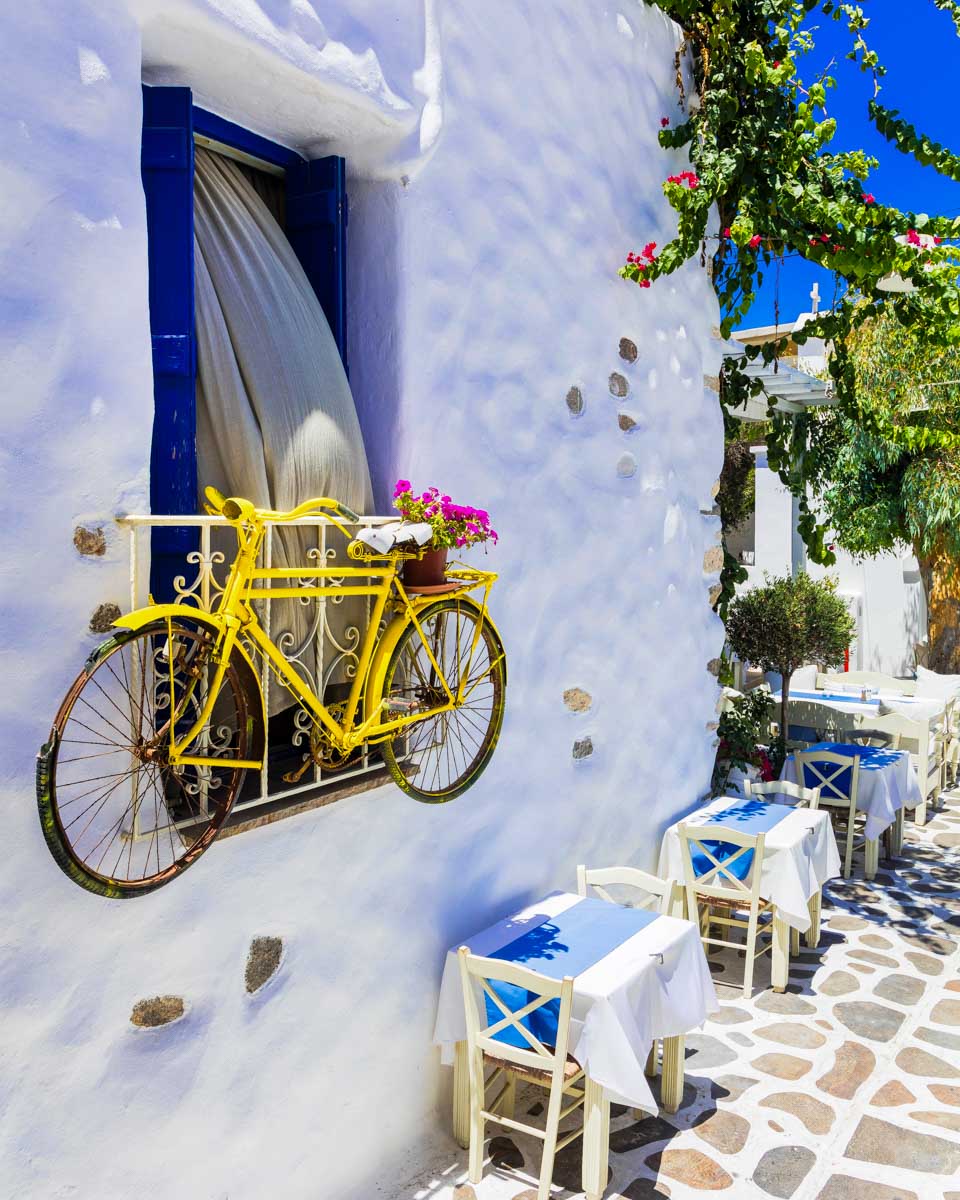
Most people think of long beach days when they think of Naxos, but we’ve found that the island really shines once you head inland! Away from the coast, you’ll find traditional villages and mountain views, as well as some really interesting historic sites. It feels slower and more authentic, and it gives you a much deeper sense of the island beyond its pretty shoreline.
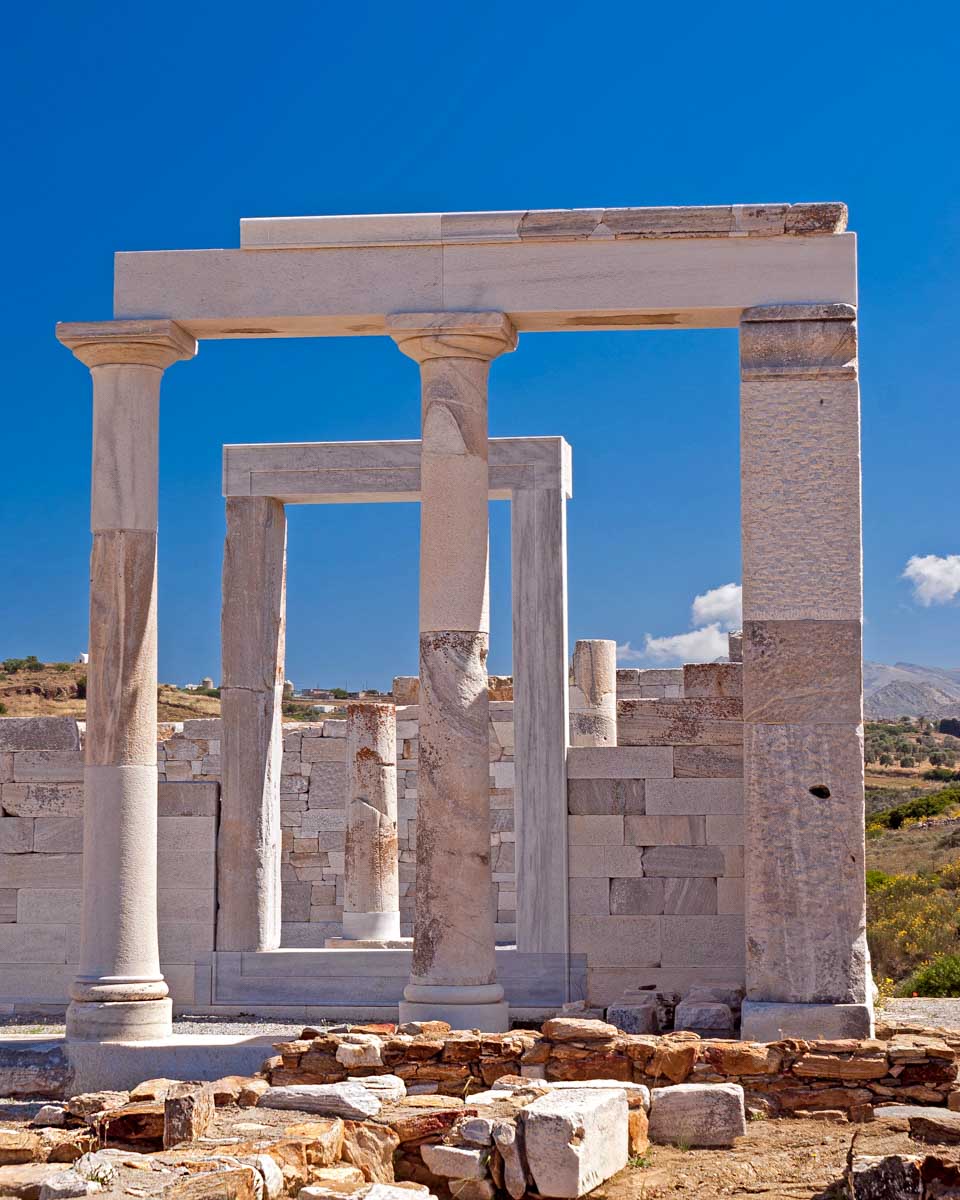
One of the standout inland stops is the Temple of Demeter, an ancient sanctuary surrounded by farmland that feels wonderfully peaceful compared to busier archaeological sites elsewhere in Greece. Naxos Town itself is also worth spending time in, especially the UNESCO-listed Old Town. Here, narrow lanes wind up toward the castle, and you can glimpse everyday life unfolding between whitewashed houses.
We think that Naxos is a fantastic alternative to Santorini or Mykonos if you’re drawn to the Cyclades but want something less crowded and more relaxed. Spring and autumn are especially good times to explore inland, as walking and sightseeing are far more comfortable outside the peak summer heat.
Getting around the interior of the island can be tricky if you’re not confident driving along narrow, winding roads, so joining a day tour is a good alternative if you’d rather not get behind the wheel. For us, this also simplified logistics and meant that we didn’t start bickering about where to park – always a win if you ask me!
17. Take a boat trip to Navagio Beach and the Blue Caves in Zakynthos
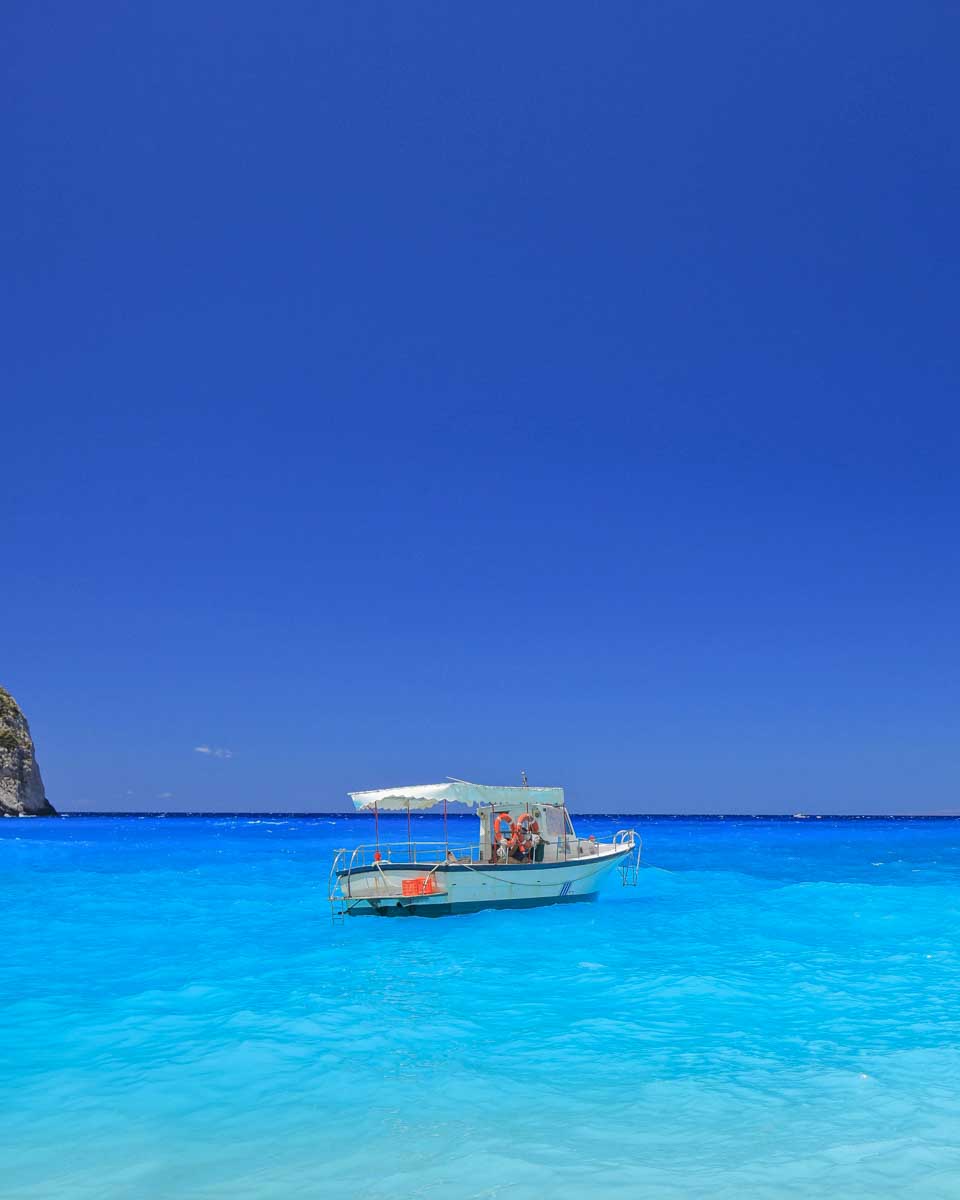
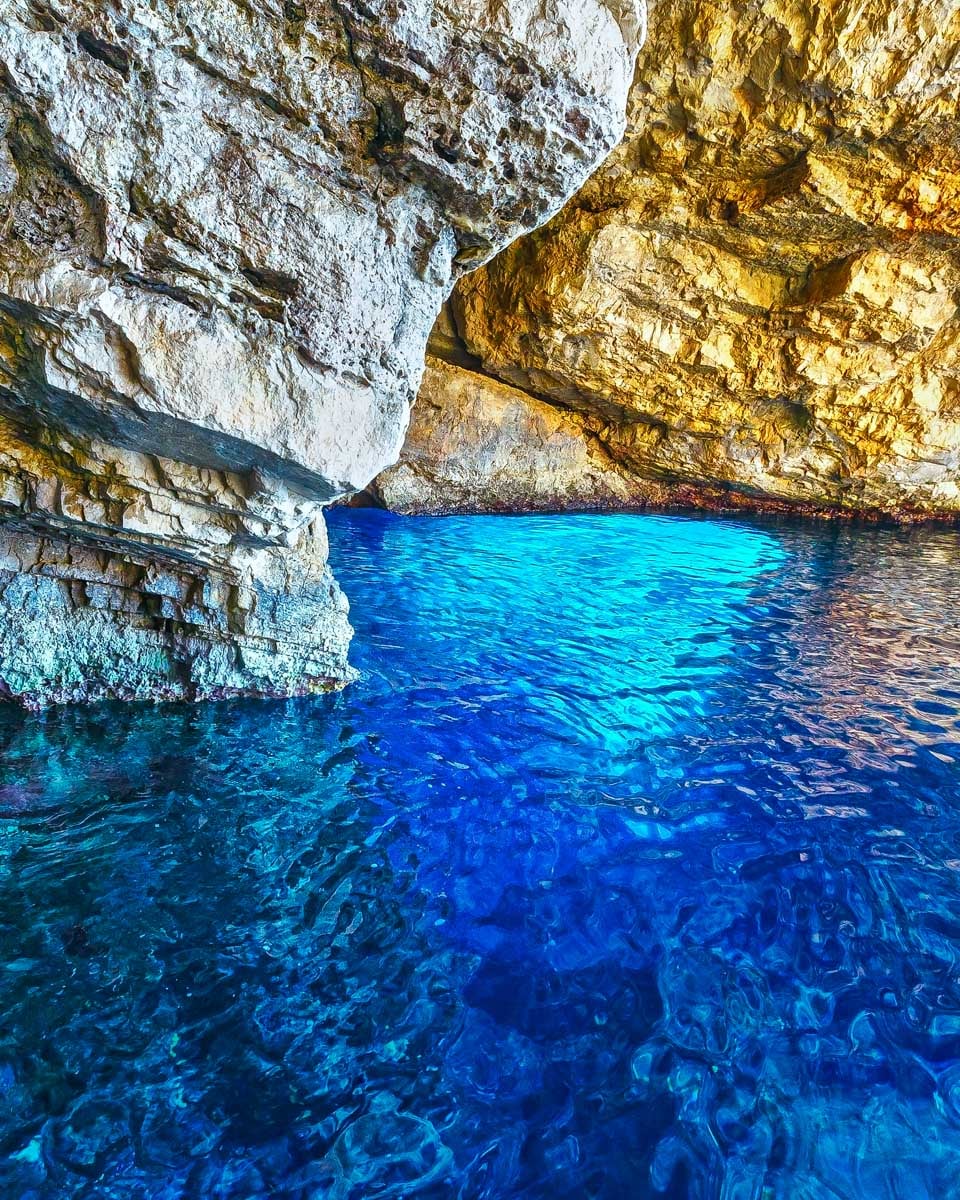
Navagio Beach and the Blue Caves are two of Zakynthos’s most iconic sights, and seeing them by boat is really the only way to do it properly. In fact, both spots are only accessible by water!
Navagio, also known as Shipwreck Beach, is home to bright white sand, electric-blue water, and a dramatic shipwreck sitting right in the middle! Then, just along the coast, the Blue Caves glow with an almost unreal shade of blue when the light hits the rock walls.
Because they’re so close together, these two stops are usually combined into the same boat trip. A typical day involves cruising along the coastline, stopping to swim or take photos at Navagio, then heading on to the Blue Caves. You might even get to swim here if conditions allow!
In that vein, it’s important to keep in mind that this experience is very dependent on weather and sea conditions. Routes can change, and swim stops aren’t always guaranteed. We’ve found that morning departures often mean calmer water, so heading out early is a safer bet than waiting until the afternoon.
We booked this full-day boat tour because it combined the major highlights and meant we didn’t have to do much research or planning ourselves. We didn’t actually have too long to spend in Zakynthos, unfortunately, so this tour really helped us to make the most of our time!
18. Hike the Fira to Oia trail in Santorini
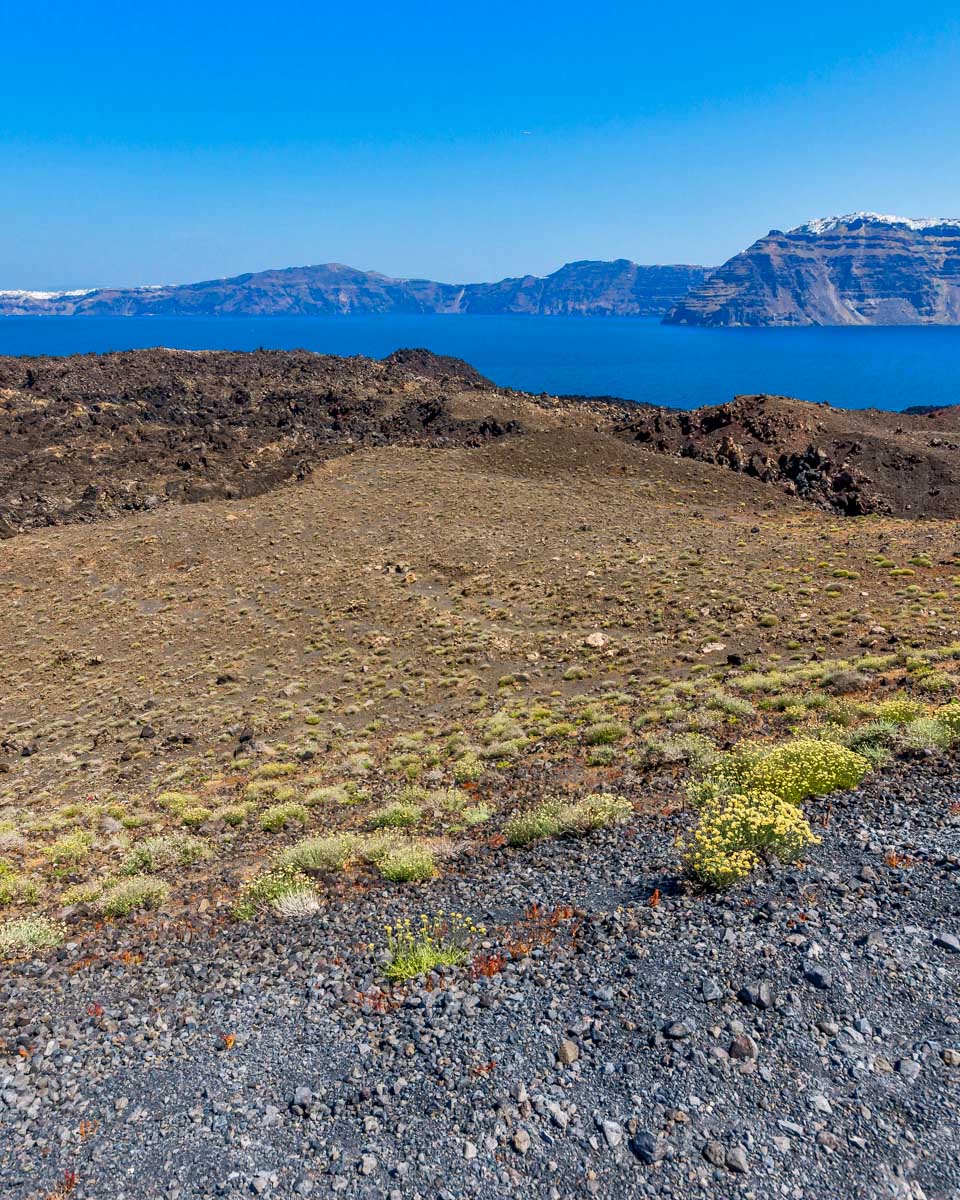
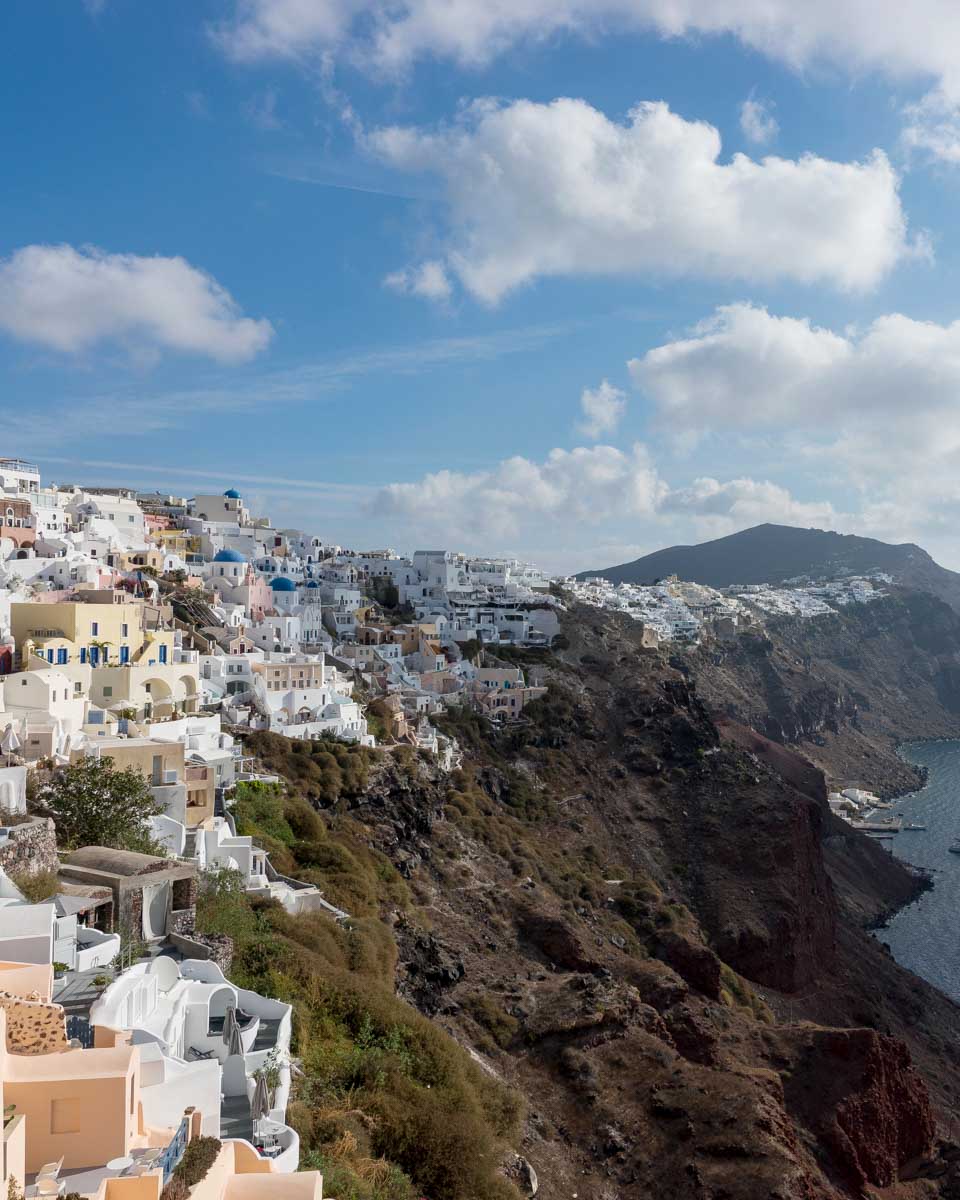
We make no secret of the fact that we’re avid hikers, so of course, we had to put hiking the Fira to Oia trail on this list! It’s one of the best ways to experience Santorini, no question about it. The path follows the edge of the caldera almost the entire way, so you’re treated to sweeping views of the Aegean Sea as you go, as well as the island’s whitewashed villages and dramatic cliffs. It’s incredibly scenic and feels so much more immersive than hopping between viewpoints by car!
At a fairly chilled pace, the walk usually takes around three to four hours, but of course, that depends on how often you stop for photos and breaks. We started not long after sunrise, and it was so worth the early start. The temperature was so much more comfortable, and there were way fewer crowds on the trail. The morning light was also really pretty!
One thing to plan for is that this is a one-way hike. Once you reach Oia, you’ll want to arrange transport back rather than turning around and retracing your route. There are buses and taxis available, but it’s worth thinking about this in advance so you’re not just trying to figure it all out at the end of the walk.
19. Go inland in Crete and visit the epic Cave of Zeus
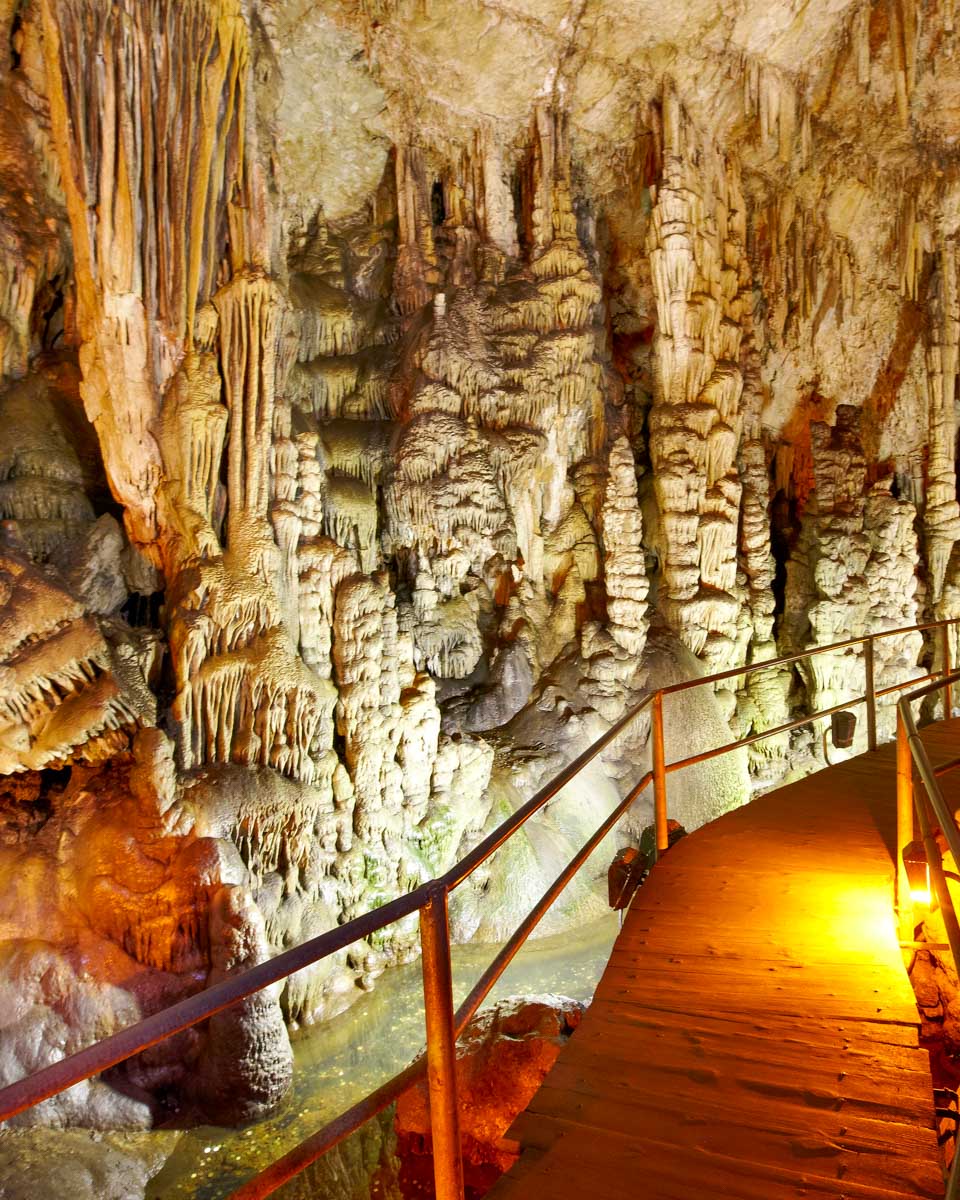
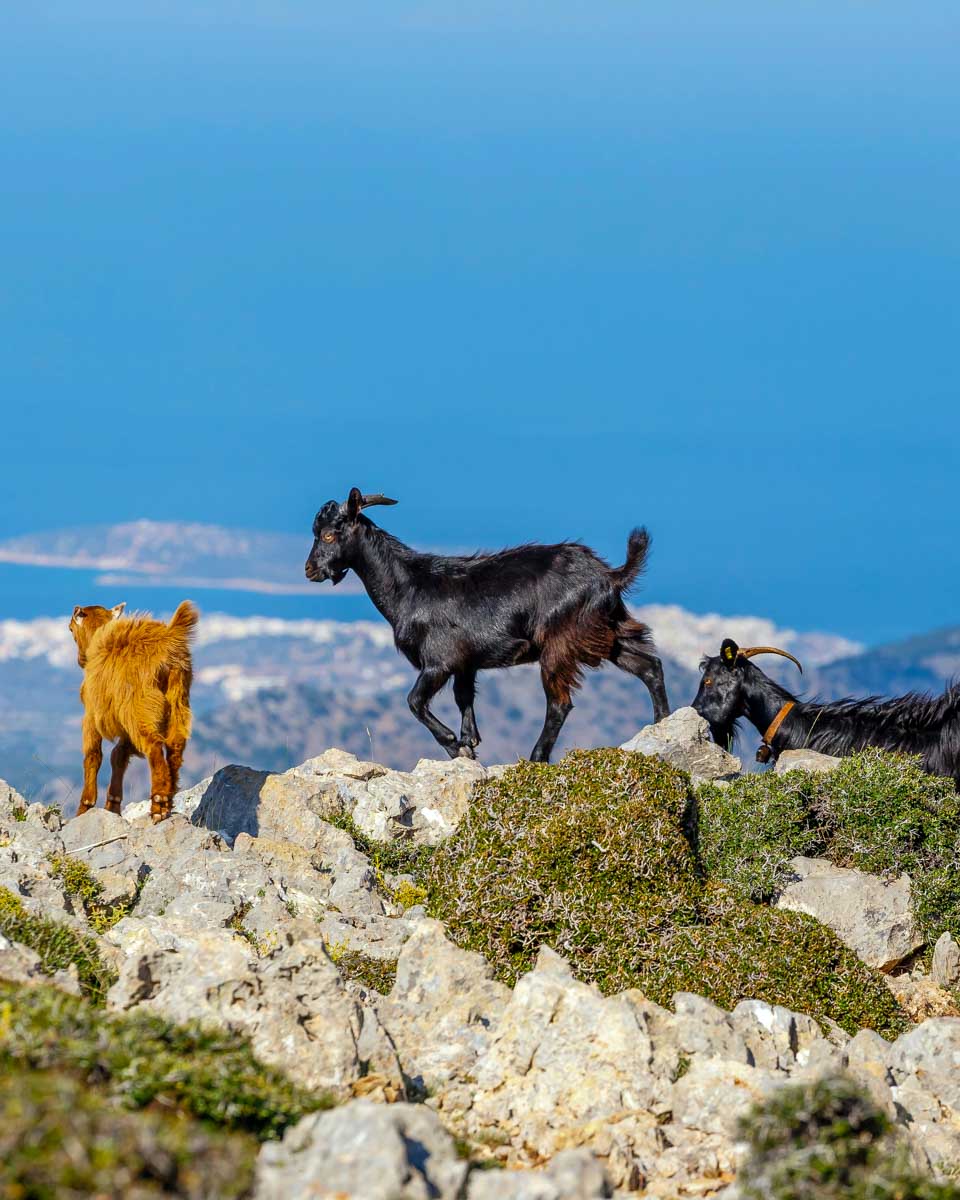
Visiting the Cave of Zeus is a great way to see a completely different side of Crete, especially if you’ve mostly been sticking to beaches and coastal towns. According to Greek mythology, this cave is the birthplace of Zeus himself, which already makes it pretty special. But beyond the legend, it’s the setting that really stands out! The drive there takes you into the mountains, past small inland villages and rugged scenery that many travelers never get to see.
The cave sits high above the Lassithi Plateau, and once you arrive, there’s a short but steady climb up to the entrance. This is followed by a walk down into the cave where impressive rock formations open up beneath you. Once inside, it’s very cool, so it can be a nice way to escape the heat for a bit during the summer!
Just be aware that the roads leading up can be bumpy, and the climb involves uneven paths, so it’s best to take your time and pace yourself. If you don’t feel like renting a car or navigating mountain roads yourself, you can join a tour like this one and be driven by a local who knows the roads well. As a bonus, you often get to enjoy some additional stops along the way!
Related Read: Before you go, check out our personal packing list for Greece! This includes our favorite travel items we are never without and Greece-specific items.
20. Get lost in Chania Old Town and the Venetian Harbor
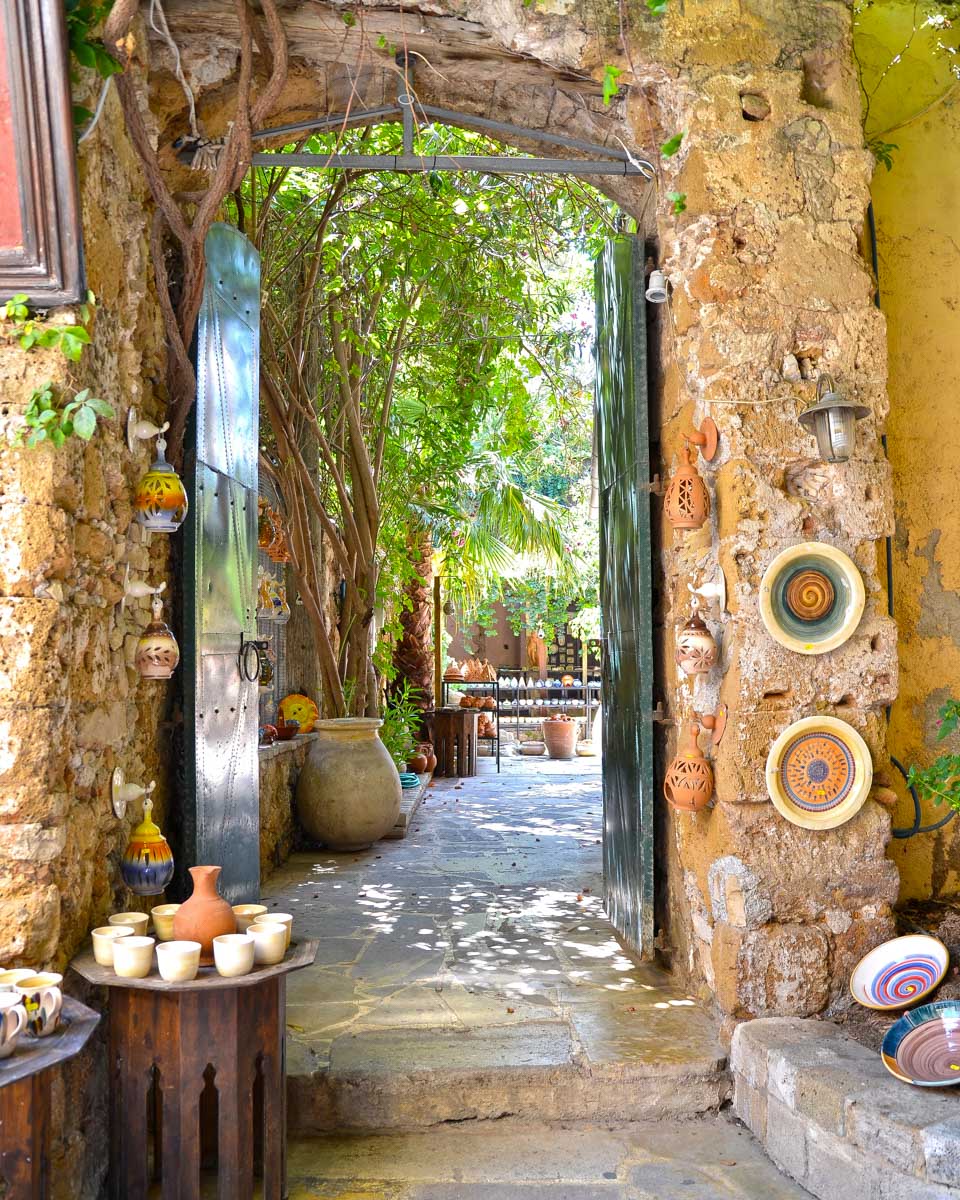
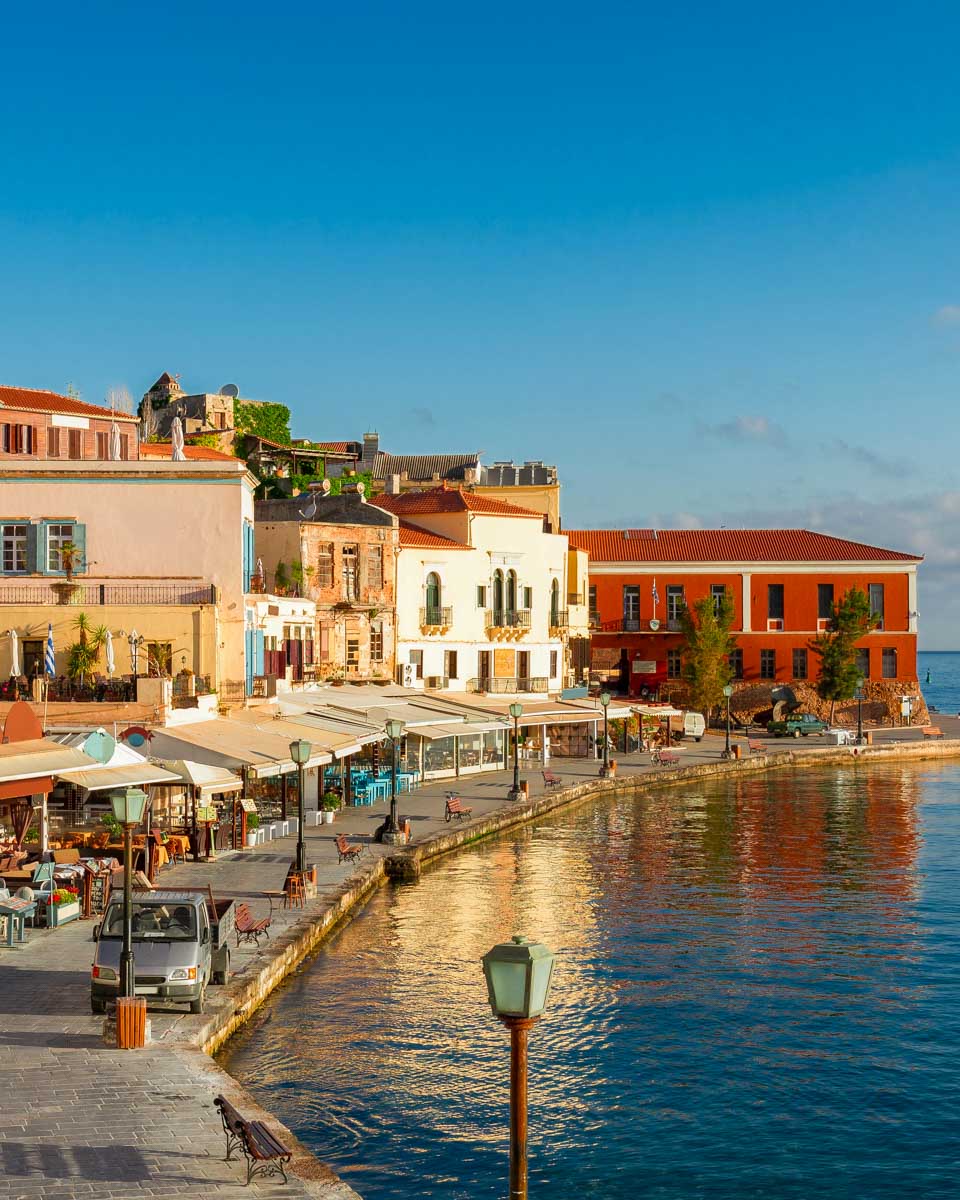
Whatever type of traveler you are, we think that just about everyone should take the time to get lost in Chania Old Town in Crete. The charm comes from wandering around at your own pace and just enjoying the atmosphere. No itinerary necessary.
We think a nice way to approach it is to start at the Venetian Harbor, where colorful buildings line the water and cafés spill onto the promenade. From there, we walked out toward the lighthouse for views back over the old town, then turned inland and explored the narrow lanes behind the waterfront. This is where Chania really comes alive, with lots of little shops and tucked-away tavernas to explore. It feels so different from the more touristy harbor front!
We would definitely recommend doing this around golden hour and staying into the evening if you can. You can find some excellent Cretan food in one of the tavernas, and plenty of local wine! The light over the harbor is also very beautiful, and once the sun goes down, there’s such a nice atmosphere around. Just keep in mind that the streets here are mostly cobbled, and so while they’re super pretty, they do call for sturdy and comfortable shoes.
21. See the majestic Blue Caves in Corfu
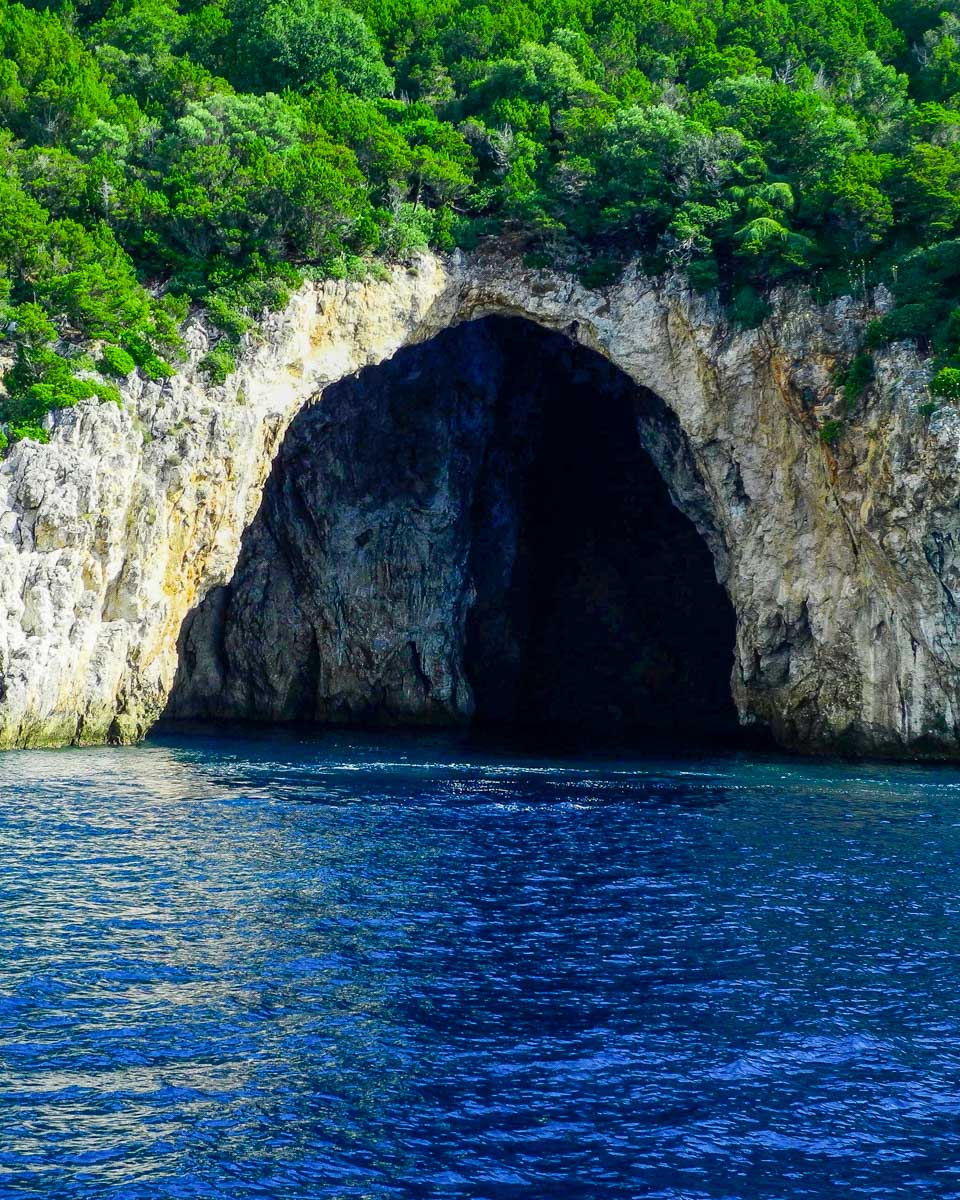
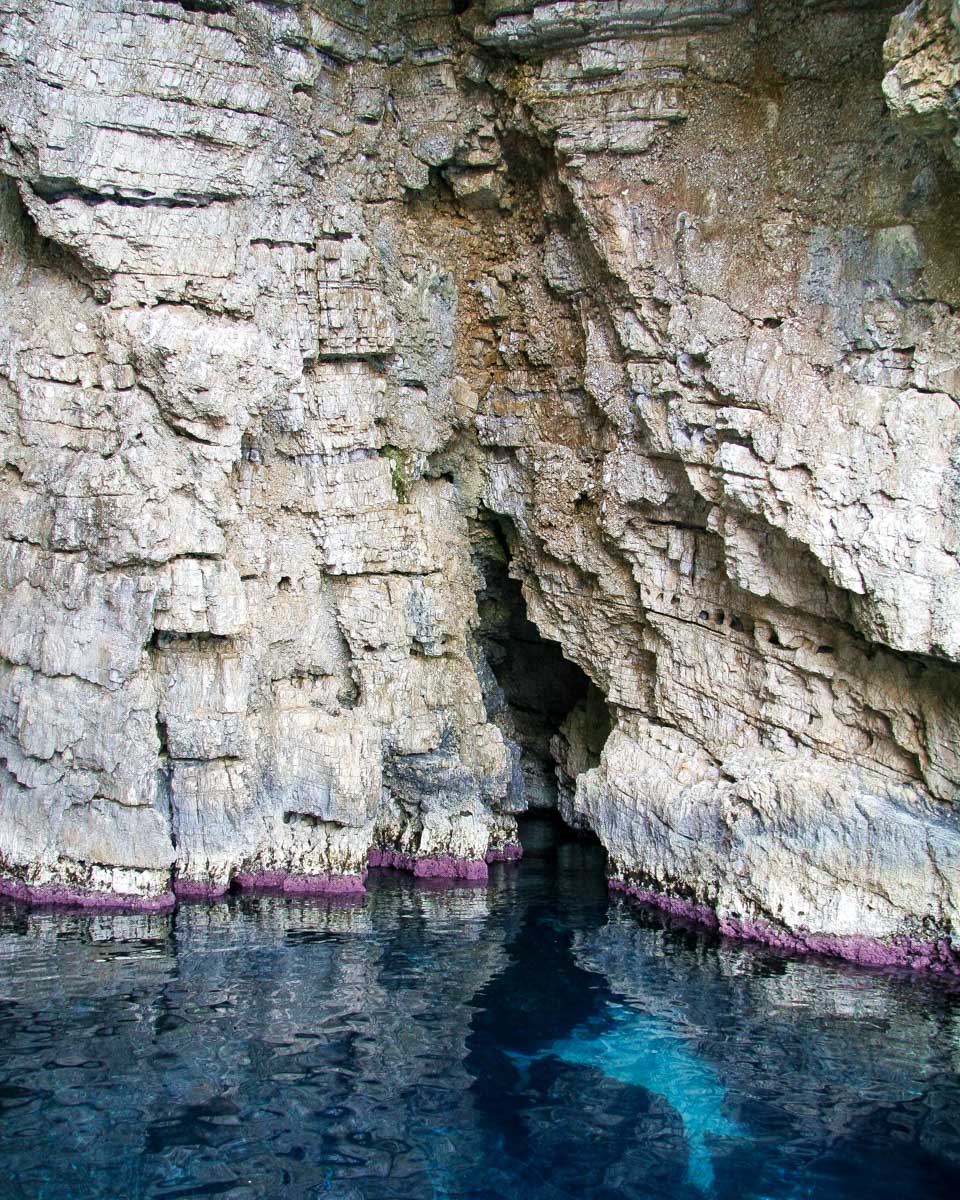
Swimming at the Blue Caves in Corfu is the very definition of a classic Ionian experience! Hopping between these bright blue swimming spots is such a dreamy day out, and the scenery really doesn’t disappoint.
The Blue Caves sit along Corfu’s rugged northwest coast, where the cliffs drop straight into bright blue water. Most trips include a few swim stops, and if sea conditions allow, boats will ease into some of the caves so you can see the glowing water up close.
It’s all very beautiful, but we’re not here to sugarcoat things for you, so bear in mind that sea conditions have a big impact on the route on the day. If the water is choppy, boats may not enter certain caves or may adjust swim stops for safety. Sure, it can be disappointing, but it’s always better to be safe than sorry!
We also recommend bringing seasickness tablets if you’re prone to that. Nothing ruins a boat trip like nausea! Swim shoes are also a good shout because they make it so much easier to paddle around rockier shores. And of course, towels and sun protection are non-negotiables.
Since the Blue Caves are only reachable by boat, booking a tour is a must. There are lots available, but we can personally vouch for this one, as we had such a great day out on the water, and got to visit the scenic islands of Paxos and Antipaxos, as well as the caves.
22. Swim at Crete’s famous pink beach
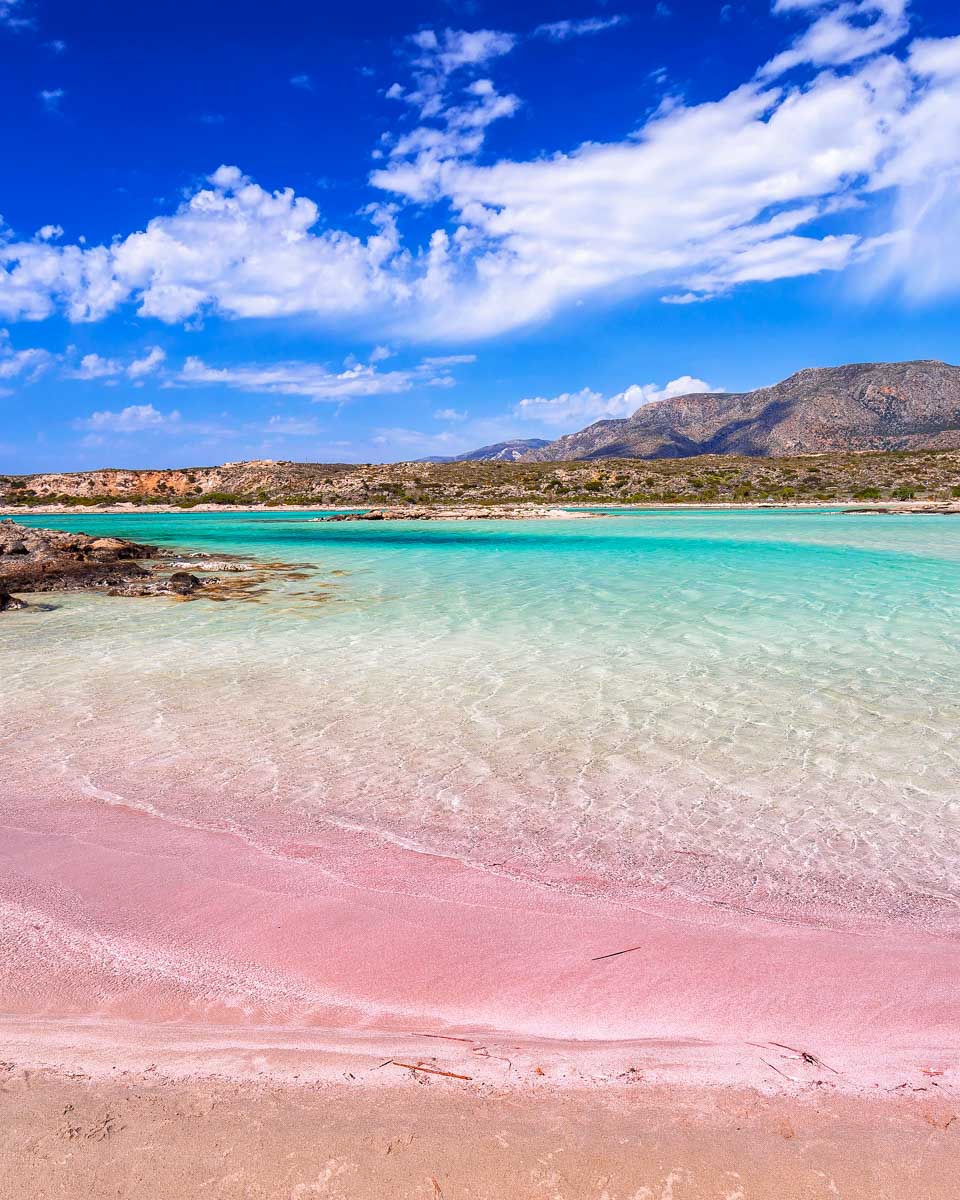
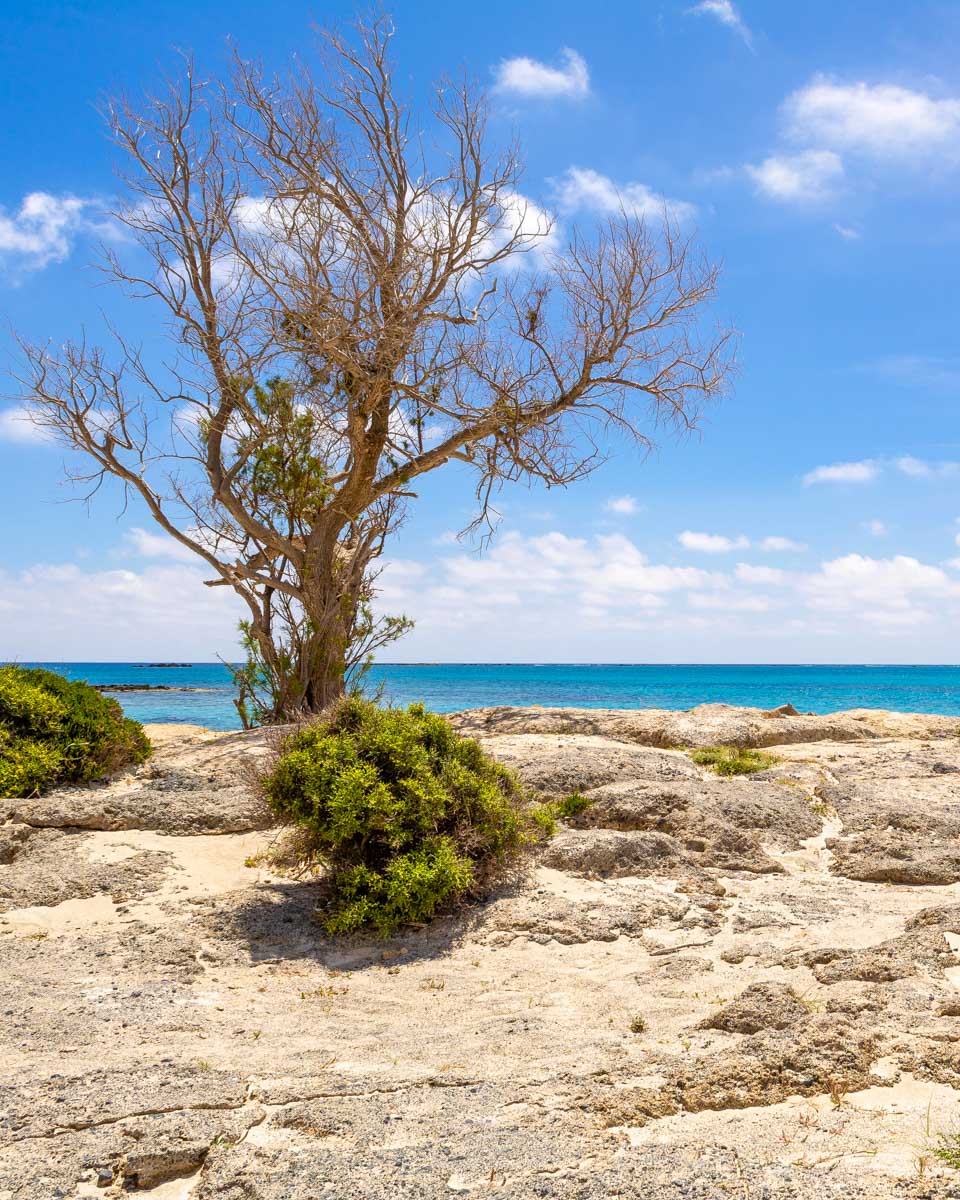
Elafonissi Beach is Crete’s famous pink beach, and it’s a must-see if you happen to be visiting the island! However, do be aware that people heavily edit it on Instagram to make the pink hue of the sand look much more dramatic than it does in real life. It helps to go in with realistic expectations because, although the soft blush sand is very pretty, it’s quite subtle in real life.
And what a lot of people don’t realize is that there’s so much more to Elafonissi than just its pink sand! The beach is made up of shallow lagoons and sandbars that are unbelievably pretty, and we loved walking through the calm, clear water. It actually feels more like a natural lagoon system than a typical beach, and it’s a lovely spot to explore.
Because it’s so well known, Elafonissi can get busy, especially in summer. We’d recommend arriving earlier in the day if you can, before the biggest crowds arrive. Late afternoon can also be a nice time once some day-trippers head back, but mornings are usually the calmest.
It’s also a protected nature area, so sticking to marked paths and respecting the environment is really important here. Bring water and snacks with you, as facilities can be limited depending on where you settle, and water shoes do help since some entry points are pebbly.
23. Experience Mount Olympus, where myth and mountains meet

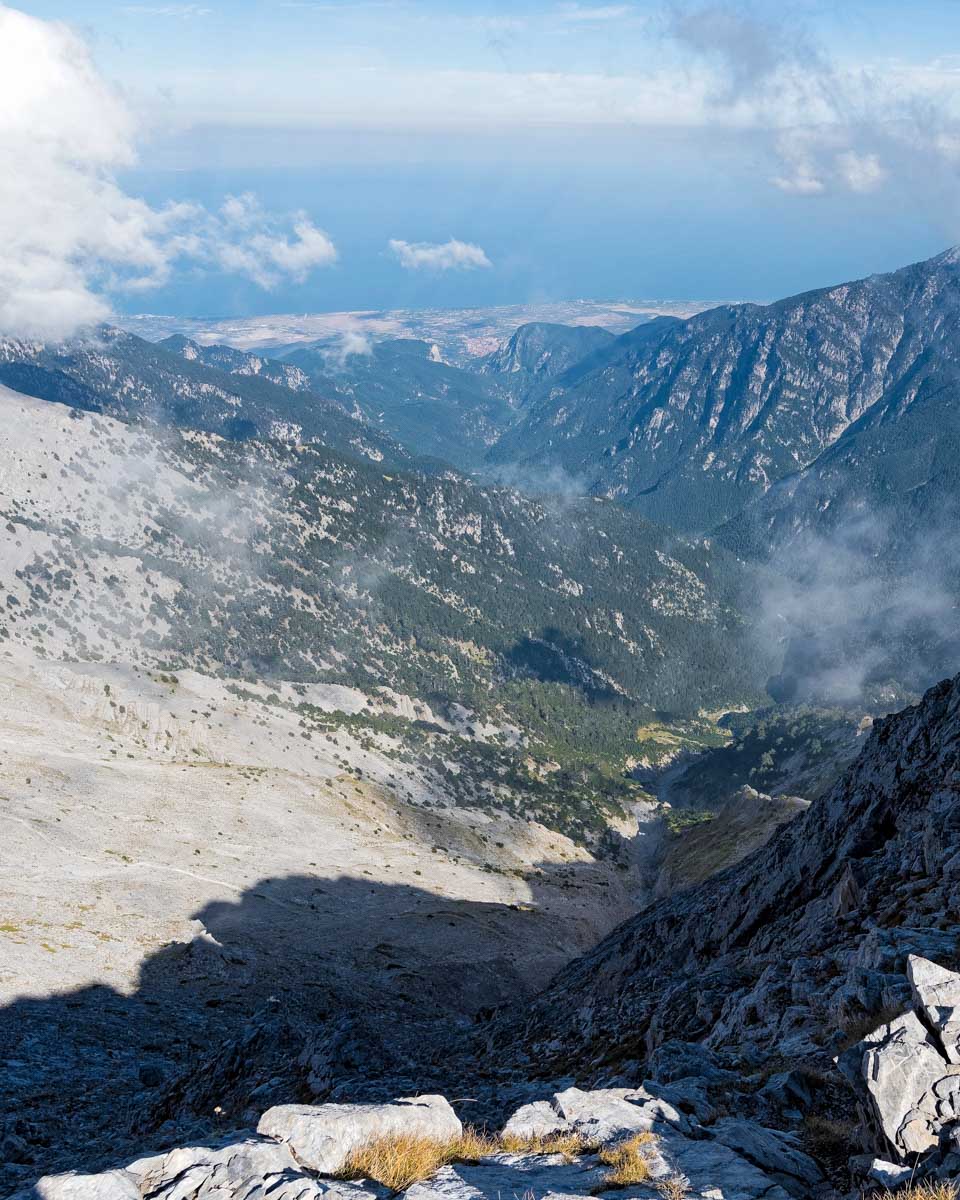
Experiencing Mount Olympus is where Greek mythology and dramatic mountain scenery really come together. This is the legendary home of the gods, but even if you’re not big on myths, the landscape alone makes it worth the trip! The forested slopes and rocky peaks feel worlds away from Greece’s beaches, and it’s a refreshing change of pace if you’re craving something more outdoorsy.
A lot of people choose to hike Mount Olympus, and there are several routes to choose from. However, it’s important to be realistic about your hiking abilities. The summit hike is physically challenging and it also requires good navigation skills, and it’s not something you should just attempt casually.
If you’re keen to do it, going with a guide is a much safer and more enjoyable option. There are also plenty of easier hikes within the national park that still give you beautiful views and a real sense of the mountain without the intensity of a summit push, so it’s a great alternative if you want something more manageable.
Another option is to join an organized day tour from Thessaloniki, which focuses on the highlights of Mount Olympus National Park. This is ideal if you don’t want to plan routes or worry about transport, and it gives you context about the area’s history, mythology, and landscape along the way. It’s a really accessible way to experience Mount Olympus without committing to a full-on hike.
Related Read: Planning to base yourself in the city? Check out our guide on where to stay in Thessaloniki to find the perfect area and hotel for your trip, then use our 3-day Thessaloniki itinerary to start planning your days.
24. Take a slow evening stroll along the Athens Riviera
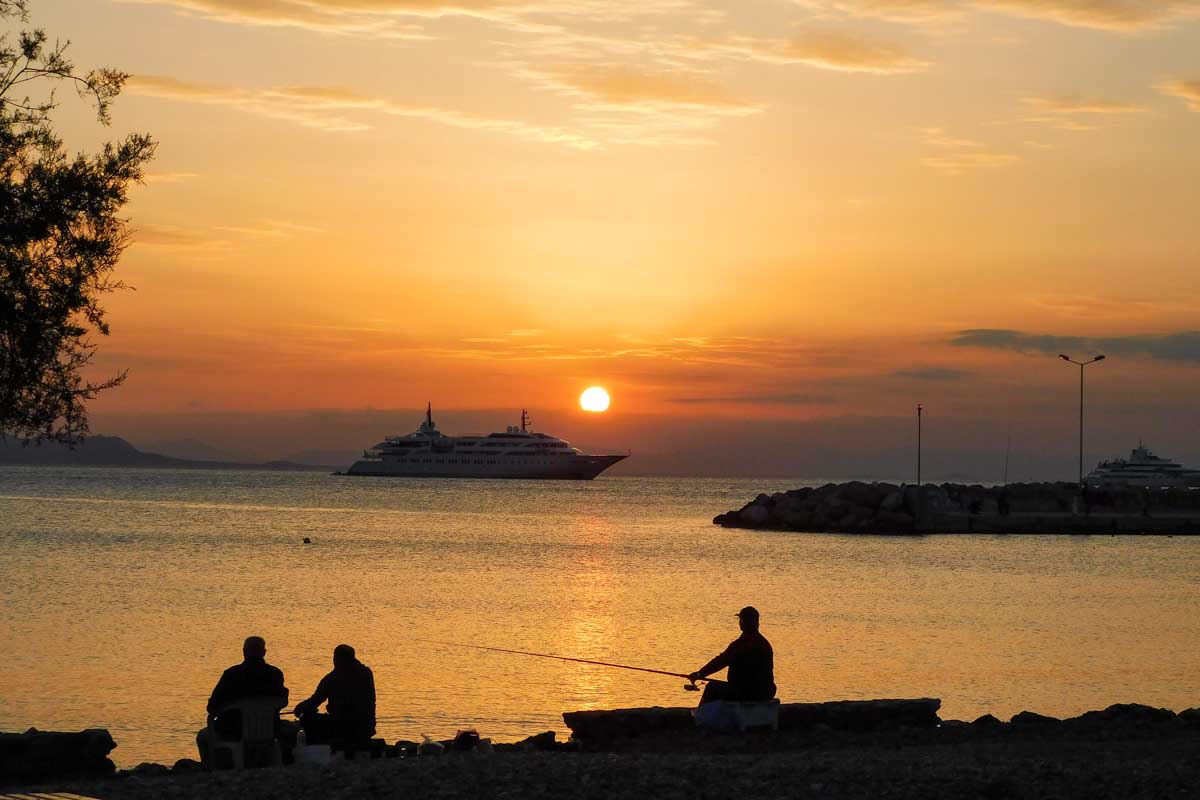
Taking a slow evening stroll along the Athens Riviera is one of the easiest ways to get coastal vibes without actually leaving the city. If you’ve spent a few days hopping between temples and museums, this could be a very welcome reset!
You don’t need much of a plan here. We just picked a waterfront stretch, grabbed a snack and a drink, and just started walking with the sea on our left! Areas around Flisvos Marina are great if you want something lively but not hectic, while heading further down toward Glyfada gives you a longer promenade and a more local feel. You can walk as far as you like, then simply turn back or hop in a taxi when you’ve had enough.
Late afternoon into the evening is the ideal time to do this, especially in warmer months. This is when the air cools, and locals come out for walks, bike rides, and casual dinners by the water. We really enjoy this because it makes the experience feel more authentic than touristy, which is great if you’ve been doing a lot of sightseeing.
Getting here is easy, too. Public transport and taxis both work well, so you can reach the waterfront without hassle and take a stroll at your own pace. Then, head back whenever you’re ready!
25. Catch iconic Aegean views from the Armenistis Lighthouse on Mykonos
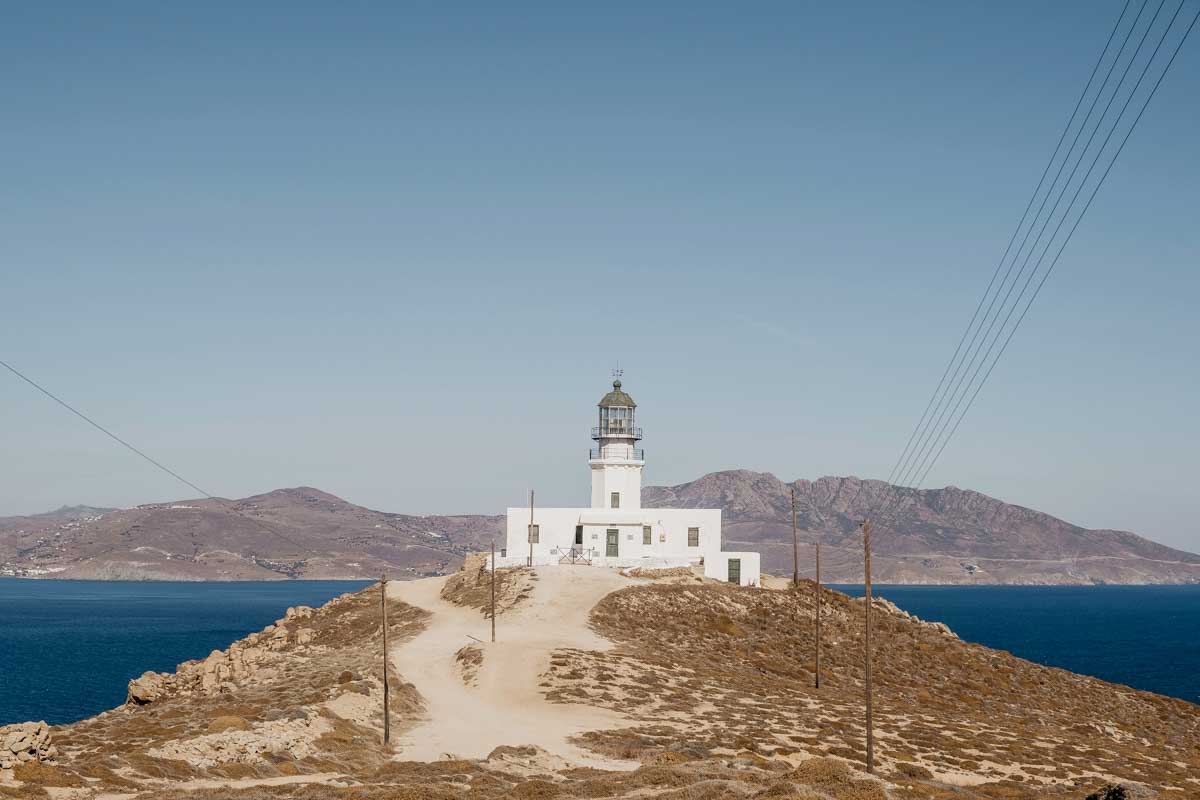
Last, but certainly not least, catching the views from Armenistis Lighthouse is the ultimate way to admire Mykonos’ dramatic scenery. The lighthouse sits on the edge of the island, so although it’s not exactly a hidden gem, it’s still a calmer alternative to the busy windmill area in Mykonos Town. You don’t usually have to jostle for space, and you can just enjoy those wide-open sea views!
We love how rugged and raw this spot feels. The coastline here is dramatic, and you can hear the waves crashing far below. The wind is usually strong enough to remind you that the Aegean doesn’t mess around, so it’s a good idea to bring a jacket or a light layer to keep you warm!
This is a brilliant place for photos, but it’s also just a nice breather if you’ve spent most of your time in busier parts of Mykonos. We think it’s best to visit in the late afternoon when there are fewer people around, and spend an hour or two enjoying the views.
Getting to the lighthouse is easiest with a rental car or taxi, as public transport options here tend to be pretty limited depending on the season. If you’re renting a car, there’s a small lot where you can park for free, and if you plan on using a taxi, we suggest pre-arranging a return with your driver so that you don’t have to wait around once you’re ready to head back into town.
Related Read: You know what pairs well with a trip to Greece? A trip to Croatia! Check out our blog on the best things to do in Croatia and add it to your travel itinerary!
Renting a Car in Europe
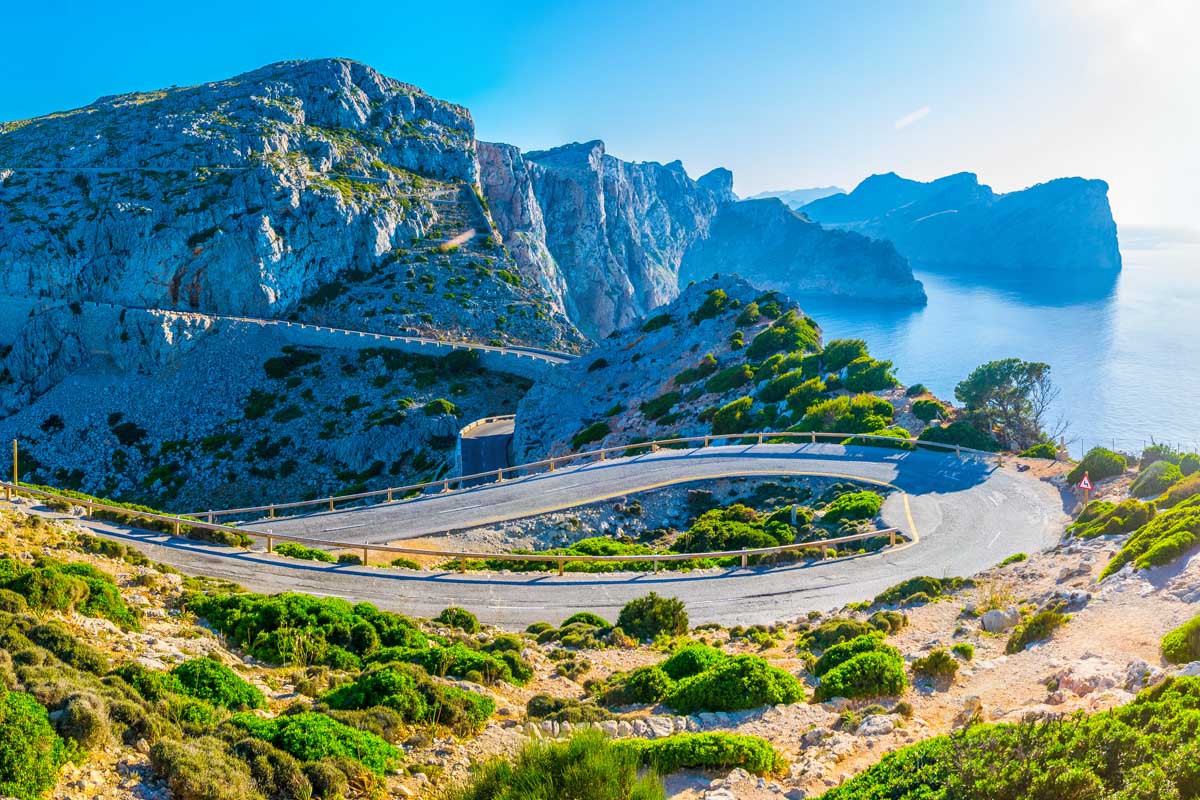
Exploring Europe by car is a fantastic way to uncover hidden gems—think charming villages, scenic countryside, and off-the-beaten-path spots that trains and buses might miss. Driving here is generally straightforward, but it’s good to be prepared for some regional quirks.
We always use Discover Cars to book our rentals and can’t recommend them enough. It’s super easy to compare prices, check company ratings, find automatic cars (which can be tricky in Europe!), and add affordable full coverage insurance.
Tips for Renting a Car in Europe
What You Need to Rent a Car in Europe
Ready to hit the road and discover the freedom of exploring Europe on your own terms?
AIRALO e-SIM
Up To 15% Off With Code “DTRAVEL15”
What’s an eSIM?
An eSIM is a digital version of a SIM card. Instead of buying a little plastic chip and swapping it into your phone, you just download it. It connects your phone to a local network in whatever country you’re visiting — no stores, no waiting, and no fiddling with tiny cards.
In simple terms, it’s the easiest way to get data and stay connected while traveling.
We’ve tested a bunch of eSIMs in North America, and after a few frustrating experiences, we’ve found our favorite — Airalo. It’s fast, reliable, and incredibly easy to use. You can set it up in minutes (even my mom managed it solo on her first try!), and the prices are some of the best out there.
🔥 Hot Tip: Choose the Europe-wide eSIM! It works across multiple countries, so you can hop from France to Italy to Spain without ever losing connection. One download, endless adventures.
💡 Bonus: We’ve got an exclusive 15% discount for our readers. Use the codes:
Thanks for reading!

Greece is high on travelers’ bucket lists for a reason – there is so much to experience! From stunning cities dotting the coast to ancient history and some of my favorite food, it’s hard not to fall in love with this place. We hope this list was helpful as you plan your Greek vacation. You’ll certainly experience the best if you stick to our recommendations!
Before you go, see all of our Europe blogs. As long-term travelers, we love sharing our top travel tips and tricks with fellow globetrotters. Here are a few related blogs to inspire your next destination – cheers!
The Best Beach Destinations in Southern Europe (For Every Type of Traveler)
21 Europe Trip Planning Mistakes to Avoid (From Someone Who’s Been There!)
The Ultimate European Bucket List
How to Spend TWO DAYS in Belgrade, Serbia: 2-Day Itinerary
The Services We Recommend
From hotels to guided tours, we only recommend services we know and trust. Here are our recommended partners so you can explore Europe with confidence.