

15 Must-Try Dishes from Countries Across Europe (And Where to Eat Them!)
Curious about all of the must-try foods to eat during your trip to Europe? We’ve got you covered!
Some of the best travel memories are made around food, and Europe has no shortage of incredible dishes that will stick with you long after you’ve finished eating. But what are the best of the best? Where do you eat them? And how do you know it’s authentic?
We have travelled extensively across Europe and have answers to all of your questions, saving you the guesswork. Chances are you’ve heard of a few, but I guarantee there will be a couple of surprises that will quickly become your favorite dish.
So keep reading to discover the 15 must-try dishes across Europe!
1. Pasta Carbonara in Italy
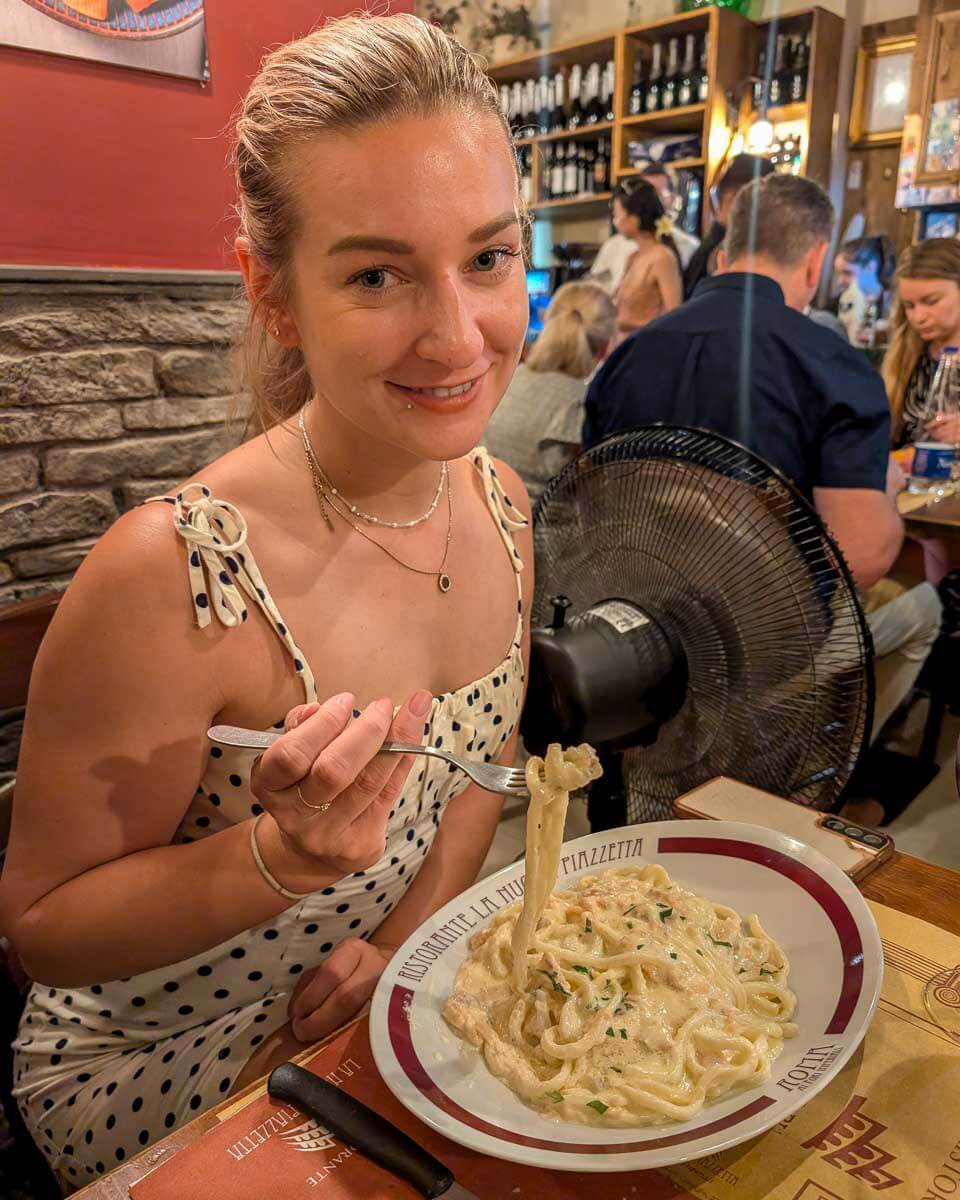
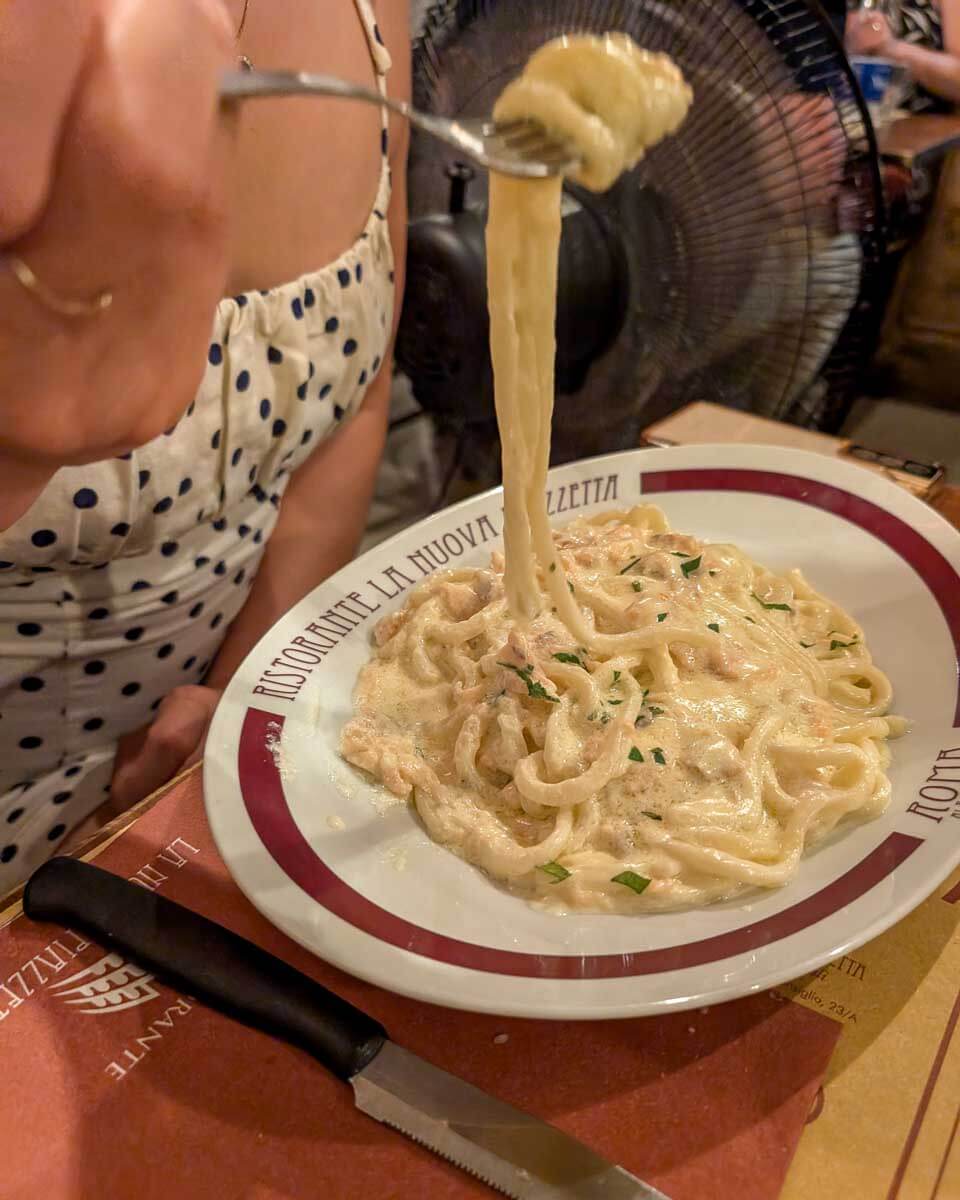
Pasta carbonara is one of Italy’s most iconic dishes and a cornerstone of Roman cuisine, although its true origin is debated by historians. At its core, it is deceptively simple: pasta (traditionally rigatoni or spaghetti) tossed with eggs, finely grated pecorino romano, guanciale (cured pork cheek), and plenty of freshly cracked black pepper. When prepared correctly, the eggs blend together with the cheese and natural fats, creating a rich, silky sauce that clings to every strand of pasta. I may or may not be drooling over here, writing this and thinking back on when we had it.
What makes carbonara truly authentic is what it doesn’t include. There is no cream, no garlic, no onions, and no substitutions. Guanciale is essential; its deep, porky flavor and fat are very different from bacon or pancetta, which alter the dish entirely. Pecorino Romano, sharp and salty, provides the backbone of flavor, while black pepper adds warmth and balance. The result is bold, savory, and perfectly restrained—classic Roman cooking at its best!
The best place to experience real carbonara is Rome itself. Neighborhoods like Trastevere and Testaccio are especially known for preserving traditional Roman food culture. Seek out classic trattorias—family-run eateries with focused menus and a local clientele—rather than tourist-oriented spots. In these areas, carbonara is not a trend or a variation; it’s a tradition, served with confidence and pride exactly as it should be.
2. Coq au Vin in France
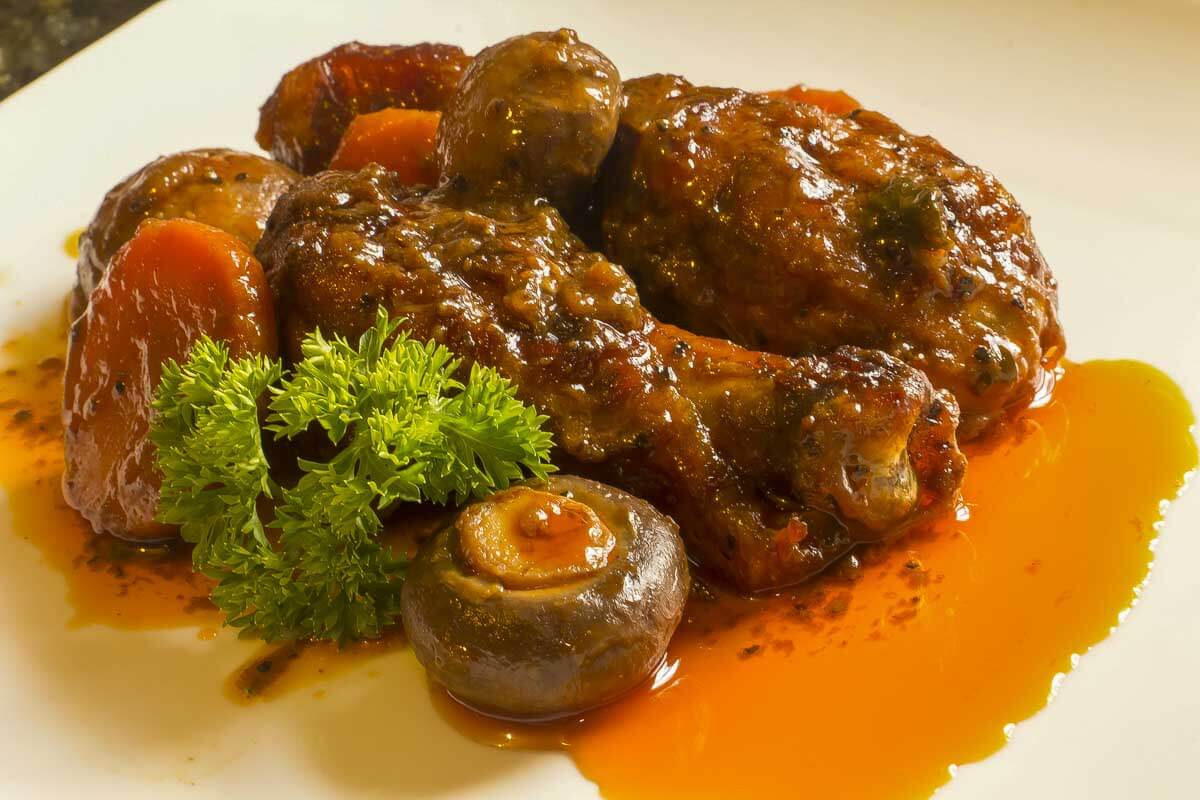
Coq au vin is proof that the French know how to let time (and wine!) do the heavy lifting. This classic dish features chicken slowly braised in red wine with mushrooms, onions, herbs, and often little bits of pork, until everything becomes impossibly tender and deeply flavorful. It’s the kind of meal that makes you mop up sauce with bread, and seriously consider ordering another glass of whatever they used in the pot.
What makes coq au vin authentic isn’t just the ingredient list, but the amount of time needed to make it. Initially created as a practical way to soften tougher birds, the long braise allows the wine to break down the meat while concentrating into a rich, velvety sauce. When done right, it’s easy to tell that the chicken clearly had a long, meaningful relationship with the wine. It’s usually served as a house specialty, paired with potatoes or crusty bread, both of which exist solely to make sure not a drop of sauce goes to waste.
The best places to try coq au vin are regions that take both food and wine very seriously. Burgundy is the natural home of the dish, where local red wines give it depth and balance. Lyon, France’s unofficial food capital, is another excellent stop. Seek out traditional bistros or bouchons, where the portions are generous, the recipes are time-tested, and coq au vin is treated less like a menu item and more like a well-kept family secret.
Related Read: Want to build an itinerary around meals like this? Check out our guide to the best things to do in France for the ultimate mix of food, history, and scenery.
3. Paella in Spain
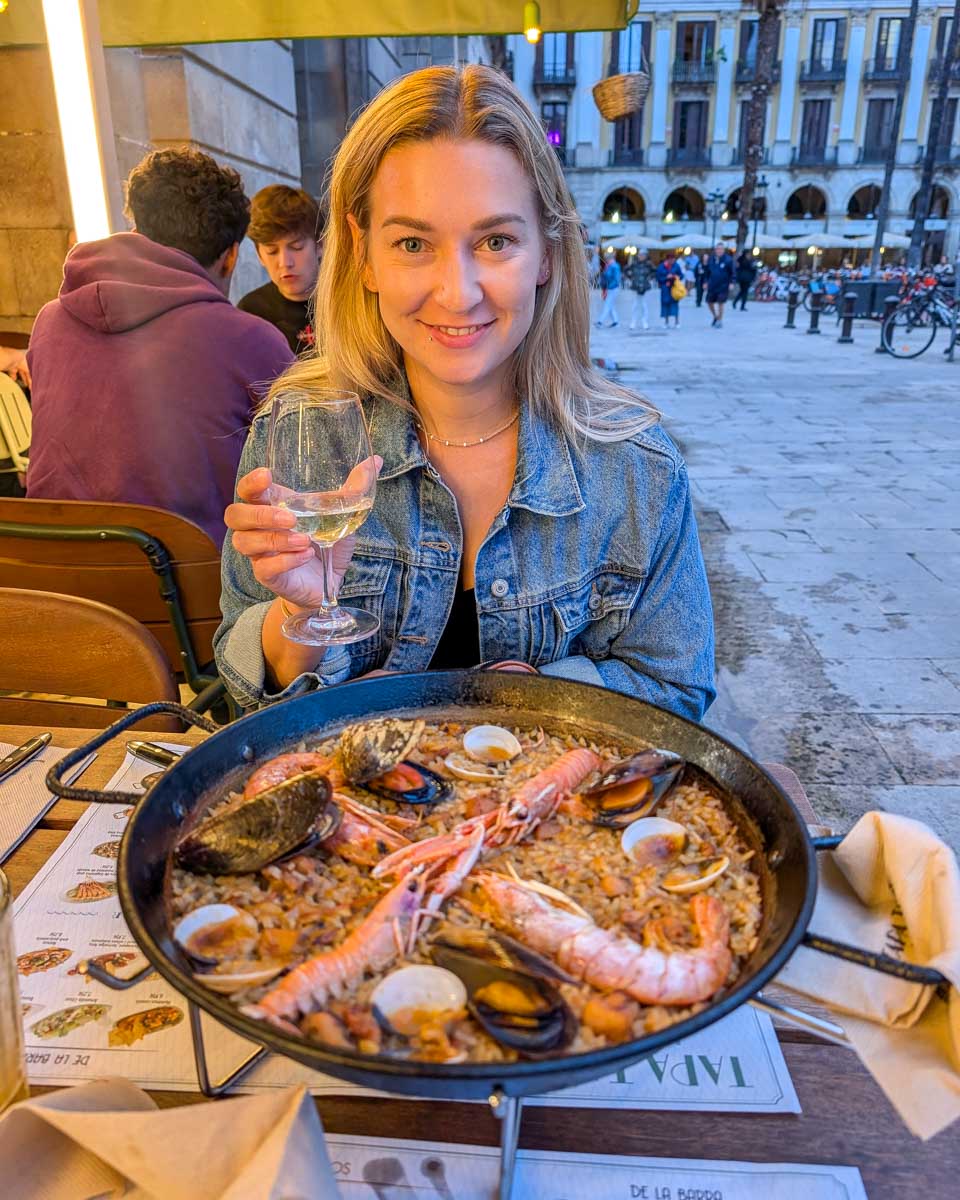
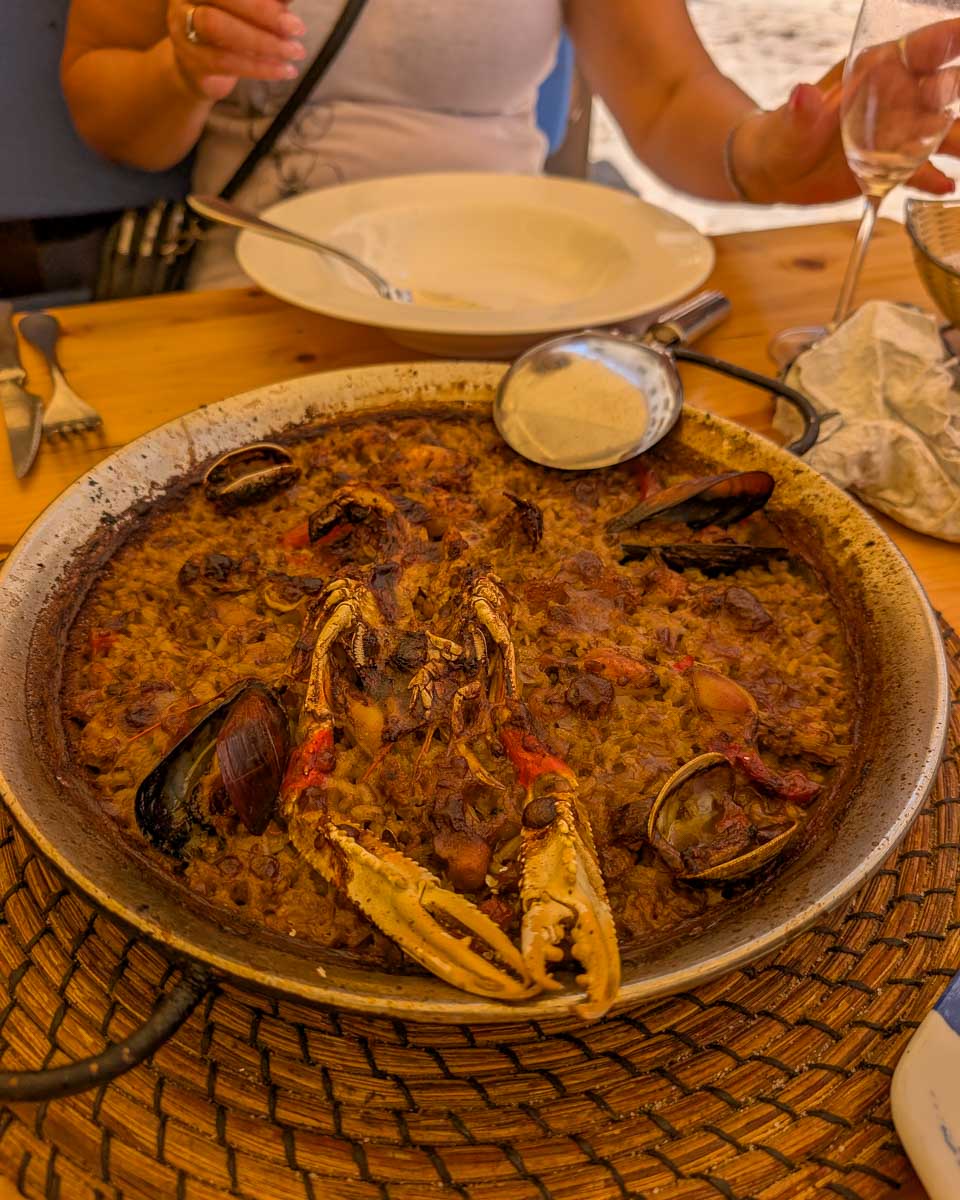
If Spain had a signature vibe on a plate, it would be paella. It’s one of the country’s most iconic dishes, and Spaniards care deeply about how it’s made, which is exactly why getting it right leads to one of the best meals you can have in Spain. Born in Valencia, paella is a rice dish cooked in a wide, shallow pan and infused with saffron, giving it both its golden color and unmistakable aroma. Traditional versions feature chicken and rabbit or seafood, and every ingredient earns its place in the pan.
Authentic paella follows a few non-negotiable rules. First, there is absolutely no chorizo. Adding it overwhelms the saffron and broth, and you’ll probably get a funny look if you try to order it with chorizo. Paella should always be cooked to order, and unlike risotto, the rice isn’t stirred once the liquid is added; instead, it cooks evenly until it absorbs all the flavor. The goal is tender rice with socarrat, the coveted crispy layer at the bottom that locals will fight over. It’s also served straight in the pan, because anything else just wouldn’t feel right.
Paella is traditionally eaten at lunch, often as a long, social meal meant to be shared, not rushed. Dinner paella is rare among locals, and for good reason—this dish demands time and attention, so expect to wait about 45 minutes for it. The best place to try it is in Valencia and the surrounding coastal Valencian towns. Keep an eye out for restaurants packed with locals!
4. Goulash in Hungary
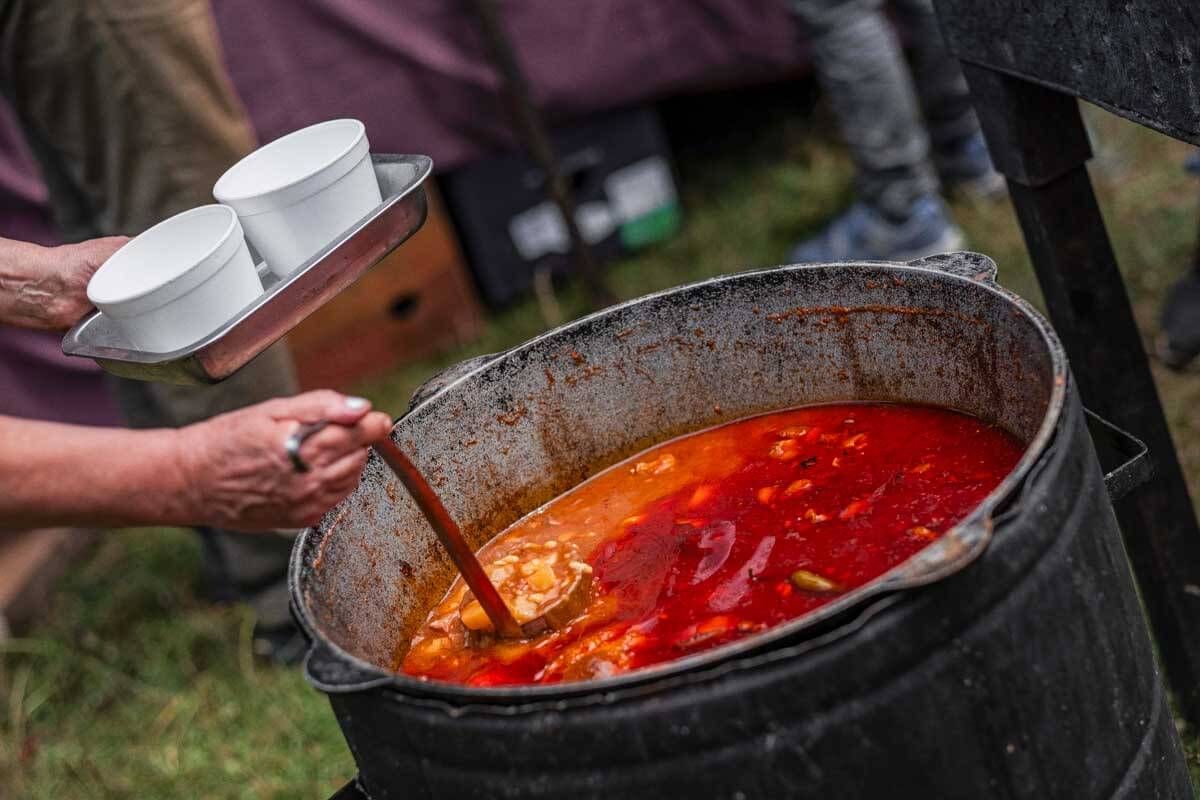
Jokes aside about being hungry in Hungary, nothing hits the spot more than goulash. A no-nonsense comfort food, real Hungarian goulash is not a thick, gravy-heavy stew but something closer to a deeply flavored soup. Built around beef, onions, and generous amounts of paprika, it’s a dish that prioritizes balance and richness without ever feeling heavy.
Authentic goulash lives and dies by its paprika. This isn’t just a background spice—it’s the star of the show, giving the broth its signature red color and gently smoky, slightly sweet flavor. The consistency should land somewhere between a soup and a stew: brothy enough to sip, hearty enough to satisfy. The beef is slowly simmered until tender, while the onions melt into the base, creating a naturally thickened broth without the need for flour or shortcuts.
Goulash is typically served with fresh bread or soft dumplings, both of which are essential for soaking up every last spoonful. It’s the kind of dish that warms you from the inside out, especially on a cold day.
The best places to try goulash are in Budapest, where traditional cooking is taken seriously, or in countryside inns known as csárdas. In these rustic spots, goulash isn’t dressed up or reinvented—it’s served the way it has been for generations, proving that simplicity, when done right, never goes out of style.
5. Wiener Schnitzel in Austria

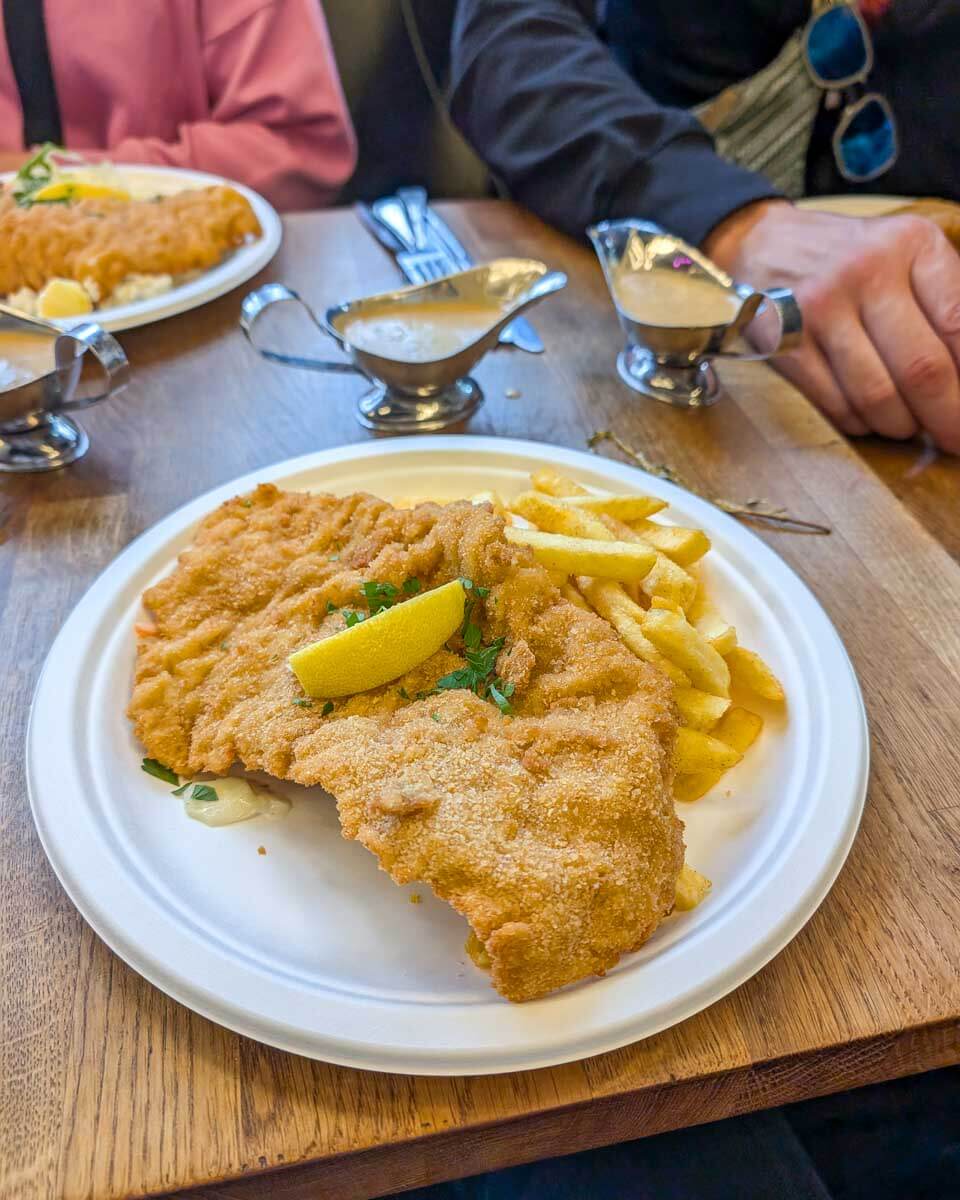
I feel like Wiener schnitzel is one of those dishes that doesn’t need much of an introduction. Chances are you’ve already heard of it, and if you haven’t, well, buckle up because this one is ridiculously good. A thin veal cutlet, breaded and fried until golden, is a national staple that shows how tasty simplicity can be.
Authentic Wiener schnitzel follows a few strict rules. First and foremost, it must be made with veal – anything else may be tasty, but it’s technically something else. Just as important is how it’s served: with a wedge of lemon, not sauce. The lemon’s acidity cuts through the richness of the fried cutlet, adding brightness without masking the flavor. Gravy, cream sauces, or anything poured on top are considered unnecessary at best and offensive at worst.
Wiener schnitzel is typically accompanied by simple sides like potatoes or a light salad, letting the cutlet remain the star of the plate. It’s filling without being heavy, making it a great lunch or dinner option.
There’s no better place to try Wiener schnitzel than Vienna, where the dish is treated as a point of national pride!
Related Read: Choosing the wrong dish is the least of your worries. Check out our blog on the top mistakes made when planning a trip to Europe, and how to avoid them (from our personal experience!).
6. Fish & Chips in England
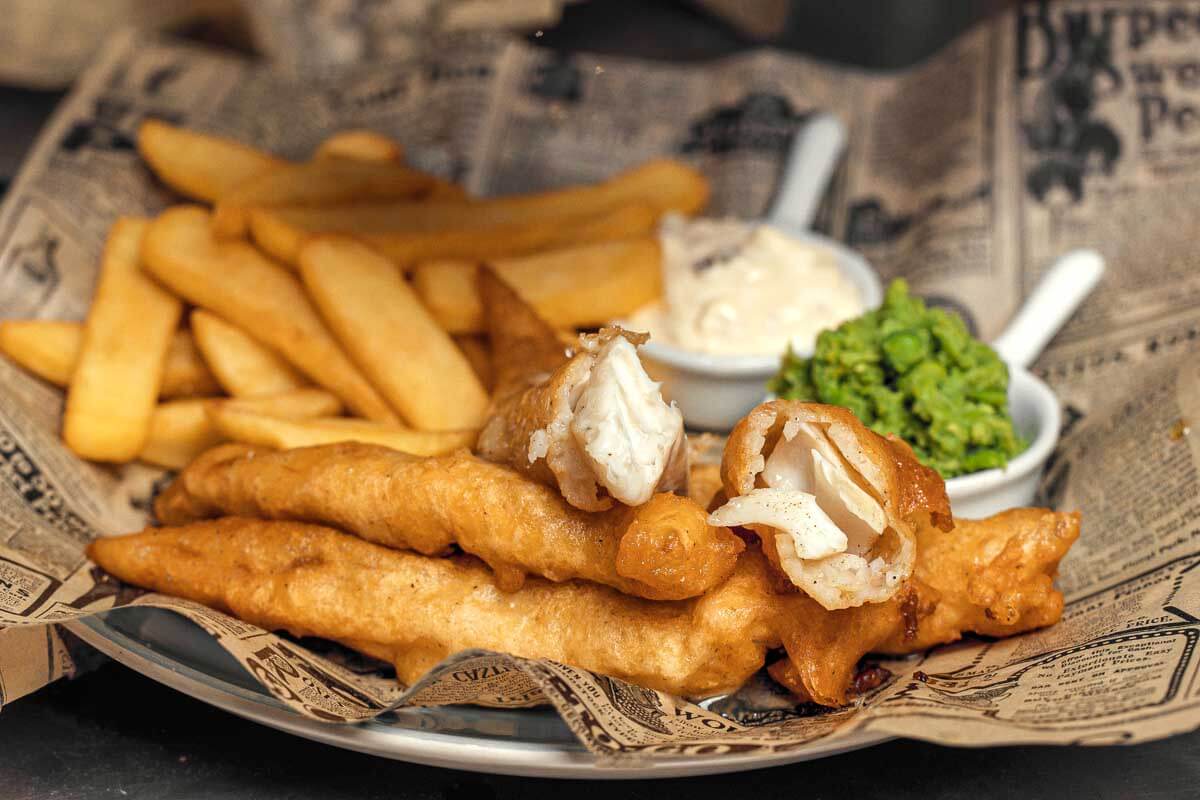
Another dish that hardly needs introduction, fish and chips, is something most people will have probably tried outside of England. But like my English friend once said, “Mate, if you didn’t eat it in England, you didn’t have good fish and chips.” And after trying it in England, I completely agree! There’s nothing flashy about battered fish and thick-cut fries, but that’s exactly the point—this is comfort food designed to be satisfying, familiar, and endlessly reliable.
The fish—usually cod or haddock—should be coated in a light, crisp batter that gives a satisfying crunch when biting into it. The chips are thick-cut, soft in the middle, and sturdy enough to soak up vinegar without falling apart. Finally, proper fish and chips have a generous splash of malt vinegar (hence needing the sturdy chips). This may sound oddly specific, but ask anyone in England about what good fish and chips is, and you’ll be on the receiving end of a monologue.
The best places to try fish and chips are England’s coastal towns, where the connection between fresh fish and tradition runs deepest. Places like Brighton and Whitby are especially well known for it. Look for classic “chippies” that locals swear by, where the menus are short, the queues are long, and the fish and chips taste exactly the way they should.
7. Moussaka in Greece
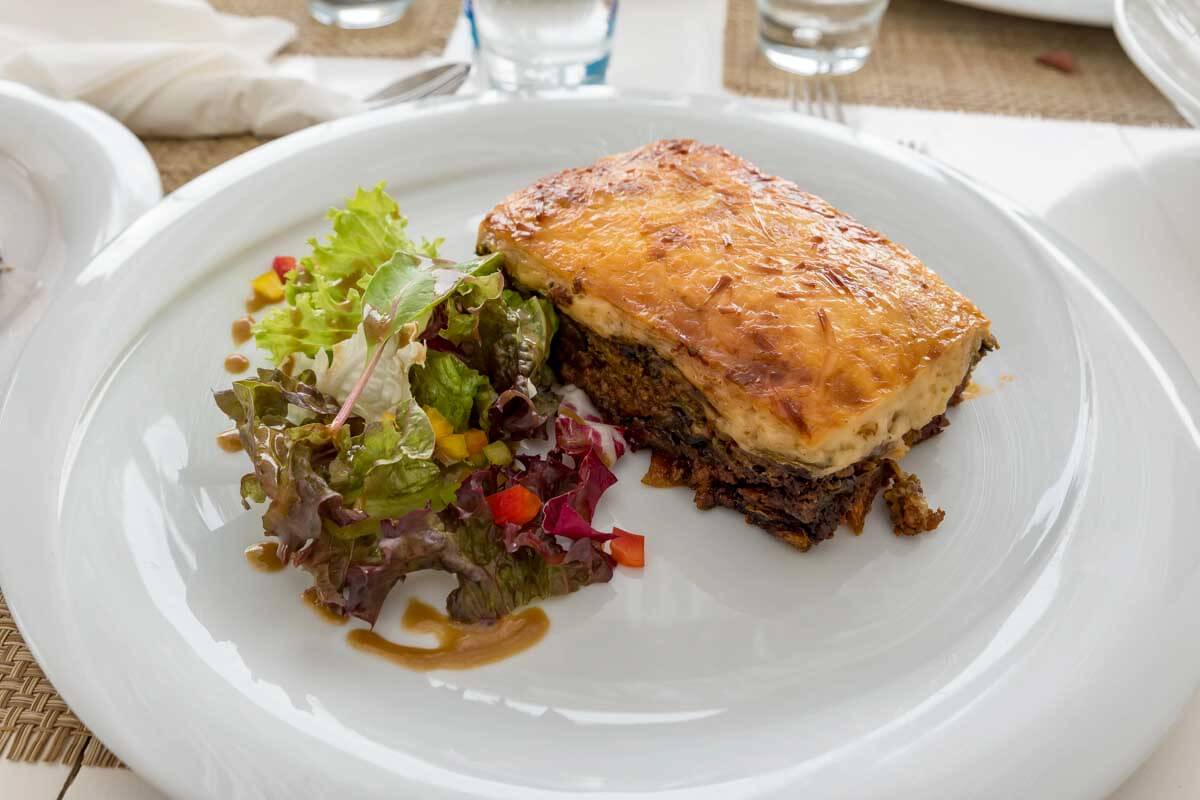
There is so much good Greek food that it’s hard to pick a favorite, but if I had to choose one, it would be moussaka. A baked casserole of eggplant, minced meat, and a thick topping of béchamel (a rich white sauce made with milk infused with herbs and other flavorings), this is a show-stopper of a meal. One bite in, and it’s clear why moussaka holds such an important place in Greek food culture—this is not a light meal, and it’s not pretending to be.
When baked fresh, the top forms a lightly golden crust that gives way to warm, savory layers beneath. This isn’t a dish meant to be rushed or scooped out of a tray that’s been sitting all day – the best versions are baked close to serving time and come in generous portions. Because of its richness, moussaka is often enjoyed at the end of the day. Especially when accompanied by a glass of wine, it’s okay to accept that you won’t be doing much afterward!
You’ll find excellent moussaka throughout Greece, but some of the best places to try it are Athens, Crete, and the Greek islands.
8. Pierogi in Poland
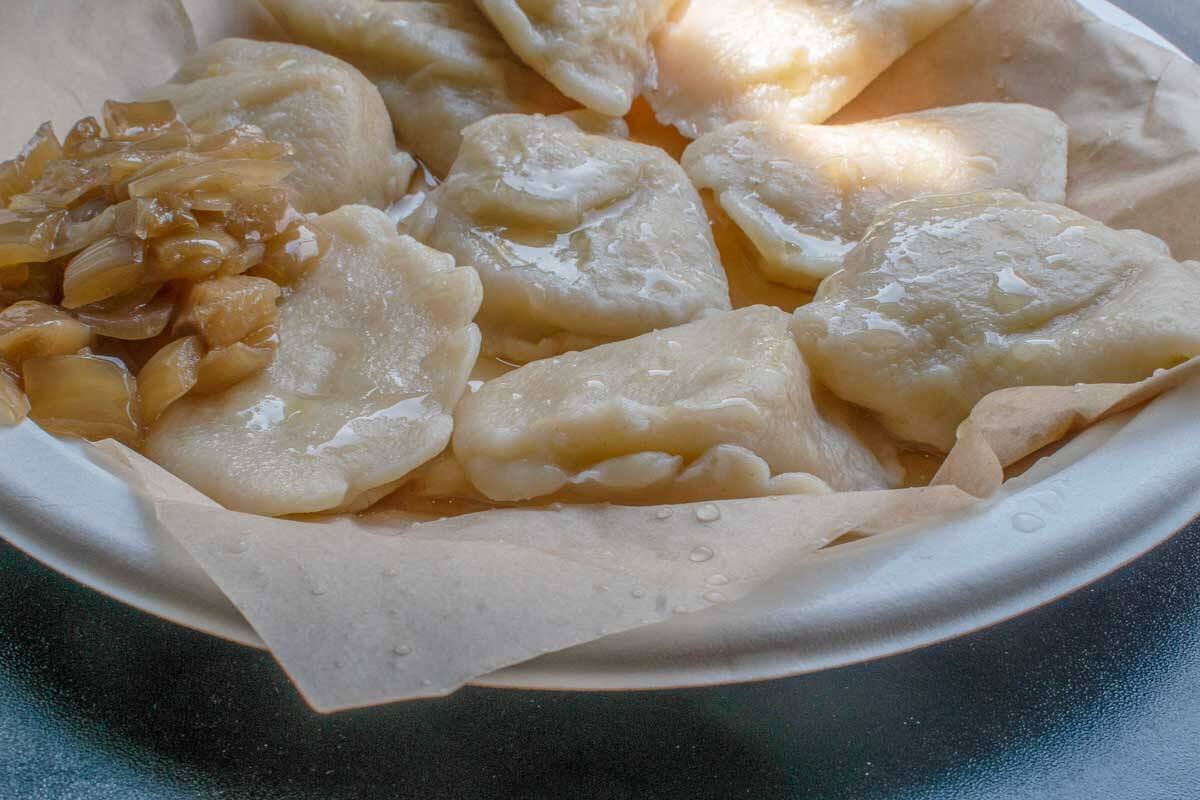
Pierogi are one of Poland’s most recognizable dishes and a staple you’ll find everywhere, from casual eateries to traditional menus. These dumplings are filled with ingredients like potatoes and cheese, meat, or sauerkraut, then cooked until tender and satisfying. They’re simple by design, but when made well, they’re incredibly satisfying.
Authentic pierogi are handmade and filled with straightforward ingredients rather than overly creative combinations. The dough should be thin and soft, never dense, and the filling should be well-seasoned without overpowering the wrapper. Potato and cheese (ruskie) are the most classic, offering a rich, savory bite that’s easy to eat more of than you planned. Pierogi are traditionally boiled, then sometimes lightly fried to add a bit of texture. They’re usually finished with butter, onions, or sour cream—nothing that distracts from the dumplings themselves.
Pierogi are typically served in generous portions and work just as well as a main dish as they do alongside other plates.
The best places to try pierogi are in Kraków and Warsaw, where traditional recipes are still widely respected. Look for places that keep the process simple and make them by hand—the difference is easy to taste.
Related Read: If you’re a fan of off-the-beaten-path locations, see our guide to Europe’s most underrated destinations for some unique travel spots!
9. Sauerbraten in Germany
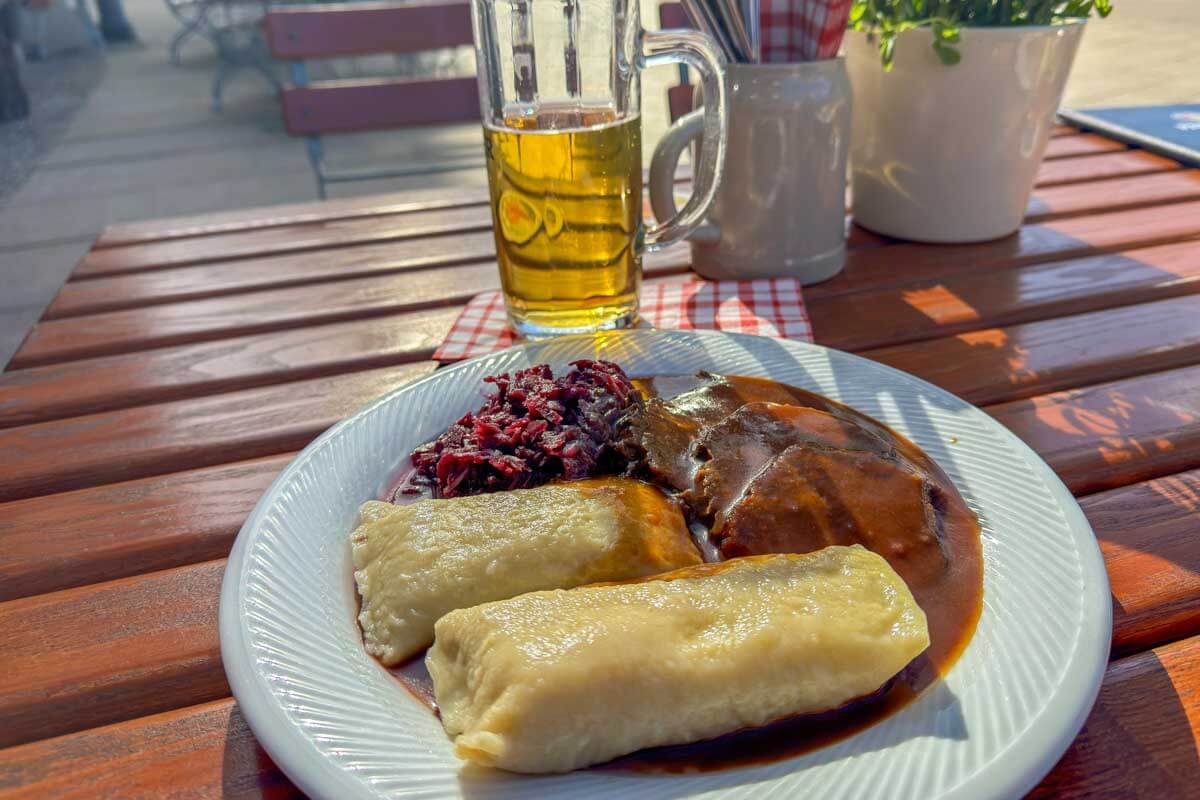
Sauerbraten is one of Germany’s most traditional dishes and a staple of classic home-style cooking. At its core, it’s a pot roast that’s marinated for several days before being slowly braised, resulting in meat that’s tender and deeply flavorful. The marinade—typically made with vinegar, spices, and aromatics—gives the dish its signature tangy profile, which sets it apart from other European roasts.
The extended marinade is essential, allowing the acidity to both tenderize the meat and build depth. After braising, the marinade is reduced into a rich gravy that balances sour and slightly sweet notes without becoming sharp or heavy. Quick versions or shortened marinades miss this balance and lack the complexity that defines the dish.
Sauerbraten is traditionally served with red cabbage and dumplings, sides chosen for both flavor and function. The cabbage adds sweetness, while the dumplings absorb the gravy, rounding out the meal.
The best place to try sauerbraten is in Germany’s Rhineland, especially in cities like Cologne and Düsseldorf. In this region, the dish is prepared according to long-standing tradition and treated as a regional specialty rather than a novelty.
10. Risotto alla Milanese in Italy
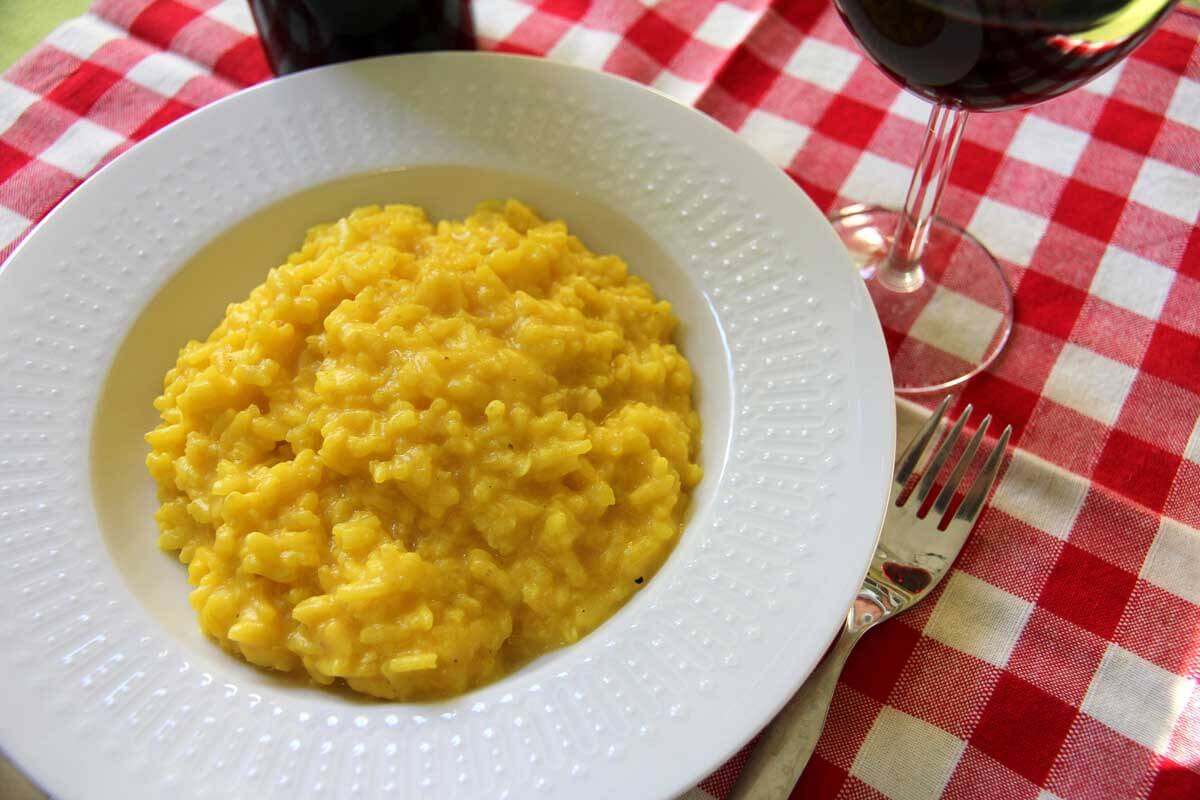
Risotto alla Milanese is one of northern Italy’s most beloved dishes and a defining specialty of Milan. This creamy rice dish is flavored with saffron, which gives it its signature bright yellow color and subtle, aromatic depth. Despite its rich texture, authentic risotto alla Milanese contains no cream—the creaminess comes entirely from properly cooked rice and careful technique.
What sets an authentic version apart is attention to process. Short-grain rice is cooked slowly, with hot broth added gradually and stirred just enough to release the rice’s natural starches. The saffron is added during cooking, allowing its color and flavor to fully develop rather than sit on the surface. The final result is loose enough to spread slightly on the plate but never soupy or stiff. Adding cream dulls the saffron and flattens the flavor, which is why traditional recipes avoid it entirely.
Risotto alla Milanese is often served on its own or alongside classic Milanese dishes, but it stands perfectly well as a main course. It’s rich without being heavy and focused on a single, clear flavor rather than layers of extras.
The best place to try risotto alla Milanese is in Milan and throughout the Lombardy region, where the dish is prepared according to tradition and the saffron-forward flavor is allowed to speak for itself.
11. Pastel de Nata in Portugal

Pastel de nata is Portugal’s most famous pastry and a staple of everyday life, whether it’s eaten as a quick snack or alongside a coffee (and I highly suggest it with coffee). This small custard tart features a crisp, flaky pastry shell filled with smooth, eggy custard and finished with a lightly caramelized top. Simple in appearance, it delivers a contrast of textures and flavors that’s hard to beat.
A properly baked tart has dark, caramelized spots on top, which add a slight bitterness that balances the sweetness of the custard. Traditional versions are served fresh from the oven and often finished with a light dusting of cinnamon or powdered sugar. Pastéis de nata are best eaten warm, ideally within minutes of being baked. But be warned, they’re small enough that stopping at just one is rarely the plan!
The best places to try pastel de nata are in Lisbon—especially the Belém area—and in Porto, where bakeries take pride in baking them throughout the day rather than in bulk.
12. Smørrebrød in Denmark
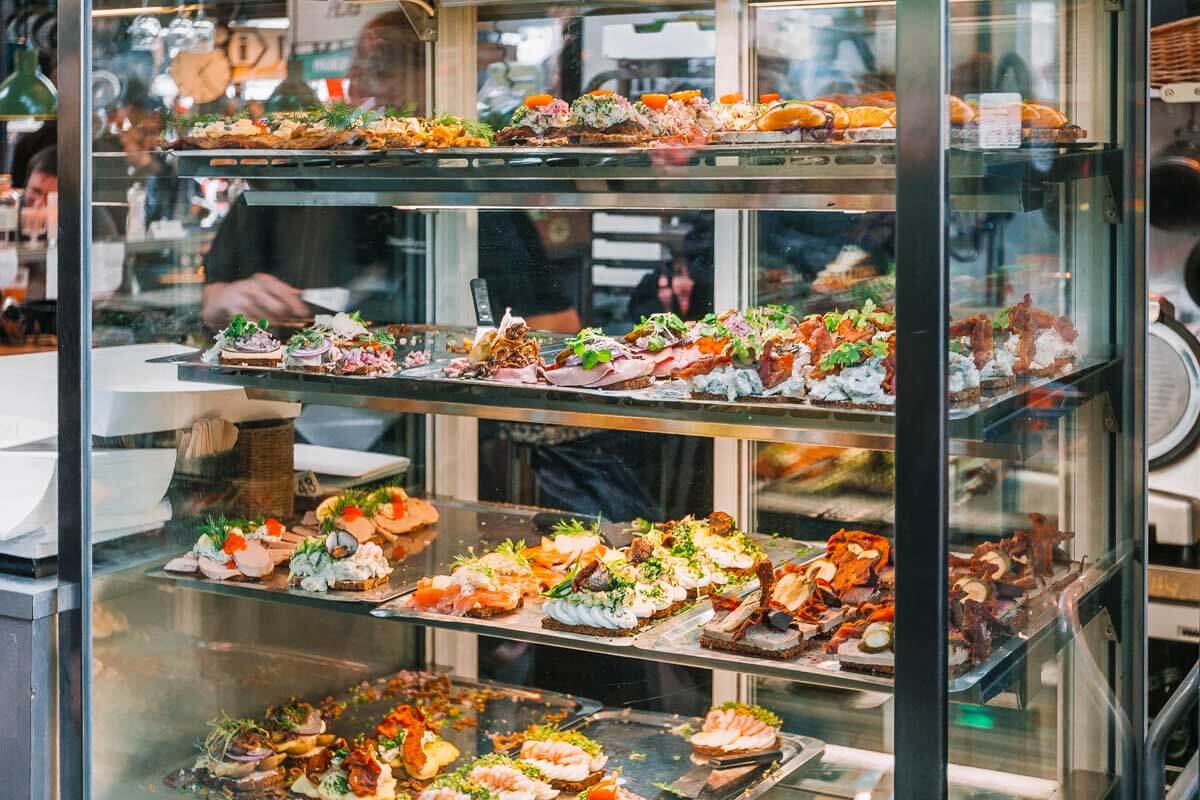
Smørrebrød is a classic part of Danish food culture and a staple lunch dish throughout the country. These open-faced sandwiches are built on dense, dark rye bread and topped with combinations of fish, meat, cheese, and vegetables.
Authentic smørrebrød starts with the bread. The rye should be freshly baked, firm, and sturdy enough to support the toppings without becoming soggy. From there, the focus is on quality rather than quantity. Common toppings include pickled herring, smoked salmon, roast beef, or cheese, often paired with simple additions like onions, herbs, or a light spread.
Smørrebrød is traditionally eaten at lunch, when it’s treated as a proper meal rather than a quick snack. It’s filling and designed to be eaten with a knife and fork, not folded in half.
The best place to try smørrebrød is in Copenhagen, where the tradition is still taken seriously. Look for places that respect the rye bread and keep the toppings straightforward—when done right, that simplicity is exactly the point.
13. Cevapi in the Balkans
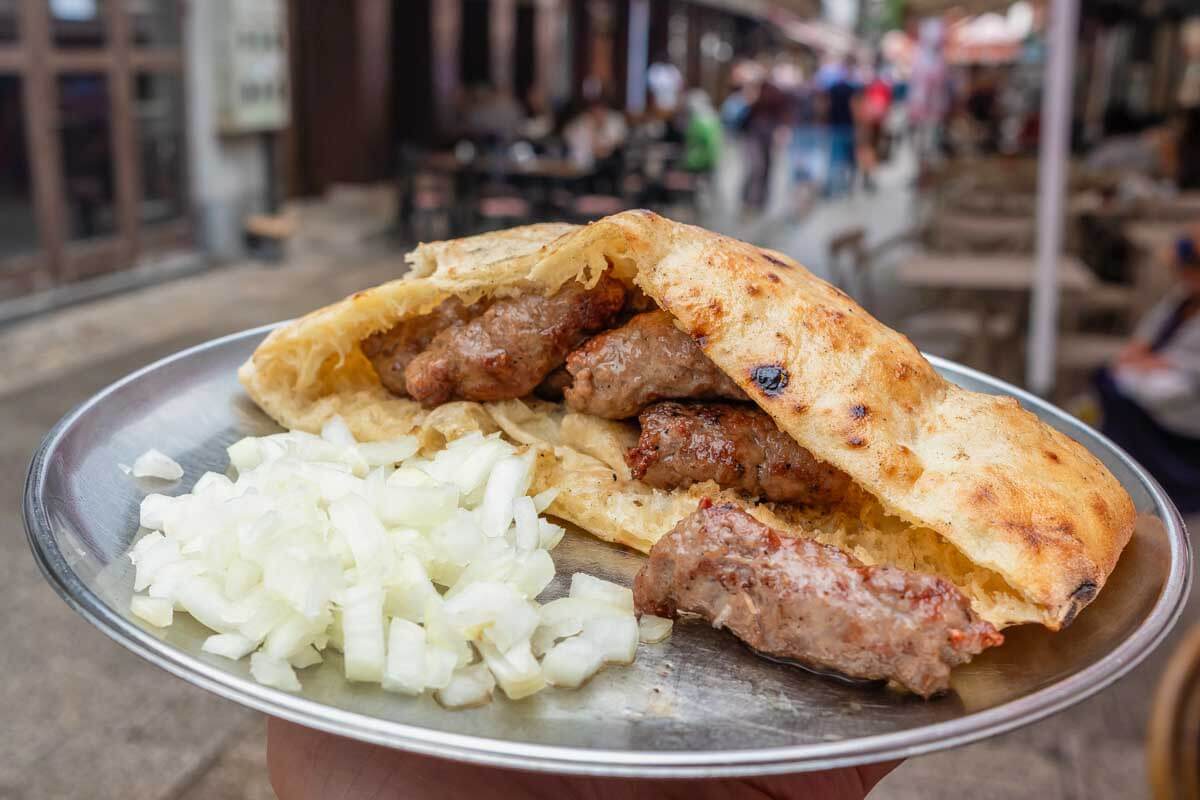
Ćevapi are a staple across the Balkans and one of the region’s most popular everyday foods. These small grilled sausages are made from minced meat, shaped by hand, and cooked over an open flame until lightly charred and juicy. They’re simple, filling, and meant to be eaten without ceremony, which is exactly what makes them so good.
Authentic ćevapi focus on the meat and nothing else. There are no fancy sauces, marinades, or elaborate toppings. The sausages are seasoned simply and grilled to develop flavor from heat rather than seasoning blends. They’re traditionally served with somun, a soft, slightly chewy flatbread that soaks up the juices, along with raw chopped onions for crunch. In some places, a spoon of kajmak may be added, but the dish should never feel overloaded or dressed up.
Ćevapi are most often eaten as casual street food or in no-frills eateries, served quickly and meant to be eaten by hand. They’re not a sit-down, lingering meal—they’re fast, satisfying, and direct.
The best places to try ćevapi are in Sarajevo, Belgrade, and Zagreb, where the dish is treated as an everyday essential and prepared according to local tradition rather than tourist expectations.
14. Belgian Waffles in Belgium

Belgian waffles are a classic street food and dessert in Belgium, but they’re far more restrained than the overloaded versions often seen elsewhere. There are two main styles: Brussels waffles, which are light, crisp, and airy, and Liège waffles, which are denser, richer, and made with pearl sugar that caramelizes as it cooks. Both are meant to be enjoyed fresh, while the waffle is still warm.
Authentic Belgian waffles are made to order and served with minimal toppings. A light dusting of powdered sugar or a simple topping is enough—anything more tends to overwhelm the waffle itself. Brussels waffles should be crisp on the outside and soft inside, while Liège waffles are chewy, buttery, and slightly caramelized. Piling on sauces, candy, or excessive toppings turns them into something else entirely and distracts from what makes them special.
Belgian waffles are often eaten on the go, straight from a paper wrapper, and work just as well as a quick snack as they do for dessert. They’re filling without being heavy and rely on texture rather than sweetness alone.
The best places to try Belgian waffles are in Brussels and Bruges, where traditional preparation is still common, and the focus stays on the waffle, not the extras.
15. Cheese Fondue in Switzerland
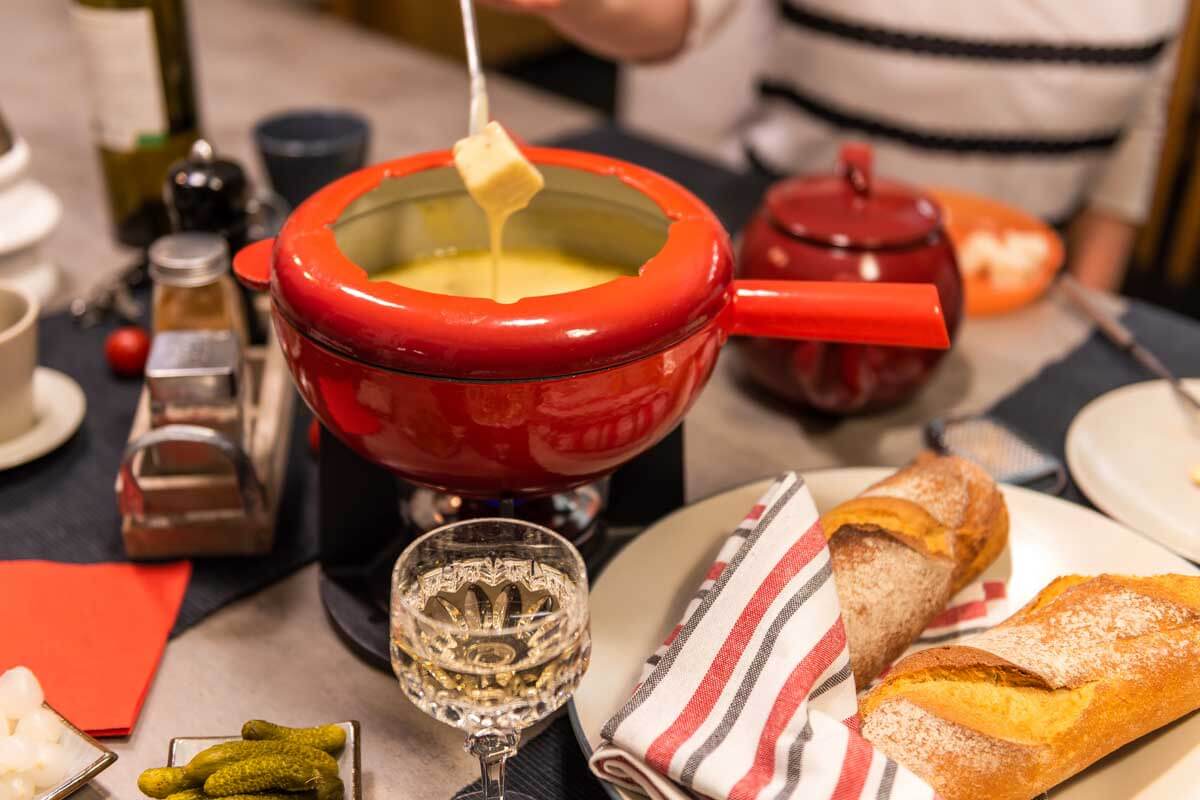
Made by melting Swiss cheese with white wine and a touch of garlic, fondue is one of my favorite foods to indulge in when visiting Switzerland. It’s made to be shared with diners dipping pieces of bread, apples, pears, and sometimes veggies into the warm, bubbling pot. It’s rich, straightforward, and intentionally social. In Switzerland, it’s typically eaten during the colder months, when something warm and filling makes the most sense.
Authentic cheese fondue depends on the right cheese and very little else. Classic versions use Swiss cheeses like Gruyère, Vacherin, or a combination of the two, melted slowly with wine to create a smooth, cohesive texture. The flavor should be balanced and savory rather than aggressively sharp. Bread is the traditional—and essential—accompaniment, cut into sturdy cubes that hold up in the cheese without falling apart.
The best places to try cheese fondue are in Switzerland’s cities and alpine regions, including Zurich, Geneva, Lucerne, and mountain towns, where the dish is prepared traditionally and enjoyed when the weather calls for it.
Related Read: Need help planning your trip? Check out our Ultimate Europe Bucket List blog to see the top can’t-miss experiences and add a few to your next trip!
Renting a Car in Europe

Exploring Europe by car is a fantastic way to uncover hidden gems—think charming villages, scenic countryside, and off-the-beaten-path spots that trains and buses might miss. Driving here is generally straightforward, but it’s good to be prepared for some regional quirks.
We always use Discover Cars to book our rentals and can’t recommend them enough. It’s super easy to compare prices, check company ratings, find automatic cars (which can be tricky in Europe!), and add affordable full coverage insurance.
Tips for Renting a Car in Europe
What You Need to Rent a Car in Europe
Ready to hit the road and discover the freedom of exploring Europe on your own terms?
AIRALO e-SIM
Up To 15% Off With Code “DTRAVEL15”
What’s an eSIM?
An eSIM is a digital version of a SIM card. Instead of buying a little plastic chip and swapping it into your phone, you just download it. It connects your phone to a local network in whatever country you’re visiting — no stores, no waiting, and no fiddling with tiny cards.
In simple terms, it’s the easiest way to get data and stay connected while traveling.
We’ve tested a bunch of eSIMs in North America, and after a few frustrating experiences, we’ve found our favorite — Airalo. It’s fast, reliable, and incredibly easy to use. You can set it up in minutes (even my mom managed it solo on her first try!), and the prices are some of the best out there.
🔥 Hot Tip: Choose the Europe-wide eSIM! It works across multiple countries, so you can hop from France to Italy to Spain without ever losing connection. One download, endless adventures.
💡 Bonus: We’ve got an exclusive 15% discount for our readers. Use the codes:
Thanks for reading!

Get your taste buds ready, because there are even more delicious flavors to try all across Europe! These are just a few of the highlights, and if your travel style is anything like ours, it’s all about the food. So indulge while you’re on vacation and enjoy the unique dishes of each country you visit!
Before you go, check out our other Europe blogs! As long-term travelers, we love sharing our favorite travel experiences and destinations with fellow adventurers, as well as helpful travel hacks to make your vacation seamless. Or check out some of our top guides below right now!
Where to Stay in Copenhagen, Denmark: 4 Best Areas & Hotels
The 10 Best Castle Hotels in Dublin
The Services We Recommend
From hotels to guided tours, we only recommend services we know and trust. Here are our recommended partners so you can explore Europe with confidence.